
Sagrada Familia del pajarito (The Holy Family with a Little Bird)
1650
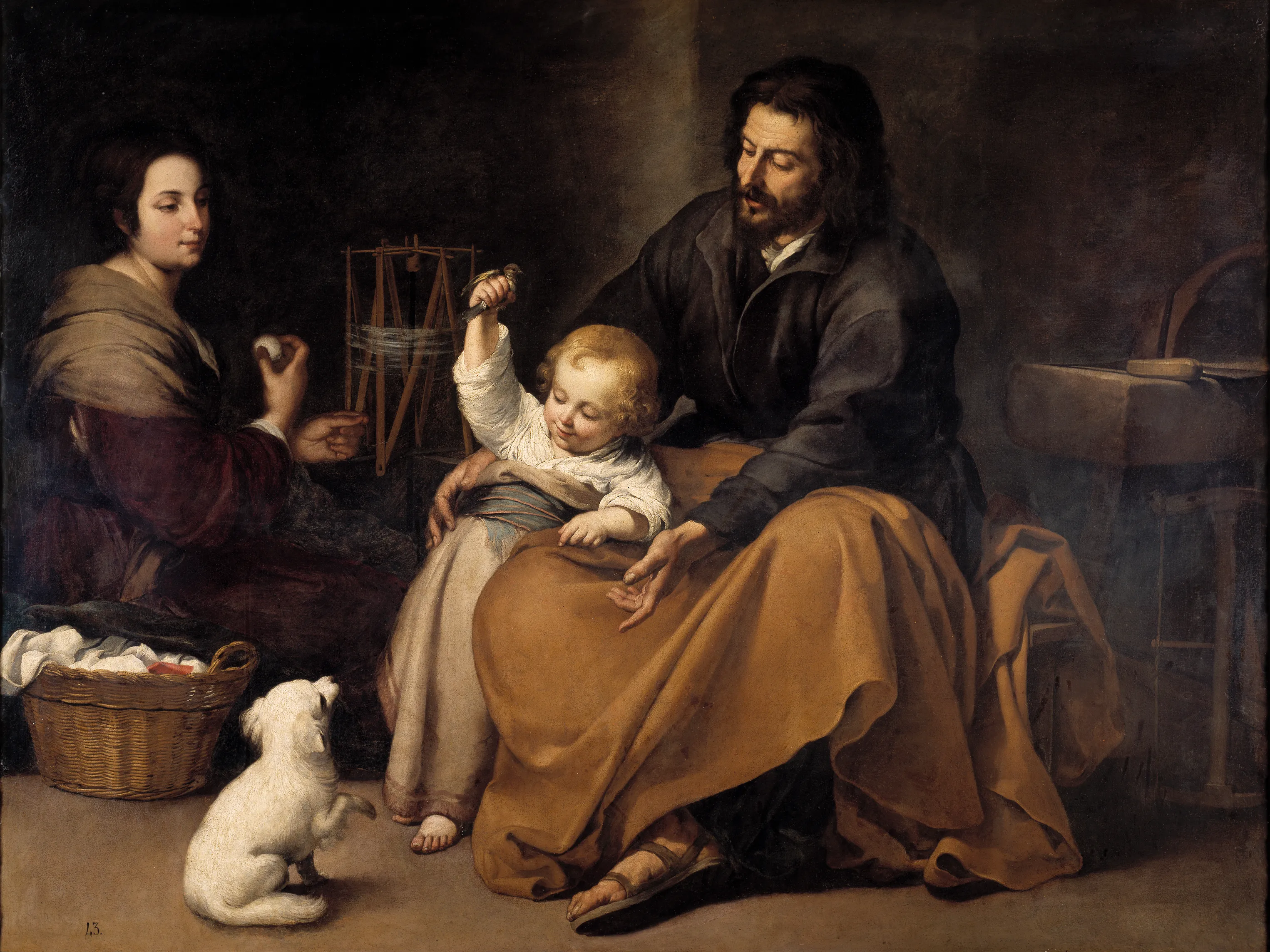
17世紀スペイン黄金時代を代表する、セビリア出身のバロック画家。
A young boy, innocently playing with a white puppy, holding a little bird aloft.
His father gently watches over them, having paused his work, while his mother smiles as she spins thread beside them.
What fills the dimly lit carpenter's workshop is a warm and peaceful scene of everyday family life, one that could be found anywhere.
However, the family depicted is not just any family; it is the 'Holy Family' of Christ, the Virgin Mary, and his foster father Joseph.
Around 1650, when this painting was created, Seville, Spain, where the painter Murillo lived, was in the midst of deep sorrow and despair.
About 165 more words
Unlock this story's ending, and every article on MusicStory
- 42
Stories1–2 new every week
An archive of paintings paired with great music, made for a weekend night and a cup of coffee
- 282
Paintings with commentarygrowing daily
From simply looking to truly reading — the brushwork and the obsession of the masters
- 10
Music Librarygrowing daily
Know it first, and what reaches your ear changes — background music becomes art you keep for life
My Notes, unlimited
Every reading adds to a digital art notebook that is yours alone
Already have an account? Log in
Stories featuring this painting
Your Note
Write down what this painting made you feel in your art notebook.
Please sign up to write notes.
Sign up for freeRecommended Artworks
%2C_by_Diego_Vela%CC%81zquez.webp)
More artists




If you find an error in this content, please let us know here
This site is protected by reCAPTCHA, and the Google Privacy Policy and Terms of Service apply.