A master of modern Spanish painting who captured the fierce Mediterranean sun and its dazzling play on water and skin, hauling monumental canvases out into the open air to define Luminism.
LifeLife and works
Joaquín Sorolla was born in Valencia, Spain, in 1863. Orphaned at the age of two when both of his parents succumbed to a cholera epidemic, he was raised by his aunt and uncle. At fifteen, he gained admission to the local Academy of Fine Arts, where he acquired a rigorous foundation in draftsmanship. Visiting Madrid in 1881, he spent countless hours at the Prado Museum copying the brushwork of Diego Velázquez, absorbing the master's chiaroscuro rooted in deep browns and velvety blacks. Around the same time, he worked in the studio of a professional photographer—who would later become his father-in-law—retouching monochrome photographs by hand to accentuate light. This experience instilled in him an acute awareness of optical refraction and the daring, abrupt crops characteristic of the camera lens.
By the 1890s, Sorolla turned to Social Realism, producing works that confronted the darker facets of life. In Another Marguerite (1892), he depicted a handcuffed woman transported in a third-class railway carriage, while in And They Still Say Fish Is Expensive! (1894), he captured a wounded young fisherman tended to beneath a single beam of light piercing a dim ship hold. Such humanitarian themes were warmly embraced by the juries of major European exhibitions at the time. In 1899, he completed Sad Inheritance!, portraying orphaned children with physical disabilities, such as the effects of polio, bathing at the water's edge. The masterpiece earned him the Grand Prix at the 1900 Paris Exposition Universelle.
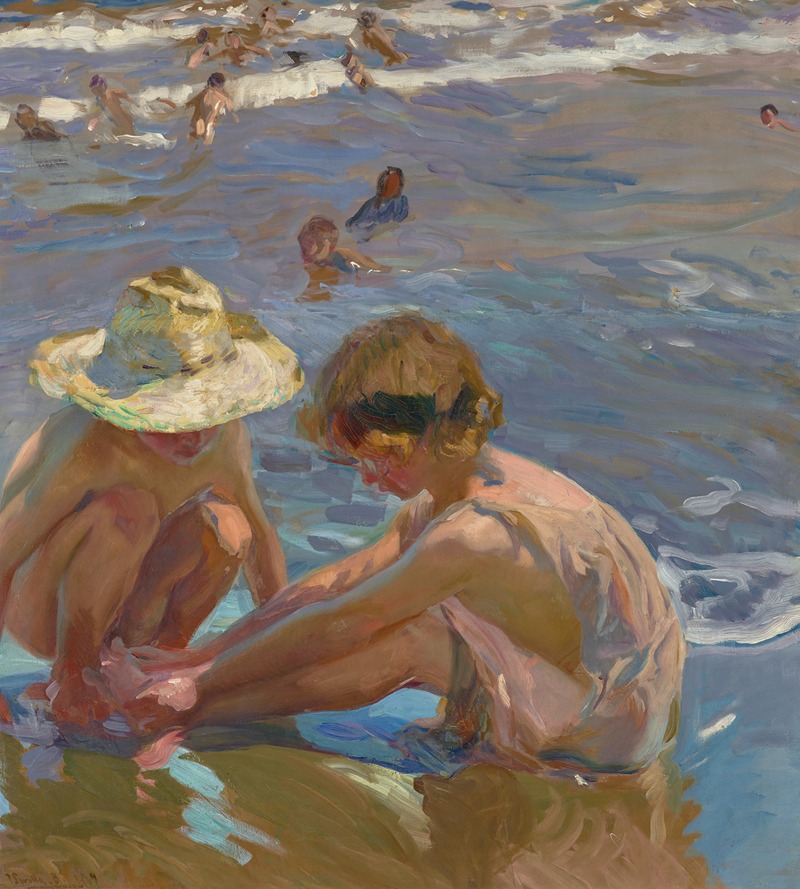
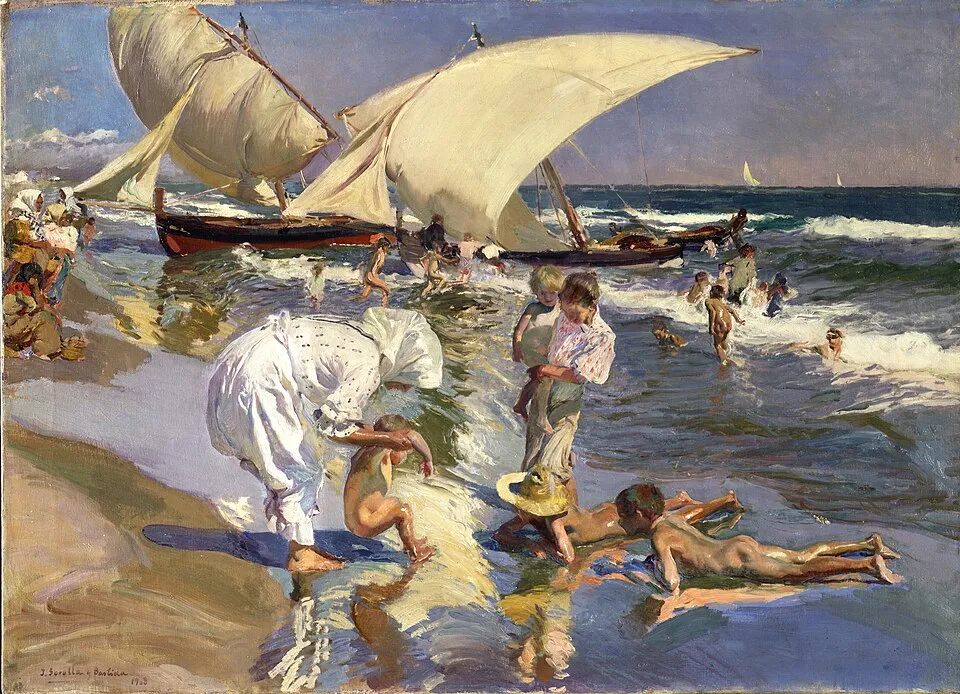
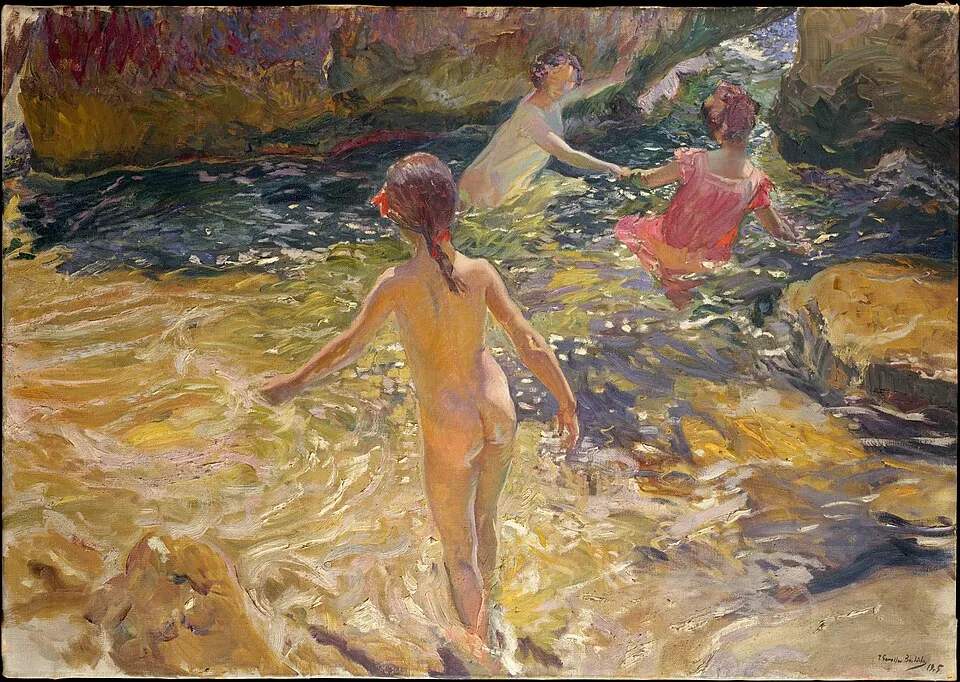
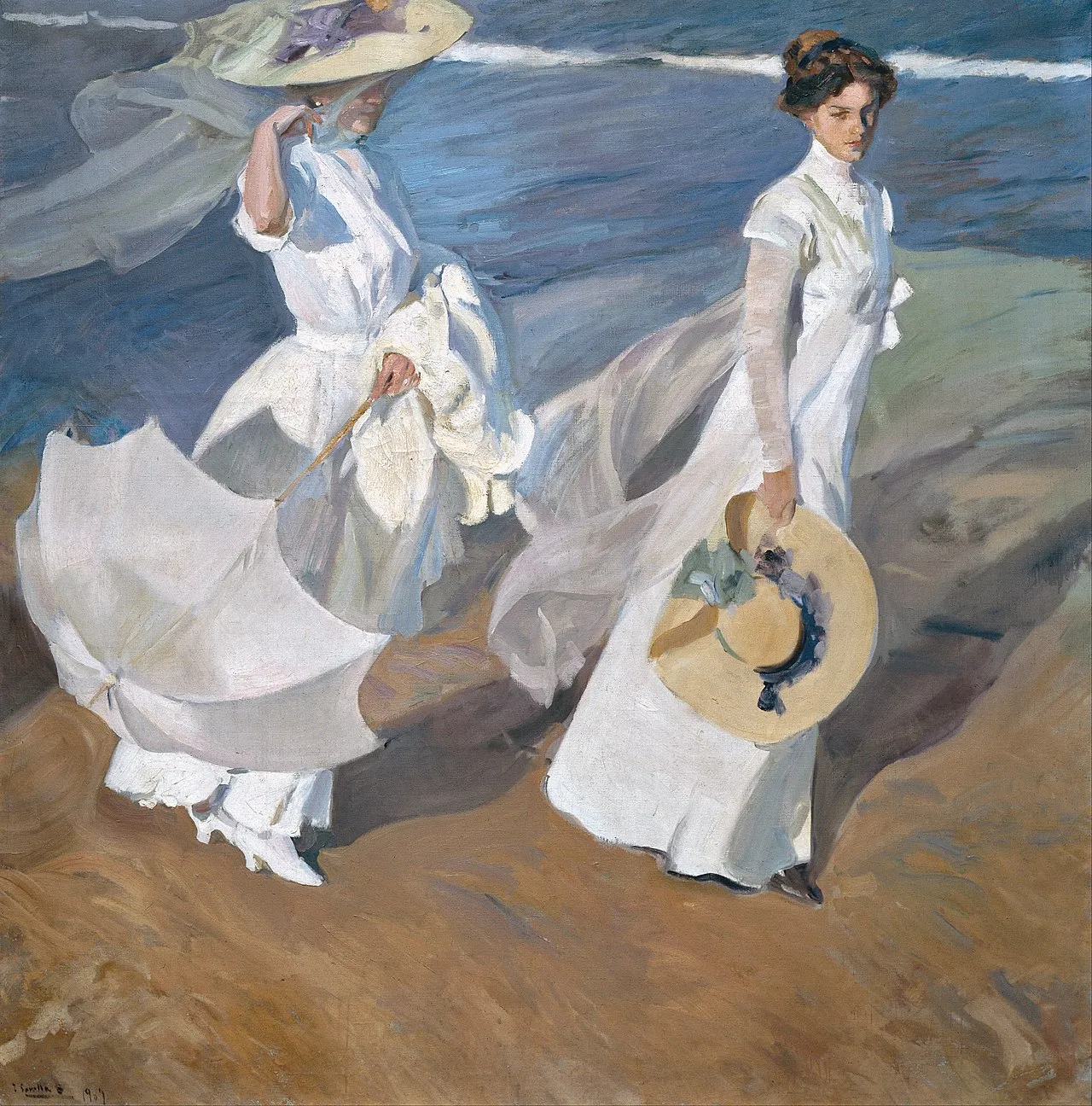
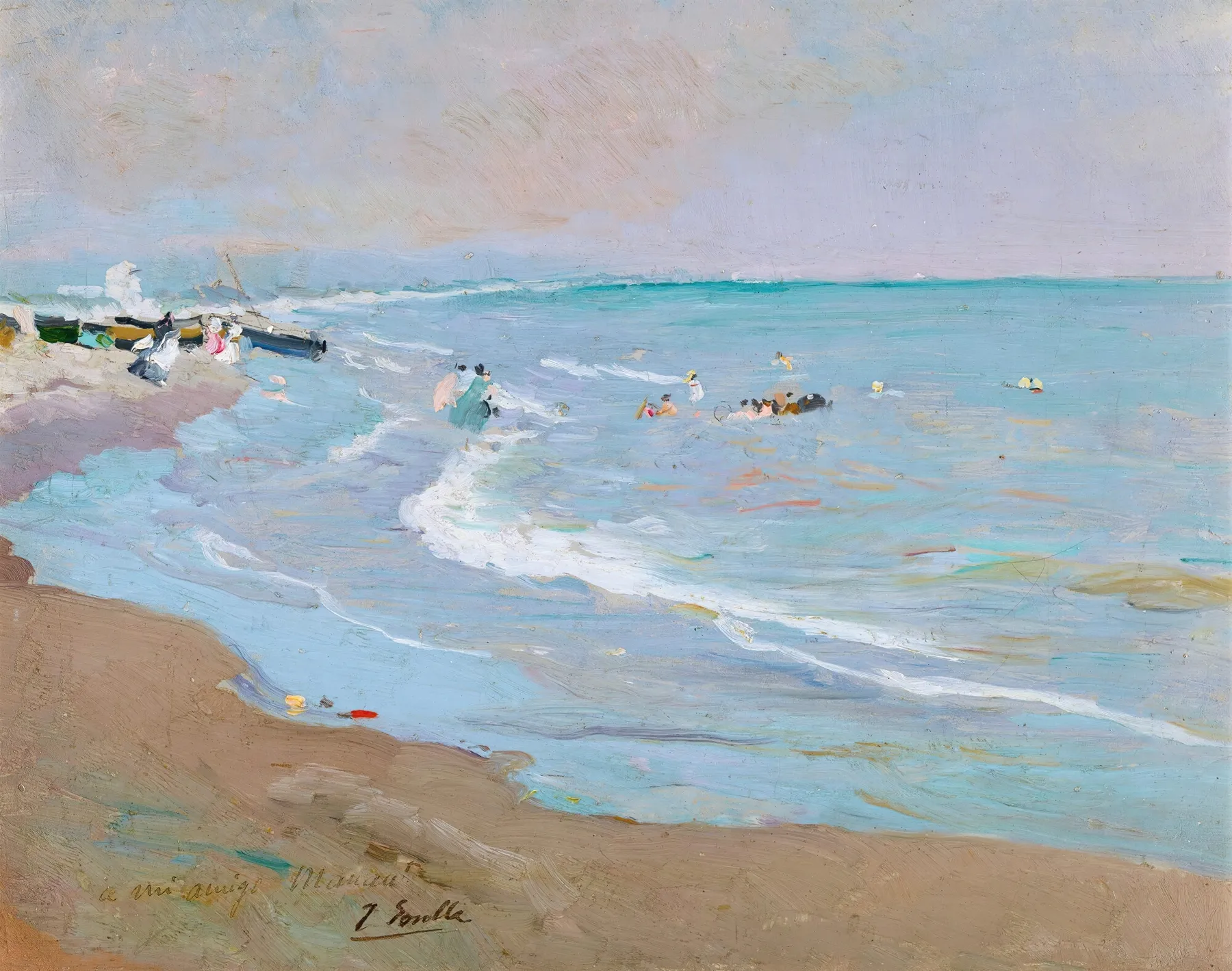
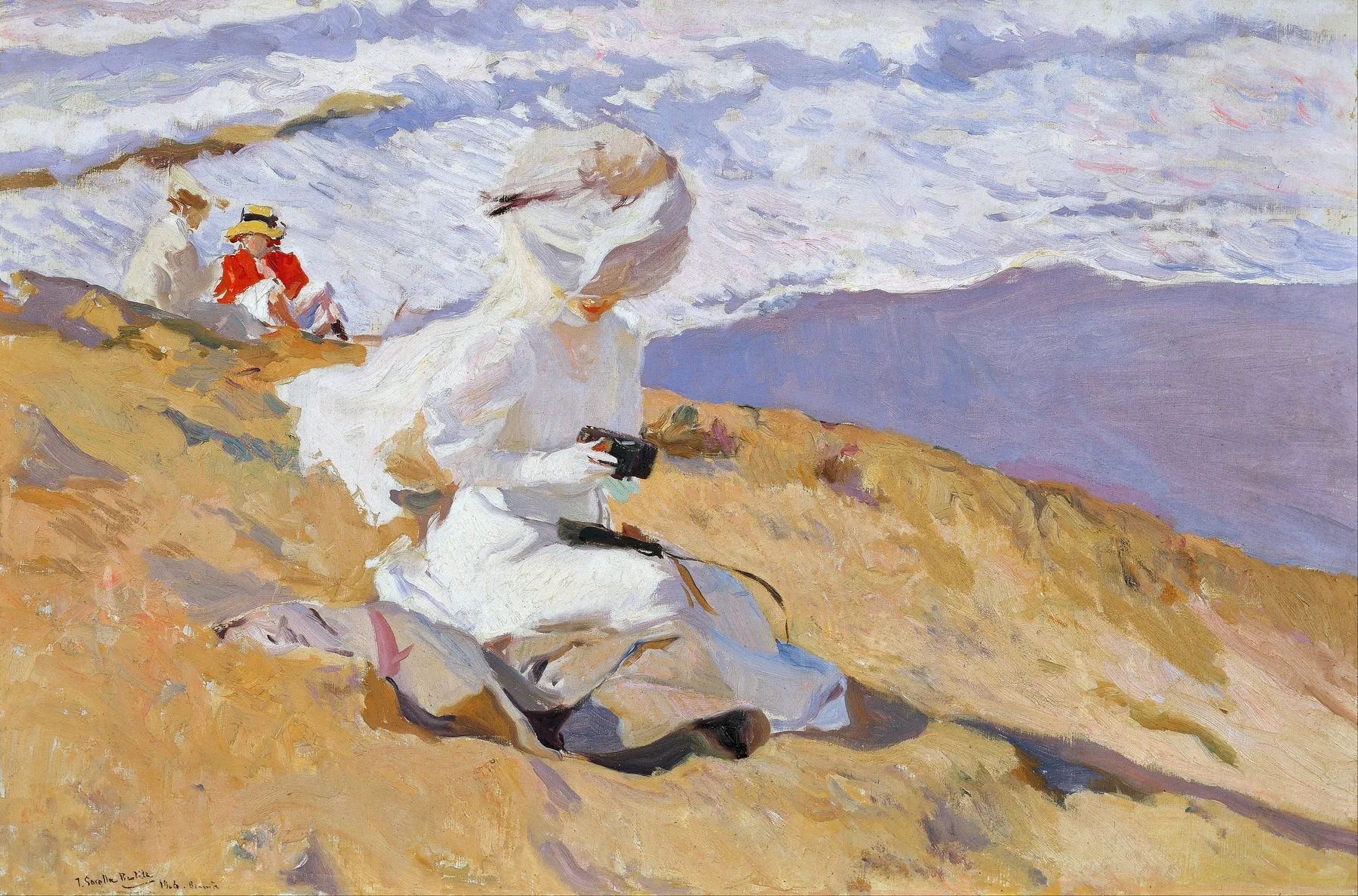
From the turn of the century onward, Sorolla moved away from narrative subjects, devoting himself entirely to recording visual phenomena as raw reality. Breaking free from the physical confines of the studio, he had massive canvases measuring more than three by four meters erected directly upon scaffolding in the shallows of the sea. Convinced that nature's transient moods demanded instantaneous execution, he painted at breathtaking speed, working wet-on-wet without preliminary underdrawing on the canvas. Yet this spontaneity was deceptive; over his lifetime, he produced around 9,000 drawings and studies, meticulously calculating poses and geometric compositions before embarking on his open-air sessions.
A 1909 solo exhibition at The Hispanic Society of America in New York proved a triumphant success, with more than 150 of the 356 exhibited works purchased almost immediately. With the proceeds, he constructed a grand residence and studio on Madrid's Paseo del General Martínez Campos in 1911. Sorolla himself designed the property, including three glass-roofed studios angled to harvest optimal daylight, as well as private Andalusian-style gardens adorned with geometric brickwork and fountains. Once completed, these grounds became an idyllic laboratory where he produced numerous intimate portraits of his wife, Clotilde, and their three children.
That same year, Sorolla was commissioned by the American philanthropist Archer Milton Huntington to paint Vision of Spain, a monumental cycle of fourteen murals intended to decorate the Hispanic Society's library. For eight arduous years, the artist traversed Spain—from Castile and Seville to Galicia—capturing the diverse regional customs, folk costumes, and natural light on vast panoramic canvases. Shortly after concluding this titanic undertaking in 1919, he suffered from severe physical exhaustion. On the morning of June 17, 1920, while painting Mabel Rick, the wife of a close friend, seated in a rocking chair in his garden, Sorolla suffered a stroke that left his right side paralyzed and stripped him of his ability to hold a brush. That unfinished portrait, its rocking-chair armrests and textured background left in their initial raw underpainting, remains preserved today in Madrid's Sorolla Museum, scheduled to reopen following a major renovation in early 2026.