
Portrait of Igor Stravinsky
1920
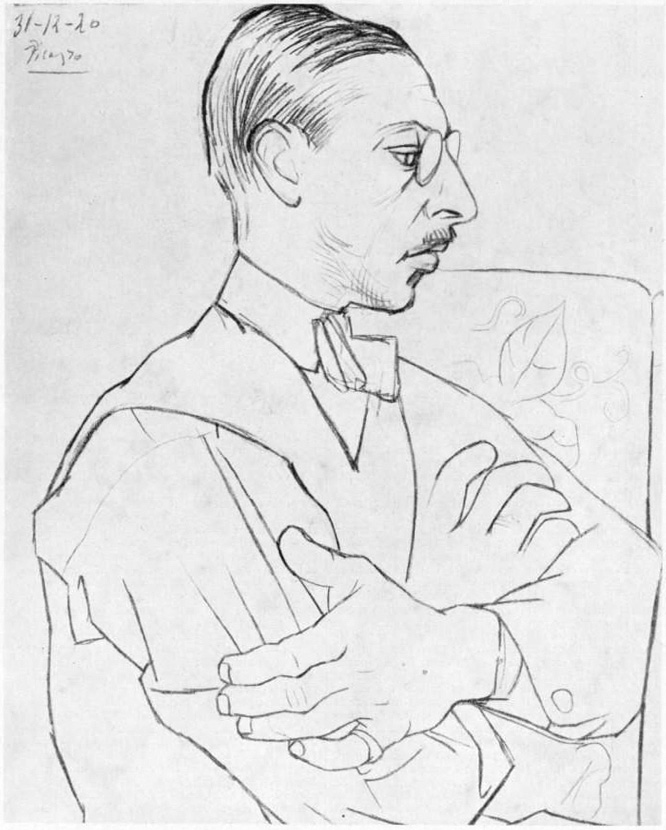
Image: Image quote: Pablo Picasso, Igor Stravinsky (1920) Source: Wikipedia
- Dimensions
- 62.4 × 48.5 cm
- Medium
- Graphite pencil and charcoal on gray paper
- Collection
- Musée national Picasso-Paris
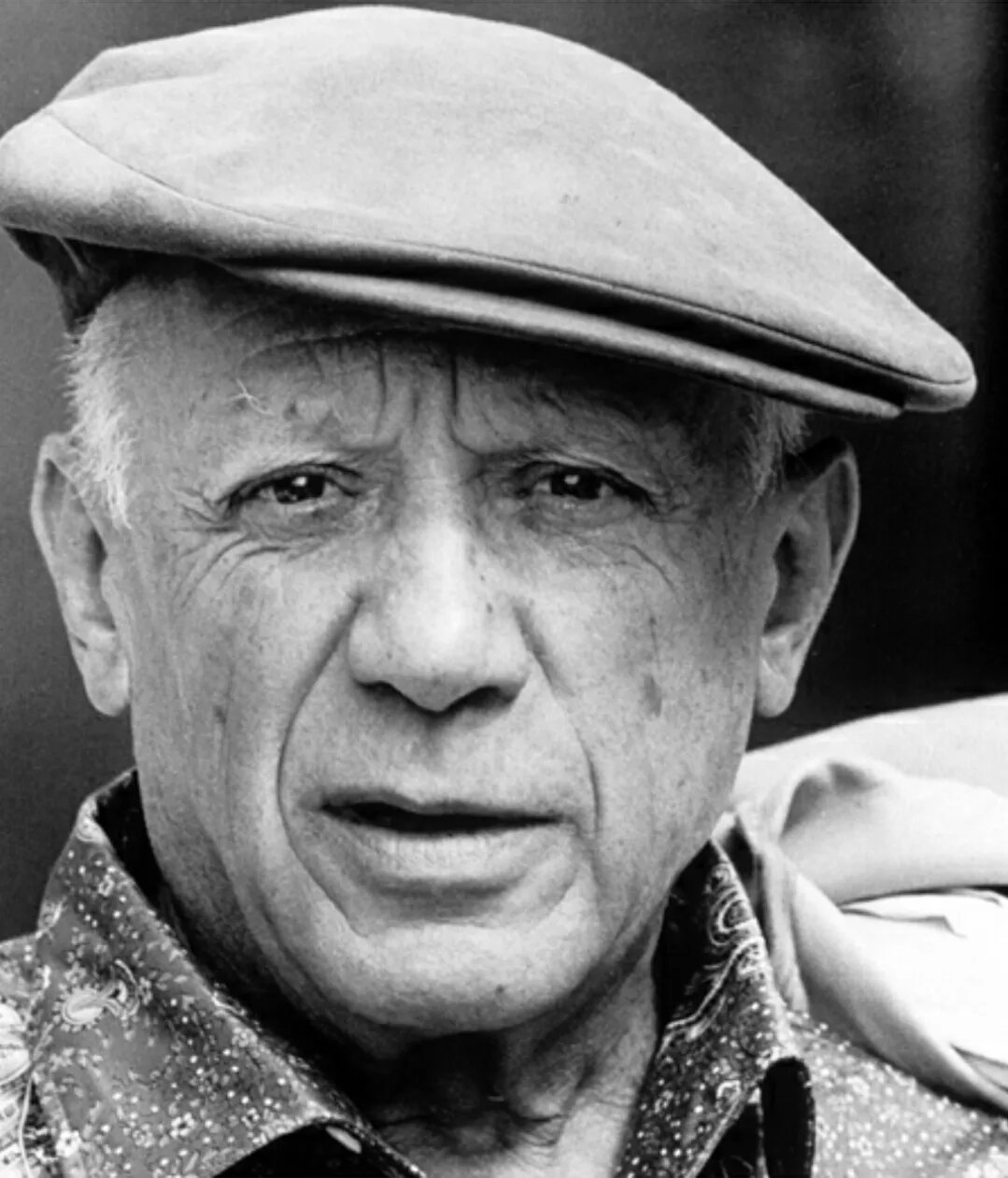
A Spanish-born painter who brought an end to the traditional practice of project…
✦ Highlights (technique & color)
Executed in pencil and charcoal on gray paper, the portrait is defined by a purity of line that eschews heavy shading, conveying three-dimensional form solely through varied contours and minimal hatching. While it appears at first glance to be a faithful realist study, the clasped hands and knees are drawn noticeably larger than life, lending an imposing physical weight to the composition. Moving beyond mere realism, this deliberate distortion showcases Picasso’s singular ability to bring balance to pictorial space.
✦ The setting of this painting
The setting is Picasso’s home and studio at 23 rue La Boétie in Paris on May 24, 1920. While the lower floor was a refined living space reflecting the taste of his wife, Olga, the upper-floor studio was a chaotic world cluttered with unfinished canvases, African sculptures, and musical instruments. This portrait was drawn when Stravinsky visited the studio in the immediate aftermath of the premiere of the ballet Pulcinella, with the excitement still palpable.
✦ Historical context
This work is set against the backdrop of the "return to order" that swept the European cultural scene following the First World War. In reaction to the radical, disruptive impulses of the prewar years, there was a renewed appreciation for classical harmony and traditional techniques. Picasso was turning toward neoclassical painting characterized by precise draughtsmanship, while Stravinsky was moving toward neoclassical music that refashioned Classical-era idioms; the aesthetics of both artists were perfectly synchronized with the postwar zeitgeist.
A man in a suit, wearing round spectacles.
He sits quietly, his hands tightly clasped in front of him.
A famous anecdote is often told about this portrait.
"Mistaken for a secret blueprint of a military fortification at a border checkpoint."
Suspicious military police nearly confiscated it, or so the story goes.
Yet, in truth, that anecdote does not belong to this drawing.
The incident took place in 1917.
It occurred with an entirely different portrait drawn by Picasso.
Even today, many commentaries mistakenly continue to repeat the story in connection with this work.
When and how, then, was this piece created?
May 24, 1920, Paris.
Picasso's studio at 23 Rue La Boétie.
There, the composer Igor Stravinsky came to visit.
The two had first met three years earlier in Italy.
Visual art and music.
Though working in different fields, both pursued innovation and immediately formed a deep rapport.
Then, in mid-May 1920.
The ballet Pulcinella premiered at the Paris Opéra.
It was a historic production, featuring music by Stravinsky and stage designs by Picasso.
With packed houses and fervent applause every day,
it was amid this lingering excitement that the studio visit took place.
Picasso's home at the time had two distinct faces.
The lower floor was a refined living space reflecting his wife's taste.
The upstairs studio, however, was entirely different.
Unfinished canvases, African sculptures, musical instruments, papers.
It was a chaotic space, cluttered to the point where there was barely room to step.
The First World War had brought unprecedented destruction.
Postwar Europe sought a "return to order."
A movement turning away from radical, destructive impulses to reclaim classical harmony.
Stravinsky turned toward music that reconstructed Classical styles.
Picasso, too, moved toward expression through precise line drawing.
Two geniuses synchronized with the spirit of the age crossed paths here.
Amidst his chaotic studio, Picasso captured his friend's likeness in one swift sitting.
It was not commissioned by anyone.
Nor was it made for money.
The two frequently exchanged drawings and musical manuscripts.
Stravinsky would present autograph scores, and Picasso would respond with portraits.
It was an intimate dialogue between two figures at the cutting edge.
About 121 more words
Unlock this story's ending, and every article on MusicStory
- 42
Stories1–2 new every week
An archive of paintings paired with great music, made for a weekend night and a cup of coffee
- 282
Paintings with commentarygrowing daily
From simply looking to truly reading — the brushwork and the obsession of the masters
- 10
Music Librarygrowing daily
Know it first, and what reaches your ear changes — background music becomes art you keep for life
My Notes, unlimited
Every reading adds to a digital art notebook that is yours alone
Already have an account? Log in
Your Note
Write down what this painting made you feel in your art notebook.
Please sign up to write notes.
Sign up for freeRecommended Artworks
%2C_by_Diego_Vela%CC%81zquez.webp)
Sources & references
More artists
If you find an error in this content, please let us know here
This site is protected by reCAPTCHA, and the Google Privacy Policy and Terms of Service apply.