
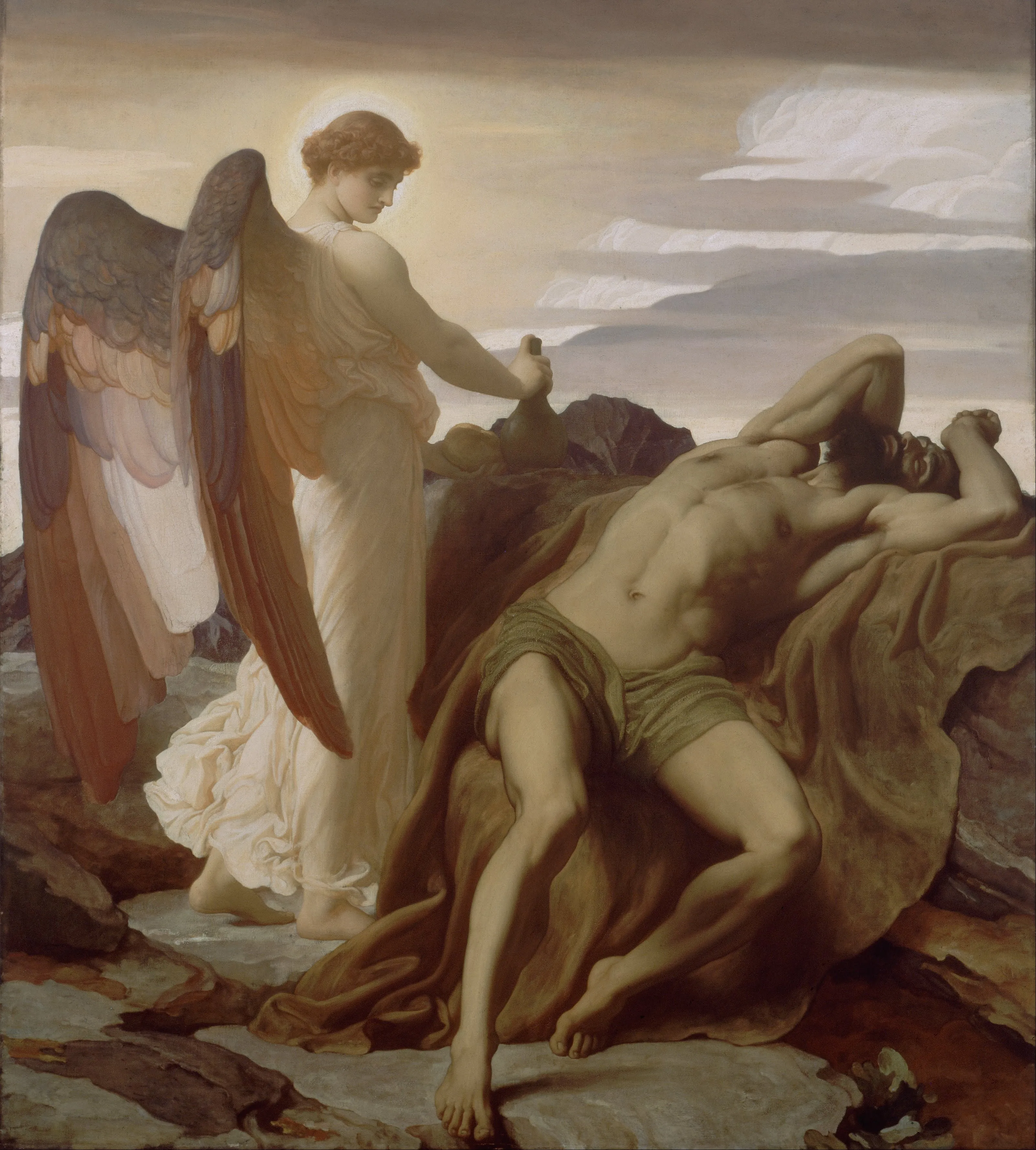
Elijah in the Wilderness
1878
ヴィクトリア朝の画壇に君臨したイギリスの巨匠にして彫刻家。 王立芸術院(ロイヤル・アカデミー)の会長を長年務め、イギリスの画家として史上唯一、貴族(男爵)の称号…
1877-1878
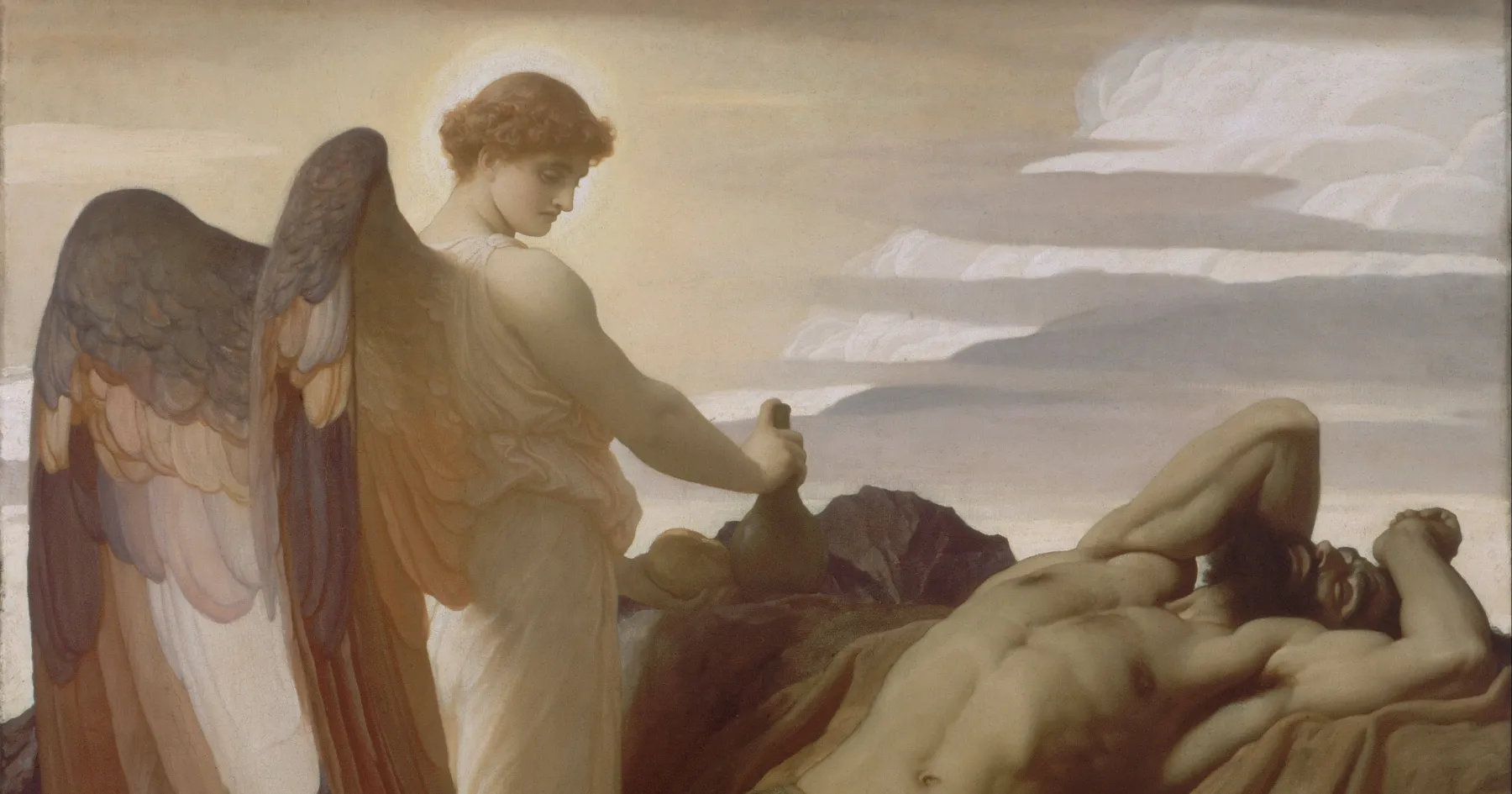
In a desolate, rocky land, a robust man sleeps, overcome by despair.
Beside him, a beautiful and majestic angel, having just descended, carries bread and water.
This work depicts the prophet Elijah from the Old Testament, who, fleeing from Queen Jezebel who sought his life, collapsed, wishing for death.
About 151 more words
Unlock this story's ending, and every article on MusicStory
- 42
Stories1–2 new every week
An archive of paintings paired with great music, made for a weekend night and a cup of coffee
- 282
Paintings with commentarygrowing daily
From simply looking to truly reading — the brushwork and the obsession of the masters
- 10
Music Librarygrowing daily
Know it first, and what reaches your ear changes — background music becomes art you keep for life
My Notes, unlimited
Every reading adds to a digital art notebook that is yours alone
Already have an account? Log in
Music recommended for this painting
Stories featuring this painting
Your Note
Write down what this painting made you feel in your art notebook.
Please sign up to write notes.
Sign up for freeRecommended Artworks
.webp)
More artists
If you find an error in this content, please let us know here
This site is protected by reCAPTCHA, and the Google Privacy Policy and Terms of Service apply.