
Ad Parnassum
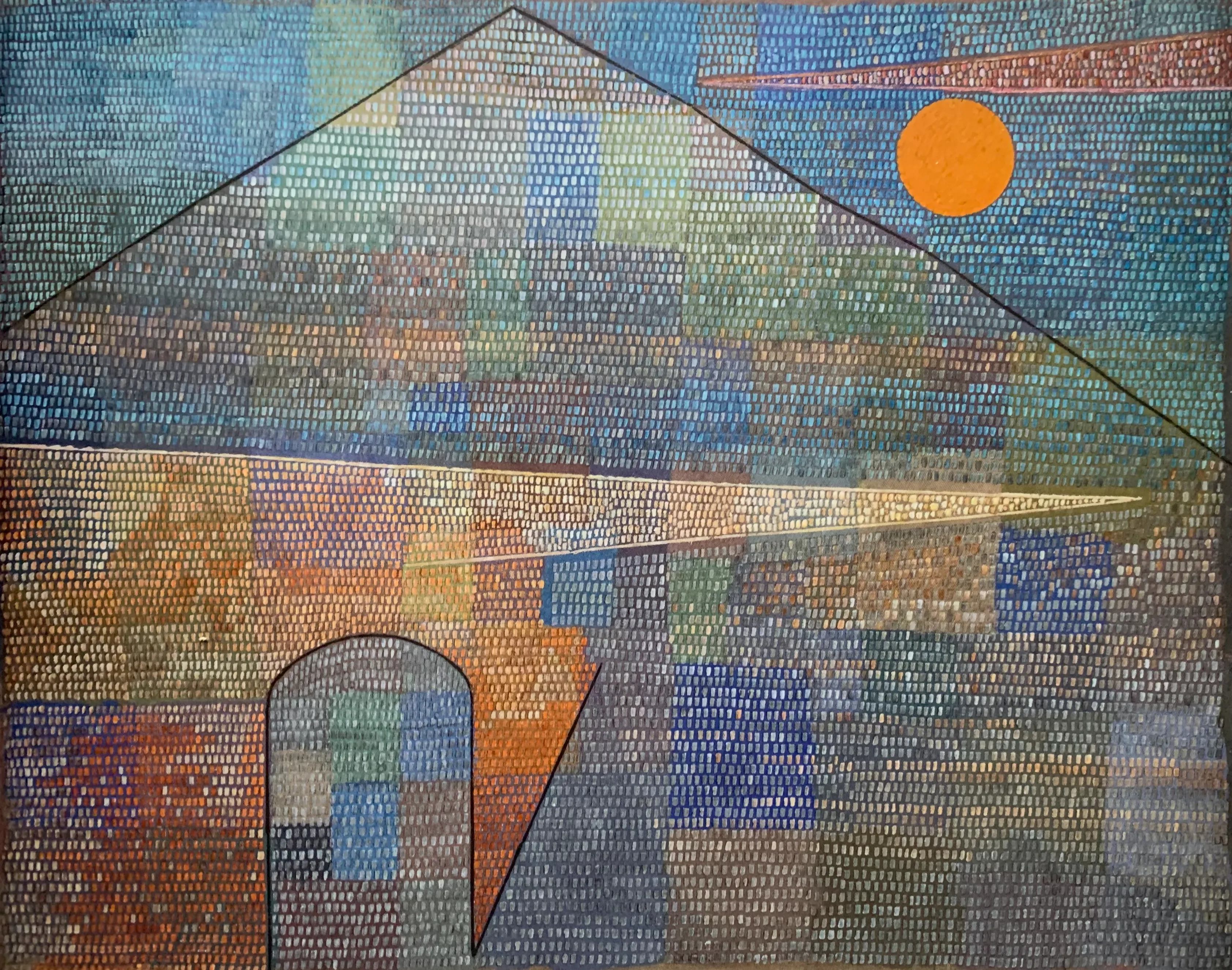
- Dimensions
- 100 × 126 cm
- Medium
- Oil, stamped line drawing, and pointillist dots stamped in white and overpainted in oil, on casein ground on stretched canvas
- Collection
- Kunstmuseum Bern (Bern, Switzerland)
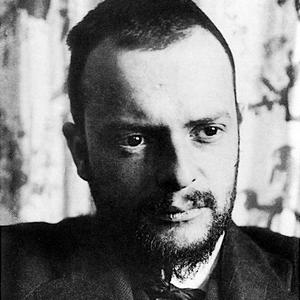
A Swiss-born painter of the early twentieth century who brought a rigorously str…
✦ Highlights (technique & color)
A white ground is laid over the canvas, upon which black lines and white dots are stamped. It possesses an exceptionally complex, multilayered structure, with oil paint meticulously layered dot by dot over the stamped white marks. The underlying white showing through the gaps creates a distinctive texture, as if the entire surface is glowing from within.
✦ The setting of this painting
This work creates a space where Klee's memories of his travels in Egypt from 1928 to 1929 intersect with the realm of Greek mythology. Merging the conceptual stage of Mount Parnassus—the sacred mountain said to be the home of the gods of art and music—with the structures of pyramids and the overwhelming gradations of light he witnessed in Egypt, Klee reconstructs them into his own spiritual landscape.
✦ Historical context
The year of its creation, 1932, was a tense period marked by the collapse of the Weimar Republic and the rapid rise of the Nazi Party. The following year, the suppression of avant-garde art escalated in earnest, forcing Klee to surrender his professorship and flee into exile in Switzerland. This monumental work was created in the final moments before the freedom of artistic expression in Germany was entirely dismantled.
At the center of the canvas rises a colossal, triangular mountain.
Near its summit floats a vibrant orange circle.
Toward the bottom, an arched gateway is drawn in bold black lines.
Countless square dots of color cover the entire surface like a mosaic,
as if radiating light from within.
This painting was created in Germany in 1932,
a tense period marked by the rapid rise of the Nazi Party and an uneasy atmosphere pervading society.
For this reason, it is often described as a work of tragedy—
a tragic cipher hastily produced by an artist living in dread of exile amidst the despair of Nazi suppression and dismissal,
later seized as "degenerate art" by the Nazis and sent abroad.
Yet in truth, this is a myth that overlooks the actual timeline.
When this painting was created, he was not living in fear.
In 1932.
The previous year, Paul Klee had resigned from the teaching post he had held for many years
to become a professor at the Düsseldorf Academy of Fine Arts.
His teaching load was lighter.
He had acquired a spacious studio.
It was a wonderful environment that allowed him to devote himself freely to his art.
Physically healthy before the onset of his illness,
he enjoyed great stability, both financially and mentally.
This was not a commissioned work;
it was born from his own pure artistic pursuit.
Klee was also a trained violinist.
What he pursued was the grand theme he had explored since the late 1920s: the complete fusion of music and painting.
Multiple melodies intertwine to produce beautiful harmonies—
it was this musical structure that he sought to express through dots of pigment.
He primed the canvas with a white ground,
then stamped black lines and white dots onto it.
Over this, he applied layers of oil paint,
meticulously brushing a variety of colors onto each individual dot.
About 202 more words
Unlock this story's ending, and every article on MusicStory
- 42
Stories1–2 new every week
An archive of paintings paired with great music, made for a weekend night and a cup of coffee
- 319
Paintings with commentarygrowing daily
From simply looking to truly reading — the brushwork and the obsession of the masters
- 10
Music Librarygrowing daily
Know it first, and what reaches your ear changes — background music becomes art you keep for life
My Notes, unlimited
Every reading adds to a digital art notebook that is yours alone
Already have an account? Log in
Your Note
Write down what this painting made you feel in your art notebook.
Please sign up to write notes.
Sign up for freeRecommended Artworks
Sources & references
More artists
If you find an error in this content, please let us know here
This site is protected by reCAPTCHA, and the Google Privacy Policy and Terms of Service apply.