
 日本語 (JA)
 English (EN)
- Dimensions
- 不明
- Medium
- Oil on canvas (or oil on board)
- Collection
- Private collection
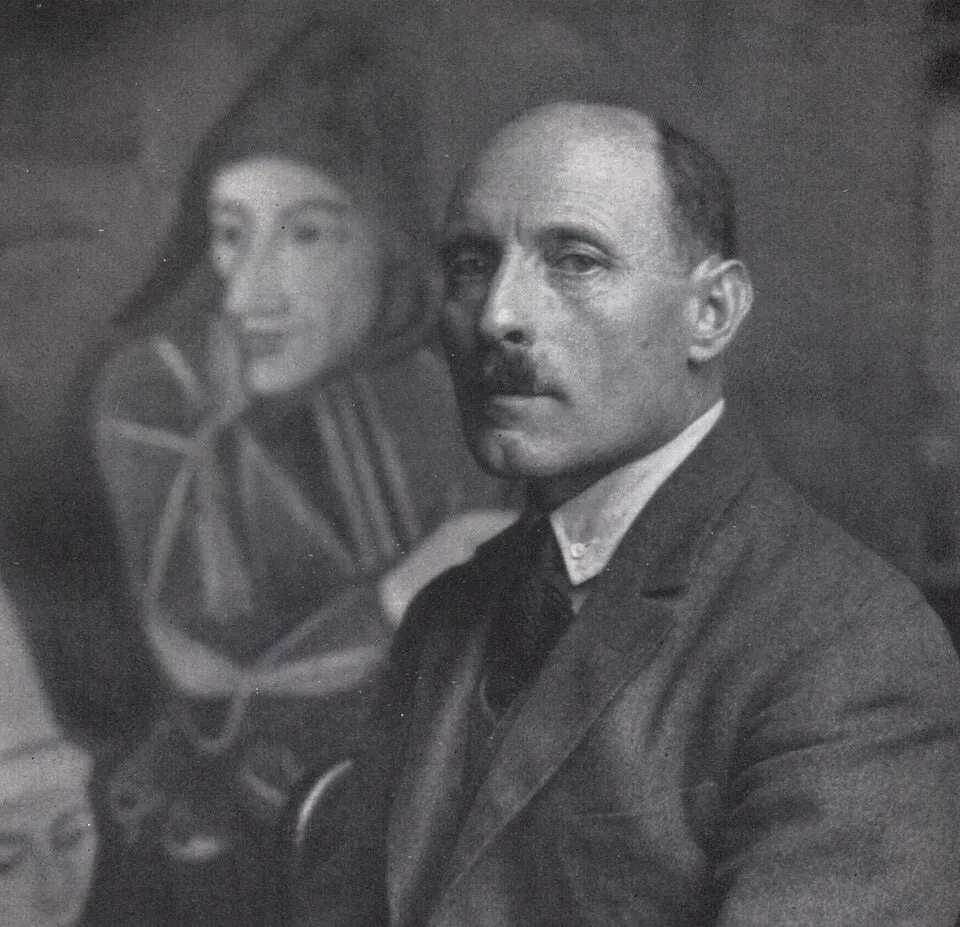
Karl Christian Ludwig Hofer or Carl Hofer was a German expressionist painter. He…
✦ Highlights (technique & color)
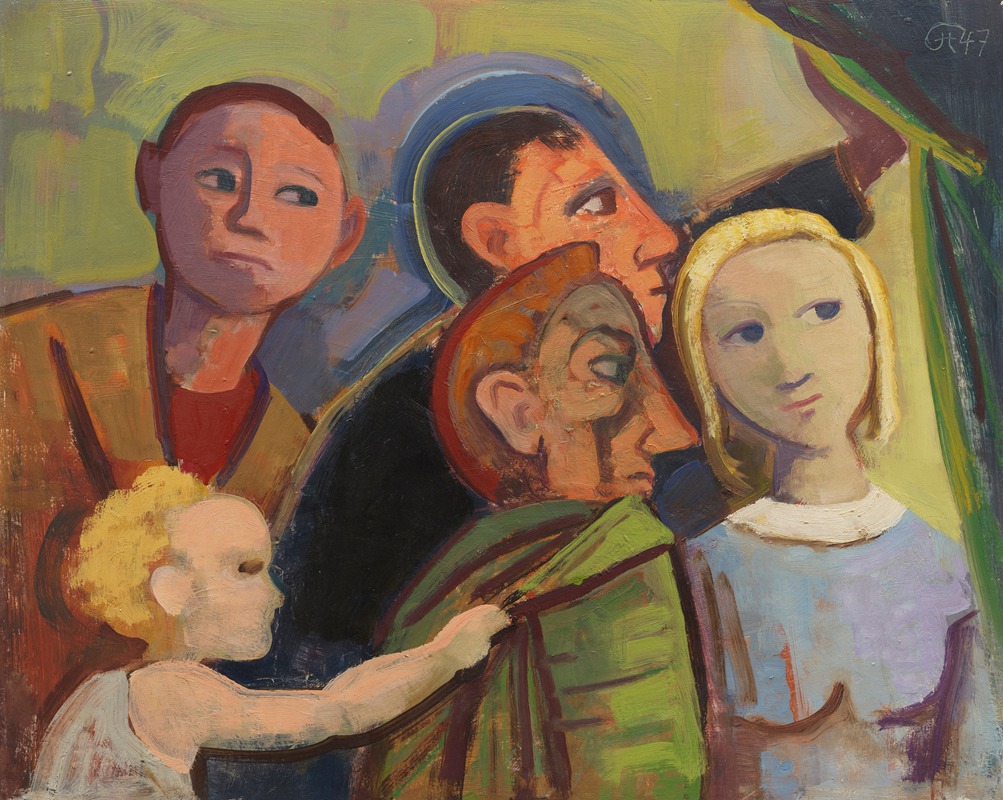
This work exemplifies the 'monumental constructivist realism' of Hofer's late career. Fine details of the figures are thoroughly pared down, endowing them with a massive presence as if sculpted from earth or sand. A somber palette reminiscent of post-war ash and charred rubble accentuates the eerie, haunting presence of the wide-eyed figures.
✦ The setting of this painting
The setting of this work is not a specific real-world location, but an austere, highly abstracted post-war street evoking geometric blocks, rubble, and cracked walls. People of varying generations and genders cluster tightly together, yet their gazes subtly diverge, devoid of dialogue or unity. The painting captures the 'silent alienation' of individuals trapped within a crowd.
✦ Historical context
In 1947, Berlin was divided under quadripartite Allied occupation, with tensions between East and West mounting toward the Berlin Blockade the following year. Following the collapse of the Nazi regime, citizens were confronted with the new absurdity of the Cold War. As the rules of survival shifted by the day, people desperately searched for signs of what was to come. This work reflects the profound suspicion and zeitgeist of post-war German society.
A huddle of people of various ages and genders.
They gaze intently at something beyond the canvas.
Yet their eyes never meet.
A silent crowd, devoid of dialogue.
Berlin, 1947.
The city was a mountain of rubble.
With the end of the Nazi era, people were confronted with a new absurdity.
The encroaching footsteps of the Cold War.
Living under four-power occupation, in uncertain days where yesterday's friend could become today's enemy.
In these extreme circumstances, people held their breath, anxiously watching developments outside.
A primal suspicion born of survival.
The title "Neugierige" means curious people, or onlookers.
This was no trivial, everyday curiosity.
That same year, a Munich cabaret staged a revue titled "We Were Curious People."
Citizens of the defeated nation had no choice but to watch the unfolding reality with bewilderment.
A profound isolation of the individual lurking within the collective.
Such was the atmosphere of the era.
About 123 more words
Read the rest of this commentary —
and step into a secret gallery
opened just for you
An "art letter" delivered to you every Saturday morning
Works, music and words chosen for your sensibility, from your artist-type result and the paintings you love
A library of masterpieces and music you can enjoy "in your own words", not just look at
A "digital art notebook" (unlimited) where your impressions build into your own taste
Unlimited likes and notes
¥980 / month¥0 today
¥980/month (tax incl.) from day 8. Cancel anytime.
Already have an account? Log in
Your Note
Write down what this painting made you feel in your art notebook.
Please sign up to write notes.
Sign up for freeRecommended Artworks
Sources & references
More art movements
Pre-Baroque
1 artworks
Victorian era
10 artworks
Impressionism
48 artworks
Late Pre-Raphaelite
10 artworks
Baroque
2 artworks
American Impressionism
5 artworks
Realism
4 artworks
Pre-Raphaelite
3 artworks
Barbizon School
5 artworks
Academic art
5 artworks
Luminism
3 artworks
Rococo
2 artworks
Symbolism
22 artworks
Neo-Impressionism
3 artworks
Ukiyo-e
1 artworks
Japonism
4 artworks
Edo period
1 artworks
Fauvism
1 artworks
Naturalism
9 artworks
Russian Realism
1 artworks
Post-Impressionism
13 artworks
Genre painting
9 artworks
Neoclassicism
3 artworks
ウィーン分離派
7 artworks
自然主義
1 artworks
ナショナル・ロマンティシズム
1 artworks
未来派
1 artworks
More artists
If you find an error in this content, please let us know here
This site is protected by reCAPTCHA, and the Google Privacy Policy and Terms of Service apply.