A German artist who integrated linear movement and layered color, rendering visible on the canvas not an imitation of external reality, but the dynamic process through which form comes into being.
LifeLife and works
Born near Bern, Switzerland, in 1879 to a music teacher father and a singer mother, Paul Klee was an accomplished violinist who was selected to perform as an extraordinary member of the Bern Music Association at the age of eleven. In 1898, he moved to Munich, Germany, to pursue painting, studying rigorous draughtsmanship and chiaroscuro at the Academy of Fine Arts. However, while studying Renaissance art during an educational journey to Italy beginning in 1901, he confronted a disconnect between his tonal technique and his sense of color. His early output remained largely confined to satirical linear etchings and sold poorly; he continued to create while managing household duties and childcare, supported by the income of his wife, the pianist Lily.
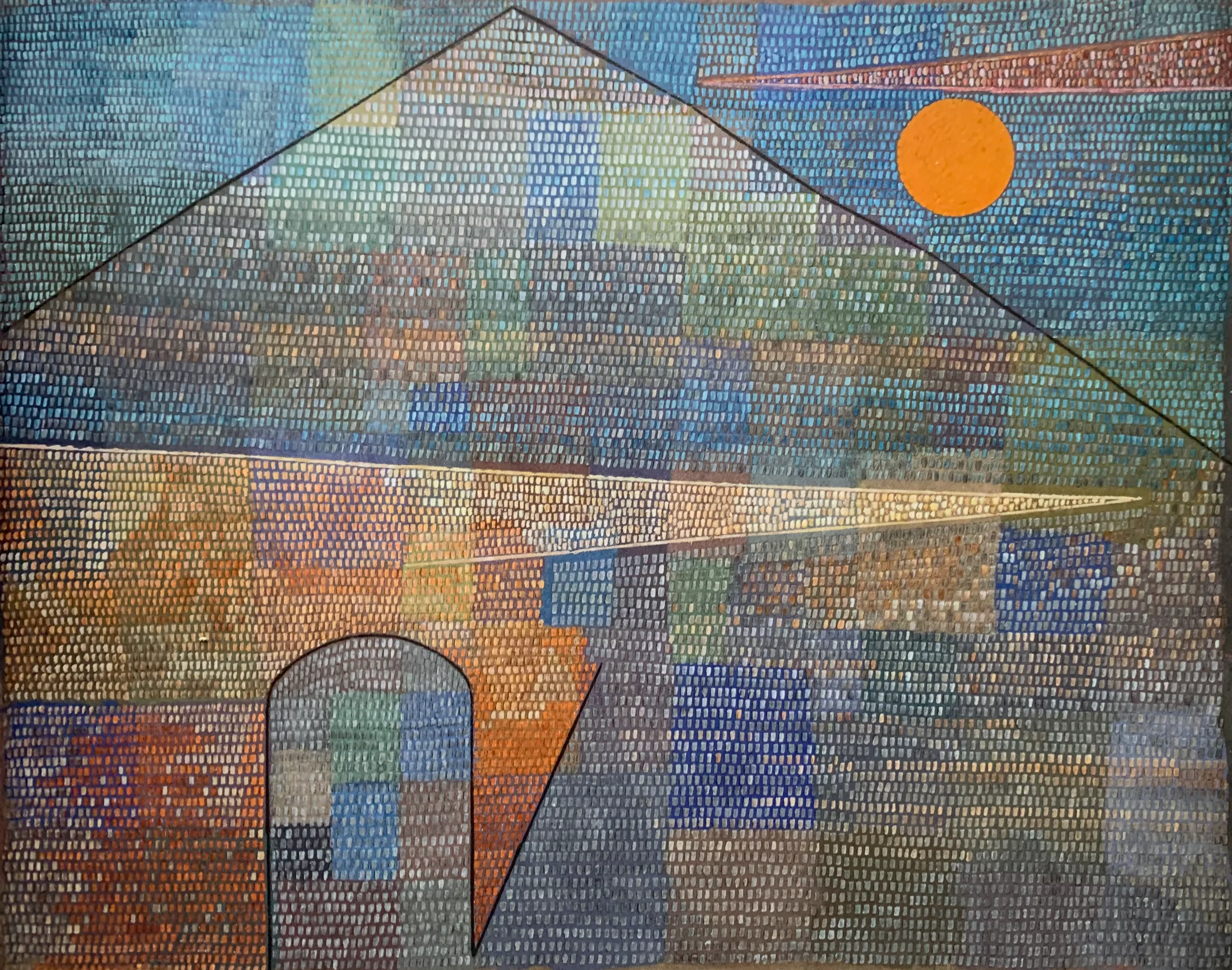
His artistic breakthrough came during a trip to Tunisia in April 1914. Inspired by the intense Mediterranean light, he devised a method of reducing figurative landscapes into geometric grids of color. In his diary, he wrote, "Color has taken hold of me forever," clearly embracing his identity as a painter of color. From this point on, he ceased to view the two-dimensional surface as a static frame, treating it instead as a dynamic field where time, linear motion, and the energy of color converge.
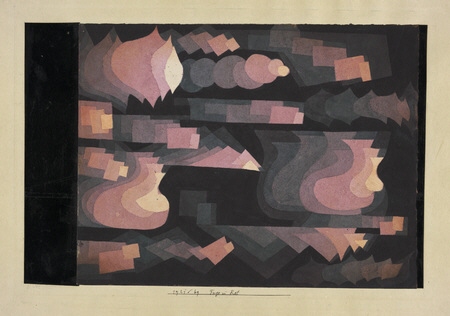
In 1919, Klee developed the "oil-transfer technique," in which he coated the reverse of a sheet of paper with black oil paint and traced a drawing onto the surface with a needle. Producing deliberate trembling lines and subtle oil bleeds, this method established a distinctive visual language that united the reproducibility of printmaking with the spontaneity of watercolor. After signing an exclusive representation contract with the art dealer Hans Goltz the following year and holding a major retrospective, his theoretical intellect gained wide recognition, leading to his appointment as a master at the Bauhaus in 1921.
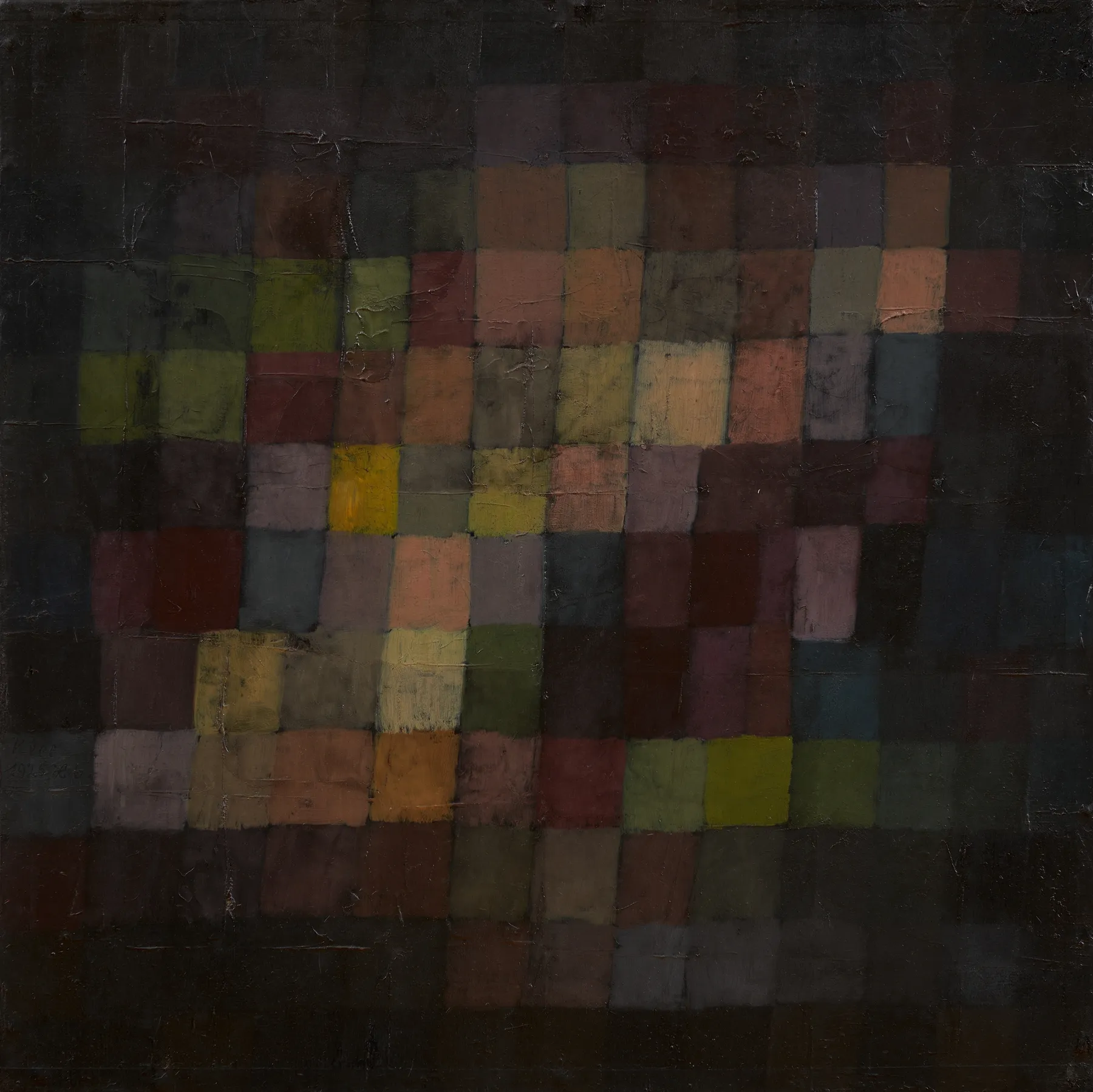
In preparing his Bauhaus lectures, Klee formulated a theory of form that addressed not static shapes, but nature's dynamic principles of genesis. Starting from the premise that "a line is a dot that went for a walk," he constructed mathematical grid models based on the physics of wavelengths and the acoustics of octave divisions, documenting them across more than 3,000 pages of personal notebooks and his book Pedagogical Sketchbook. Following a trip to Egypt in 1928, he began to fully realize his "polyphonic painting," visualising the counterpoint of Bach by superimposing translucent layers of color to construct multi-dimensional pictorial spaces.
With the rise of the Nazi regime in 1933, Klee was dismissed from his professorship at the Düsseldorf Academy of Fine Arts, and his home was searched. In December of that year, he went into exile in Bern, Switzerland; his German bank accounts were frozen, and in 1937 his works were pilloried in the "Degenerate Art" exhibition. Furthermore, from 1935 he suffered from scleroderma, an incurable disease of unknown origin that causes hardening of the skin and internal organs, which temporarily caused his artistic production to plunge.
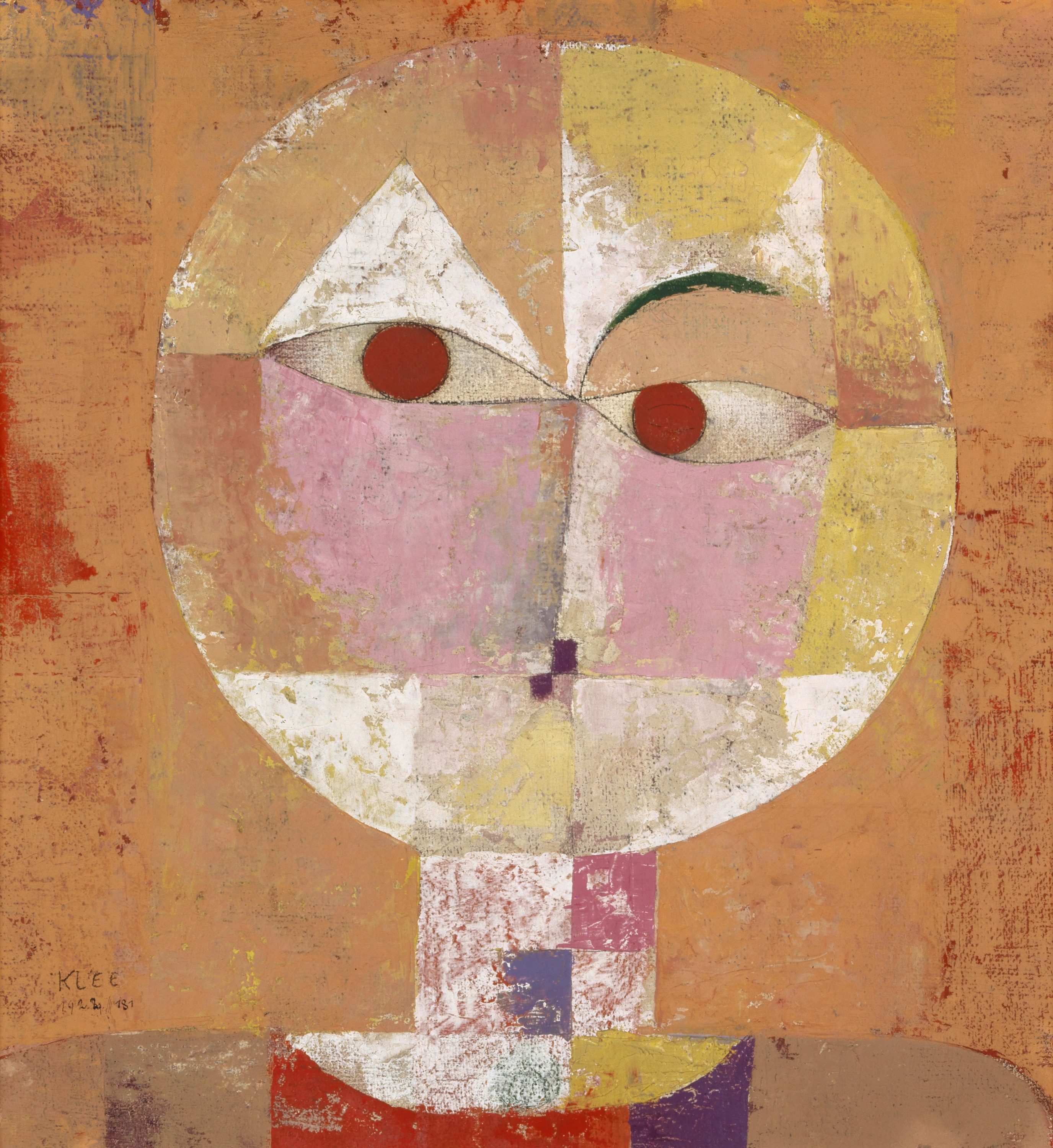
Amid political isolation and worsening illness, his compositions shifted from intricate grids to a symbolic, ideographic style, employing bold black contours over coarse grounds to confront themes of death and rebirth. Sensing his impending mortality, he produced 1,253 works in 1939, the most prolific year of his life. On June 29, 1940, shortly before final approval for his Swiss citizenship could be granted, he died of heart failure at a hospital near Locarno.
Angelus Novus, painted in 1920 using his oil-transfer technique, was acquired by the philosopher and critic Walter Benjamin, who kept it in his possession for the rest of his life. Drawing inspiration from the work, Benjamin developed his concept of the "Angel of History" in his final essay. Today, the music archives of the Zentrum Paul Klee in Bern house scores for more than 450 contemporary musical compositions based on Klee's art, including works by Pierre Boulez.