
Moonrise over the Sea
1822
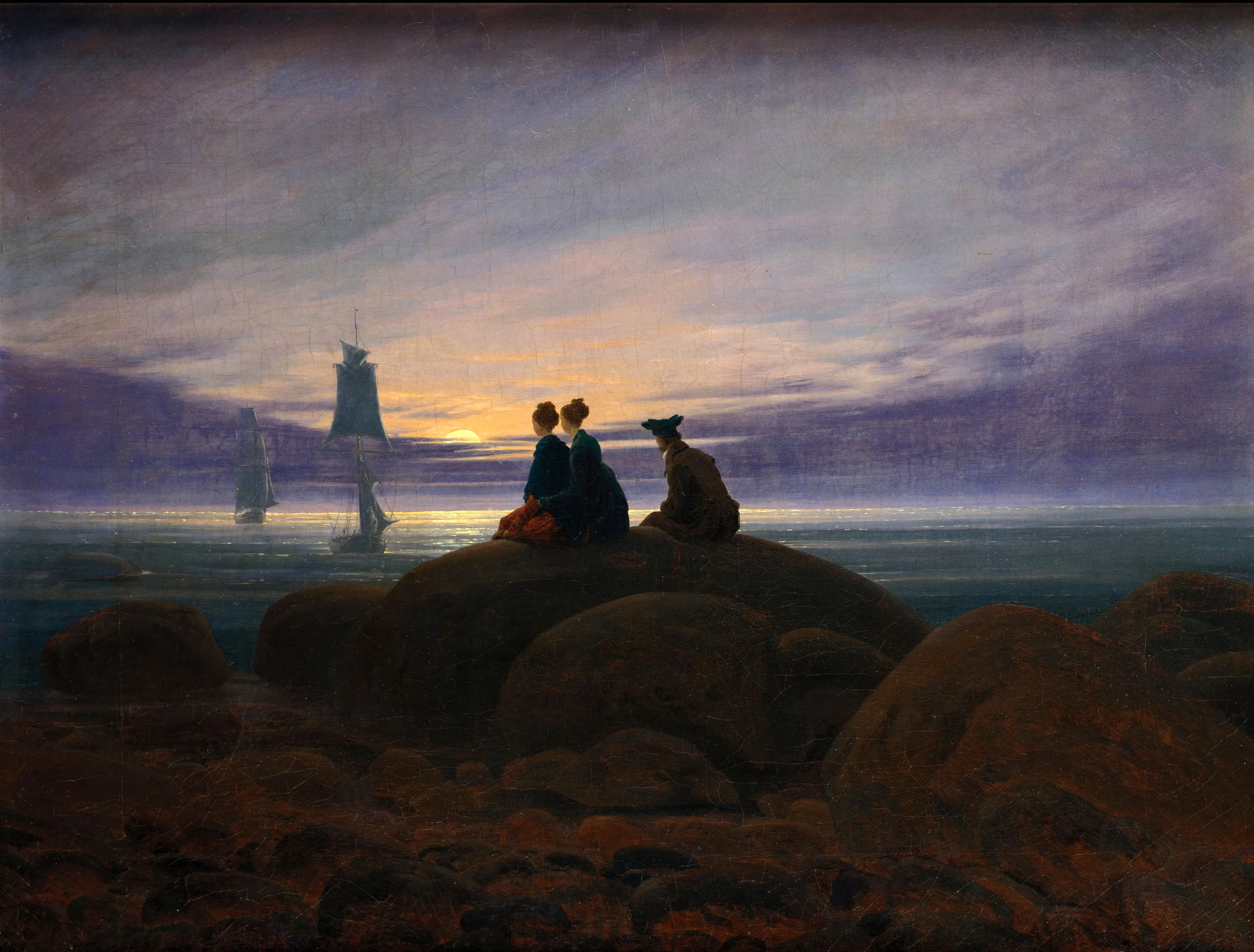

Active from the late eighteenth to the early nineteenth century, this German pai…
A twilight sky painted in shades of purple and orange. The moon, peeking through the clouds, illuminates the calm sea surface with a mystical golden glow. On a large rock by the shore, two women and one man sit close together, gazing at two sailboats quietly approaching the shore.
At first glance, it appears to be a romantic and tranquil twilight scene, awaiting the arrival of night.
However, the German Romantic master Caspar David Friedrich imbued this painting with a much deeper and more poignant metaphor of 'life and death'.
About 212 more words
Read stories of masterpieces for free
Your Note
Write down what this painting made you feel in your art notebook.
Please sign up to write notes.
Sign up for freeRecommended Artworks

![Untitled [Rescue boat]](https://musicstory-assets-682855971161-ap-northeast-1-an.s3.ap-northeast-1.amazonaws.com/artworks/paintings/untitled-rescue-boat.jpg)




More artists








If you find an error in this content, please let us know here
This site is protected by reCAPTCHA, and the Google Privacy Policy and Terms of Service apply.