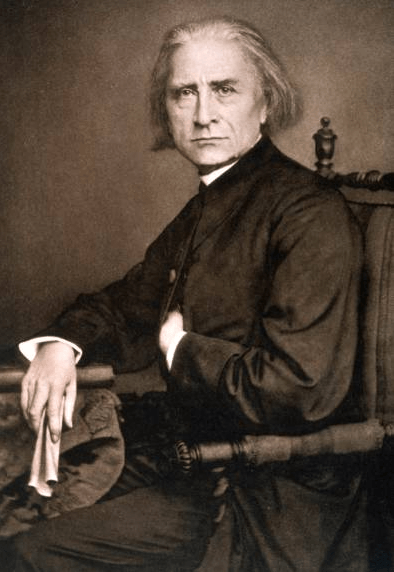
1811–1886 (Hungary)
A Hungarian composer who was a leading figure of 19th-century Romanticism and one of the greatest pianists in music hist…
A tale of quiet prayer and introspection that Liszt entrusted to the poetic resonance of a nocturne. Carried upon an accompaniment of gentle waves, wordless emotions are sung into being.
Listen to a recording
Consolation No. 3 in D-flat major, S. 172/3
Piece Guide & Analysis
The Scene It Evokes: The Meaning Behind the Title
On a quiet evening, when you dim the lights and lose yourself in solitary contemplation, what kind of landscape unfolds within your heart?
When listening to classical music, many feel an instinctive pressure, as though they must correctly decipher the composer's intentions.
Yet Franz Liszt's piano piece Consolation No. 3 in D-flat major, S. 172/3 is not about finding someone else's definitive answer; it is a gentle work that invites us to turn inward and quietly commune with our own souls.
Between 1849 and 1850, when this piece was composed, Liszt had arrived at a profound turning point in his life. He had just brought an end to his exhausting touring career as a dazzling virtuoso who had sent audiences across Europe into frenzies of excitement. Accepting the invitation of Grand Duchess Maria Pavlovna of Saxe-Weimar-Eisenach, he settled down to serve as Kapellmeister at the Weimar court.
Grand Duchess Maria Pavlovna was an ardent patron who devoted countless hours to exploring music deeply alongside Liszt. Having stepped away from the glittering concert stage, this close bond—rooted in a shared, serene pursuit of music's essence—formed the spiritual foundation of the entire cycle. Distanced from the roar of applause, Liszt likely found in this period a precious sanctuary to reflect upon his own inner world.
The cycle's title, Consolations, is the French word for "solaces" or "comforts." Its origin is widely believed to stem from Liszt's deep affinity for the Romantic literature of his day. The most compelling source is thought to be the poem "A Tear, or Consolation" from the collection Poetic and Religious Harmonies by the poet Alphonse de Lamartine.
Around the same time, Liszt was also working on his monumental piano cycle sharing the title of Lamartine's anthology, showing how deeply intertwined these literary themes were. Another cited influence is the 1830 poetry collection Consolations by the French literary critic Charles-Augustin Sainte-Beuve, which sought to mend the loss of faith through the bond of friendship. Tellingly, the French edition published in Paris in 1850 bore the subtitle Six Poetic Thoughts.
Why did Liszt choose the key of D-flat major for this third piece? In Liszt's tonal aesthetics, E major was frequently employed to evoke celestial light and divine love. D-flat major, by contrast, represented something far more introspective and intimate—a nocturnal haven of profound serenity.
Among music lovers, a popular legend has long circulated that this work was composed as an official memorial or elegy for his close friend Frédéric Chopin, who died in October 1849. Listening to its poignant, tender melody, it is easy to imagine it as a tribute born of grief, yet historical documentation tells a slightly different story.
Nowhere in Liszt's letters, manuscripts, or first editions is there any record formally identifying this piece as an in memoriam for Chopin. Nevertheless, it shares striking affinities with Chopin's Nocturne in D-flat major, Op. 27, No. 2, published in 1836: the identical key, the same meter, a remarkably similar wide-arpeggio accompaniment in the left hand, and a singing cantabile line in the right. Modern musicology therefore tends to view the piece not as a public memorial, but as Liszt's private expression of mourning and homage, masterfully adopting Chopin's idiomatic style.
Nor is there any record of an official public premiere. At the time, short piano works—character pieces evoking specific moods or poetic scenes—were performed not in large concert halls for the public, but in intimate salons, such as Liszt's Weimar residence, the Altenburg, before an inner circle of friends. Furthermore, unlike his fearsomely virtuosic showpieces, its gentle, accessible technical demands allowed it to become a cherished staple in homes and salons throughout the latter half of the nineteenth century.
The Narrative: What Unfolds in the Music
In truth, Liszt did not originally conceive this piece as the third Consolation. He began composing the cycle in 1844, assembling a first version of six pieces between 1844 and 1849. Rather than publishing this initial version, however, Liszt undertook an extensive revision between 1849 and 1850, boldly replacing entire movements.
The most dramatic transformation occurred in this very piece. The original third piece in the first version was an E-major work based on Hungarian folk themes, but Liszt discarded it completely from the cycle. He later reused its theme in the Hungarian Rhapsody No. 1 in F minor, S. 244/1, and in its place composed an entirely new piece: the D-flat major Consolation No. 3 we know today.
This newly born piece opens softly with a deep, resonant bass note. While the tonic D-flat is sustained beneath for five measures, the left hand begins to ripple like gentle waves in broken chords. Floating atop these waves, the right hand tenderly introduces a poignant, singing melody reminiscent of Italian bel canto.
As the music quietly unfolds, shadows of melancholy gently cast themselves over the serene light. The harmony shifts naturally into the plaintive key of F minor, subtly tugging at the listener's heartstrings. After momentarily drifting into the warm glow of E major, it returns peacefully to D-flat major to close this first section.
In the next passage, the opening melody is heard once again, this time an octave higher. In this higher register, it brings a luminous warmth, as if gentle sunlight were parting through an overcast sky. Yet this radiance is fleeting, and the music soon leans back into the shadows of F minor.
Entering the middle section, the emotional contours deepen still further. Turning suddenly from somber F minor to its parallel F major, the landscape then descends by a half step into A minor. Here, the right hand's melody thickens into parallel thirds, radiating a deeply moving, heartfelt resonance. As if soothing the heart's quiet agitation, the emotions gently resolve, guiding the music home once again to the familiar solace of D-flat major.
In the closing coda, the serene resonance of a plagal cadence in the home key of D-flat major lingers peacefully. Then, just before the end, an unexpected chord—a mysterious flat-submediant chord built on B-double-flat—drifts softly into the silence. After this astonishing harmony shimmers like a faint ray of hope in the dark, the music fades into the softest whisper (ppp), dissolving like particles of light.
The poignant beauty of this melody transcended the piano to capture the hearts of countless musicians. Liszt himself transcribed it for organ and harmonium in the 1870s, and collaborated with Belgian cellist Jules de Swert on an arrangement for cello and piano. In the late nineteenth century, the legendary harpist Edmund Schuëcker arranged it for solo harp, where it became a cherished staple due to how naturally its harmonies blossom within the harp's rich overtones. Today, it continues to be performed across the globe in arrangements for violin, flute, and voice.
The spirit of this piece echoes quietly in modern literature as well. Kazuo Ishiguro's 1995 novel The Unconsoled follows the bewilderment and alienation of a renowned pianist. Scholars have noted that both the title and the underlying themes of the novel resonate deeply with the motif in Lamartine's verses: comforting those who cannot be consoled.
Our ability to experience this work in its authentic form today is thanks to the painstaking dedication of musicologists. Beginning in the 1970s, the New Liszt Edition compiled an authoritative text by collating autographs and early editions from around the world. A landmark moment came in 1992, when the long-dormant first version was rediscovered in the Weimar archives and published alongside the second version by G. Henle Verlag.
Musical Analysis: The Magic of Two Overlapping Times
Where does the unique serenity and dreamlike solace of Consolation No. 3 come from? While it is deeply comforting even when absorbed casually, understanding Liszt's compositional craftsmanship reveals its beauty in vivid, three-dimensional detail. Here are three essential musical secrets that anyone can appreciate.
About 770 more words
- ・The Truth Behind the Myth: A Tribute to Chopin
- ・The Performance Dilemma Posed by the Opening Bass
- ・A Floating Sensation Born from Conflicting Pulses in Each Hand
- ・A Harmonic Surprise Hidden in the Final Measures
Unlock this story's ending, and every article on MusicStory
¥07-day free trial
Unlimited access to 371 stories, paintings and pieces
- ・The first 7 days are completely free. Cancel within the trial and nothing is charged.
- ・From day 8, ¥980/month (tax incl.). Cancel anytime from your account page.
- 42Stories
- 318Paintings with commentary
- 11Music Library
- My Notes, unlimited
Already have an account? Log in
Your Note
Write down what you felt and learned from this piece in your art notebook.
Please sign up to write notes.
Sign up for freeSources & references
- www.youtube.com
- www.youtube.com
- www.youtube.com
- ontomodb.jp
- www.prestomusic.com
- en.wikipedia.org
- www.scribd.com
- www.octoopus.art
- juilliardstore.com
- www.classicals.de
- en.wikipedia.org
- www.scribd.com
- www.henle.de
- www.ficksmusic.com
- academic.oup.com
- eumakplus.com
- www.pianolibrary.org
- www.pianio.blog
- www.pianostreet.com
- www.chineseperformingarts.net
This site is protected by reCAPTCHA, and the Google Privacy Policy and Terms of Service apply.
If you find an error in this content, please let us know here