1810–1849 (Poland)
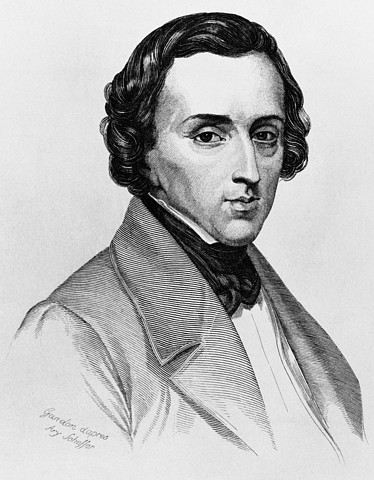
フリデリク・ショパンは、19世紀のロマン派音楽を代表するポーランド出身の作曲家であり、その生涯のほぼすべてをピアノ独奏曲に捧げた人物です。
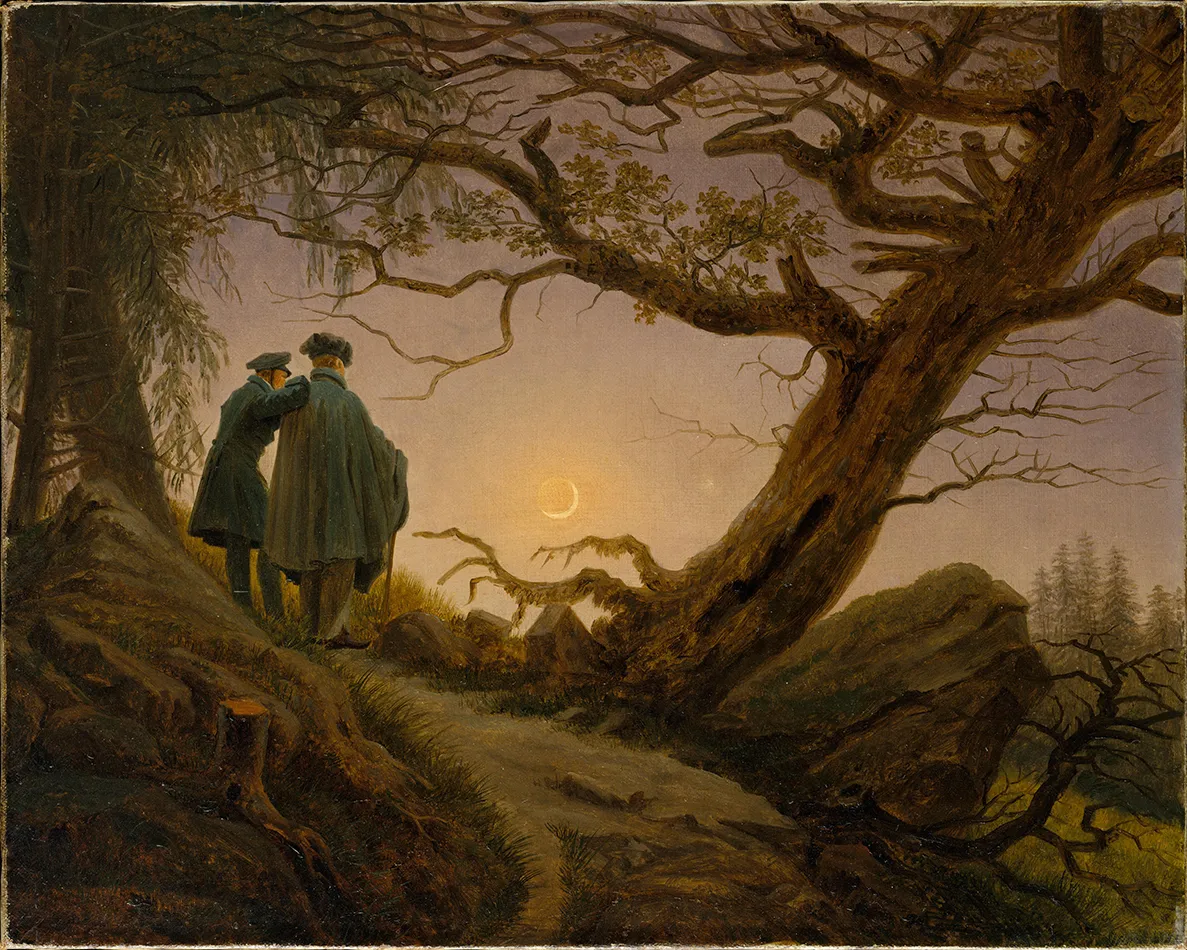
A tale of a solitary exile's prayer—yearning for a homeland never to be seen again, a feverish eruption of emotion, and the resolve to press onward despite unhealed wounds.
Listen to a recording
Étude in E major, Op. 10, No. 3, "Farewell"
Piece Guide & Analysis
What Scene Does It Paint?—The Origin of Its Title
Paris, August 25, 1832. The young Frédéric Chopin inscribed this precise date upon the autograph fair copy of a piano piece. It marked the moment of final completion for this Étude in E major, a work that would come to be cherished around the world. Chopin's life at the time was deeply intertwined with the political turmoil in his native Poland. Receiving news while abroad that the November Uprising of 1830 against Russian rule had been brutally suppressed and that his homeland had fallen, he suffered a profound psychological blow. Arriving in Paris in 1831, Chopin grew acutely conscious of his identity as a political exile. It was likely amidst this solitary life in exile, burdened by the realization that he might never set foot on native soil again, that the deep and passionate melancholy pervading this piece was nurtured.
While this work is affectionately known as "Farewell" and often said to depict a patriotic parting, Chopin himself never once bestowed such a literary title upon it in his lifetime. Nicknames widely recognized in the West, such as "Tristesse" (Sadness) or "L'adieu" (Farewell), were applied arbitrarily by later critics and sheet music publishers eager to emphasize the piece's melancholic character. In Japan, the title "Wakare no Kyoku" (Farewell Song) took permanent root through a 1934 biographical film about Chopin. When the French-language version was released in Japan the following year, that title was adopted for the Japanese release, and the melody itself, used with striking prominence throughout the film, came to be called by that very name.
There is also a famous anecdote that during a lesson with his favored German pupil Adolf Gutmann, Chopin was moved to tears by the beauty of this piece, raised his arms to the heavens, and cried, "Oh, my fatherland!" Yet this, too, was a reminiscence recounted decades after Chopin's death from the memory of an aging Gutmann, and it is widely thought to contain the dramatic exaggeration so common in the late Romantic era. In truth, the piece was purely an étude, composed not upon commission from a specific patron, but out of Chopin's own artistic ambitions and commercial publishing intentions. Incidentally, the Op. 10 set of études containing this piece was dedicated to his close friend Franz Liszt; however, an engraver's error in the first impression resulted in it being mistakenly inscribed as "J. Liszt," an error that speaks volumes about the publishing circumstances of the day.
The Narrative—What Unfolds in This Music
This composition outlines a narrative unfolding across three broad scenes, cast in ternary form (A–B–A'). The opening scene is a realm of quiet, lyrical song. Sustained by a melody of such perfect balance that Chopin reportedly confessed to Liszt and others that he had never written another so beautiful, it sways gently like calm waves. It evokes a quiet scene of reminiscence, as though gazing from afar upon the fair landscapes of a lost homeland.
Upon entering the middle section, however, the scenery transforms entirely. Just as the tempo takes on a slightly more animated stride, dark clouds gather without warning, unleashing a sequence of chords mingling anxiety and manic brightness. The melody begins to take erratic leaps, soon escalating into a feverish climax where both hands cross furiously. It sounds like an uncontrollable eruption of emotion, a poignant cry against destiny. Then, as the storm passes and the reverberations of that explosive energy subside, the beautiful opening melody returns. Yet it is no longer as pristine as before. It reemerges as a brief, distilled recollection bearing deep scars, finally breathing its last in a gentle dissolution into the E-major tonic chord.
This exceptionally beautiful melody has transcended classical music, inspiring countless stories in its wake. Leopold Godowsky, one of the greatest virtuoso pianists of all time, arranged its intricate polyphony into a study in D-flat major for the left hand alone, pushing technical virtuosity to its absolute limits. In popular music, too, it has seen diverse adaptations—from a straightforward pledge of love in Jo Stafford's "No Other Love" to a vocalization of the depths of the night by Britain's Ken Dodd. In Japan, it served as the overarching theme for Nobuhiko Obayashi's film Lonely Heart (Sabishinbou), playing a defining role in coloring the bittersweet ache of adolescence and the aesthetic of parting.
Musical Analysis—The Asymmetrical Aesthetic of Melody and Accompaniment
The singular beauty and tension of this piece are supported by an intricately calculated musical architecture. Here, let us unravel its secrets from three perspectives: formal construction, harmonic function, and the characteristics of the period instrument.
About 979 more words
Unlock this story's ending, and every article on MusicStory
¥07-day free trial
Unlimited access to 334 stories, paintings and pieces
- ・The first 7 days are completely free. Cancel within the trial and nothing is charged.
- ・From day 8, ¥980/month (tax incl.). Cancel anytime from your account page.
- 42Stories
- 282Paintings with commentary
- 10Music Library
- My Notes, unlimited
Already have an account? Log in
Your Note
Write down what you felt and learned from this piece in your art notebook.
Please sign up to write notes.
Sign up for freeSources & references
- www.youtube.com
- www.youtube.com
- www.youtube.com
- chopin.nifc.pl
- blogs.ubc.ca
- inagara.octsky.net
- ja.wikipedia.org
- note.com
- en.wikipedia.org
- www.yourclassical.org
- www.pianostreet.com
- pianodao.com
- blogs.ubc.ca
- faber-product-media.s3.amazonaws.com
- www.youtube.com
- musescore.com
- www.allcinema.net
- classicalcandor.blogspot.com
- www.allmusic.com
- classical.music.apple.com
This site is protected by reCAPTCHA, and the Google Privacy Policy and Terms of Service apply.
If you find an error in this content, please let us know here