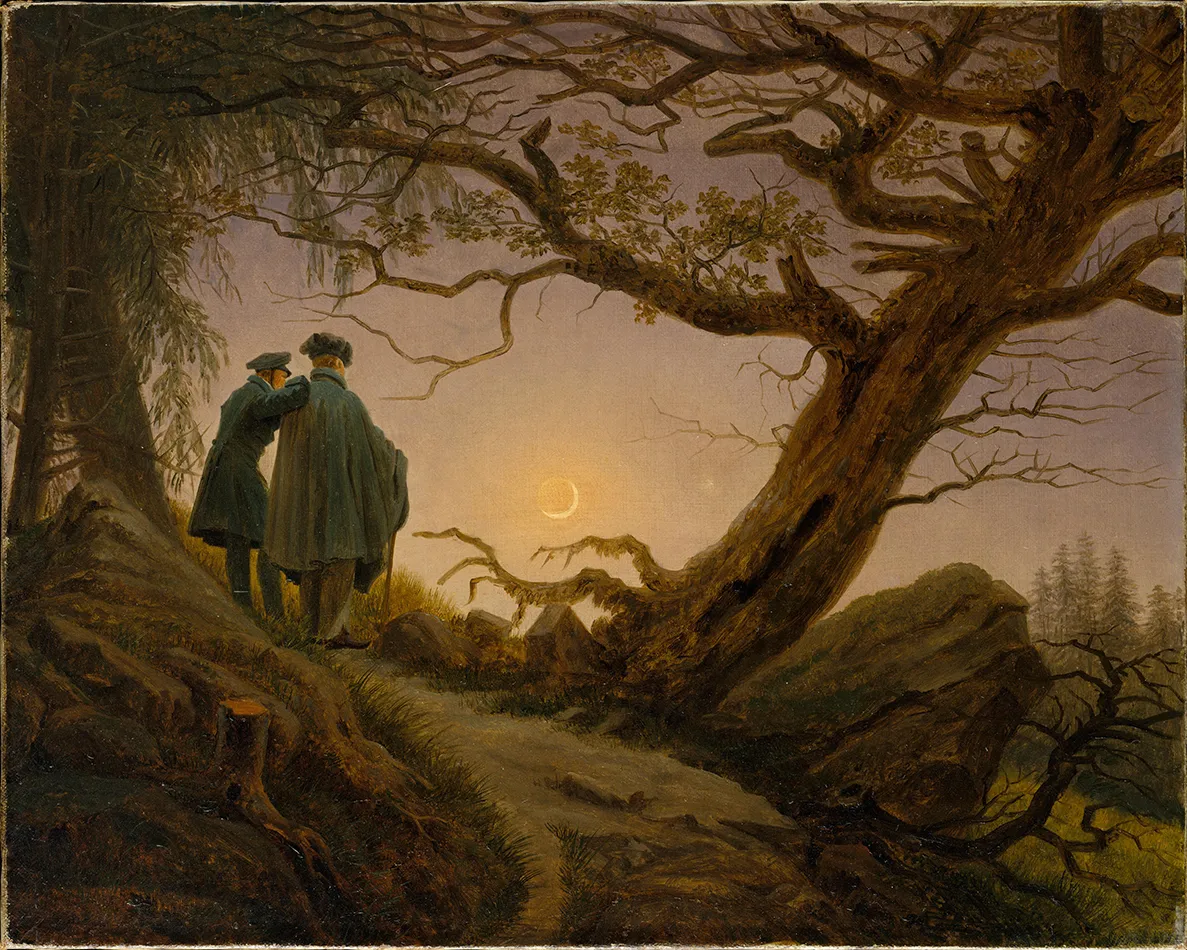
Waltz No. 1 in E-flat major, Op. 18 "Grande valse brillante"
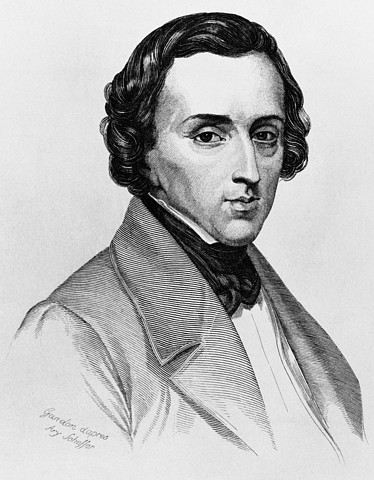
1810–1849 (Poland)
フリデリク・ショパンは、19世紀のロマン派音楽を代表するポーランド出身の作曲家であり、その生涯のほぼすべてをピアノ独奏曲に捧げた人物です。
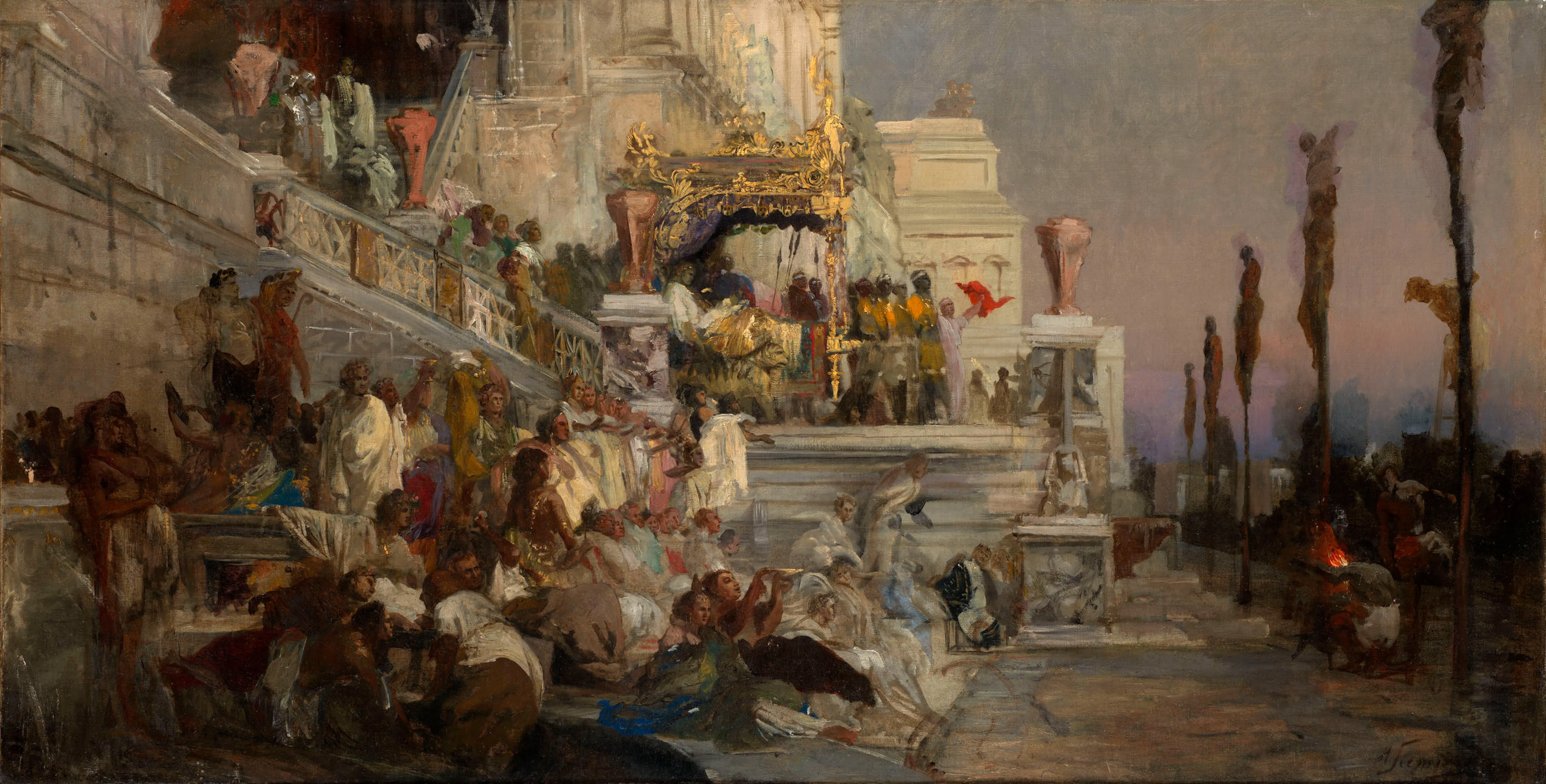
A tale of sparkling conversation and intimate moments unfolding in the refined salons of Paris. Far removed from the frenzied dance halls of Vienna, allow us to guide you into the idealized ball that Chopin conjured within the microcosm of the piano.
Listen to a recording
Waltz No. 1 in E-flat major, Op. 18 "Grande valse brillante"
Piece Guide & Analysis
The Scene and Title: What Lies Behind the Music
When listening to this piece, one might readily imagine a glittering grand ball where couples twirl beneath radiant chandeliers. Yet is this music genuinely meant for dancing?
In 1830, shortly before leaving his native Poland, the young Frédéric Chopin made his earliest sketches for this waltz in Warsaw. Cut off from returning home by political turmoil, he journeyed through Vienna and eventually arrived in Paris, the cultural capital of Europe. It was in 1833, as his new life in Paris took firm root, that the piece reached its final form.
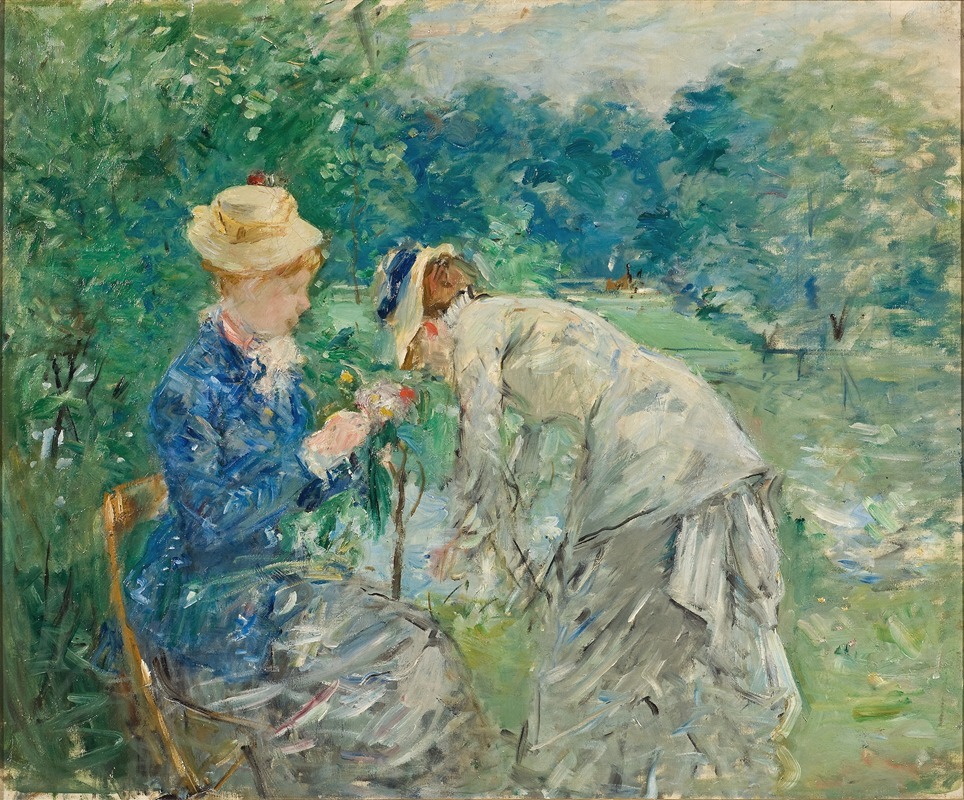
During this period, Chopin’s days in Paris were enriched by close associations with leading artistic figures such as the opera composer Vincenzo Bellini and Franz Liszt. Bellini’s circle and the musical soirees hosted by Madame Lina Freppa provided an elegant setting for improvising at the piano, singing, and sophisticated conversation. The polished, distinctly Parisian character of this waltz emerged naturally from this cutting-edge salon culture.
Upon its completion, Chopin dedicated the score to Laura Horsford, a devoted English pupil. An extant manuscript bears this dedication alongside the date of July 10, 1833. When the piece was published in 1834, the subtitle "Grande valse brillante" was appended through a blend of publisher marketing strategy and Chopin’s own agreement. Because Chopin prepared separate proofs for publishers in France, Germany, and England, the surviving first editions feature a surprising number of discrepancies in dynamics and phrasing slurs.
While this work is sometimes described as an imitation of the practical dance waltzes popular in Vienna at the time, particularly those of Johann Strauss I, the reality is quite different. Chopin had witnessed the public mania for the waltz during his stay in Vienna, but his letters reveal a cool detachment from it. Rather than imitating Viennese functional dance music, he created an idealized concert waltz, refined to the highest degree to suit the aristocratic salons of Paris. Through extreme tempo fluctuations, intricate inner counterpoint, and unexpected grand pauses, Chopin crafted a work to which it is physically impossible to dance conventional steps.
The published waltz provoked polarized reactions among contemporary critics. Robert Schumann praised its aristocratic nobility, declaring that it was music "for countesses to dance to," whereas the conservative German critic Ludwig Rellstab attacked its daring harmonies and modulations as ear-splitting dissonances. Despite such criticism, the piece quickly gained immense popularity and secured an enduring place as a crowning achievement of the salon style in Romantic piano music.
The Narrative: What Happens in the Music
Within a single movement, this waltz links seven contrasting dance themes into a grand, exquisitely detailed design, much like a continuous story unfolding over the course of an evening.
The journey opens with bold, repeated notes in E-flat major, ringing out like a fanfare of trumpets or horns summoning guests to the ball. This is followed by a brilliant theme built on ascending arpeggios that suggest the swirling motion of a waltz. Here, Chopin employs a signature technique of suspension, intentionally delaying the resolution of harmonies and gradually slowing the tempo before reaching a graceful conclusion.
As the music moves into A-flat major, a playful theme marked by light, repeated staccato notes takes center stage. Bouncing steps and smooth contours alternate, evoking the witty banter of salon guests.
The music then shifts into D-flat major, offering an exceptionally elegant conversational episode that feels like a momentary respite from dancing. Two voices in the right hand intertwine in counterpoint, sounding very much like an intimate vocal duet.
What follows is a series of vivid episodes: humorous passages where scales and arpeggios cross paths, a rich cantabile climax in G-flat major where the melody soars in a single breath, and a glittering theme in B-flat minor adorned with ornaments that sparkle like stars in the night sky. A sentimental, gently undulating melody then drifts away with an improvisatory touch, fading into silence.
In the final stretch, the ornamental motifs and repeated-note figures from earlier sections coalesce into a vibrant mosaic, gathering speed toward an exhilarating conclusion.
The sheer brilliance and dramatic salon atmosphere of this waltz continued to inspire later generations of artists. For the 1909 premiere of the ballet Les Sylphides, prominent composers including Igor Stravinsky orchestrated the piece. The self-contained sonic world of a single piano was expanded into a rich orchestral palette, driving the entire ballet to a breathtaking climax.
Musical Analysis: A Salon Trompe-l'œil of Meter and Sound
What elevates this piece far beyond a simple ballroom dance is its intricate architecture and rhythmic ingenuity. Here, we explore Chopin’s artistry through three lenses: shifting rhythmic landscapes, harmonic suspense, and dramatic formal pacing.
First is the shifting rhythmic landscape. While a waltz is fundamentally grounded in triple meter, Chopin subtly smuggles competing pulses into this three-beat frame.
In the second half of the introduction and during the intimate conversational passages of the central section, Chopin employs the hemiola. By placing accents that imply a two-beat feel across a three-beat structure, he momentarily disrupts the listener’s sense of meter. Just as one settles into a regular dance step, the ground seems to float away, generating thrilling momentum and tension.
Furthermore, in the playful A-flat major section, the right hand presents a two-beat cross-rhythm against the steady three-beat pulse in the left hand. These two streams of musical time proceed simultaneously, wrapping the listener in a delightful, dizzying illusion.
When you hear this two-beat pulse emerging within the regular three beats, does it feel like weightlessness underfoot, or like having your arm gently caught by an unexpected partner?
Next is the use of harmony to create anticipation. The distinct elegance of Chopin’s music is carefully governed by harmonic progressions. In the main theme of the first section, where one would expect an immediate resolution to the stable tonic chord, Chopin makes generous use of non-harmonic tones, such as appoggiaturas and passing notes.
This causes the music to hover in suspense, holding back resolution. By prolonging the journey from tension to release, Chopin teases the listener, making the eventual harmonic arrival deeply satisfying.
Finally, there is the dramatic pacing of the overall structure. After presenting a series of distinct themes, the piece enters a recapitulation where the opening fanfare returns. Within this return, Chopin ratchets up musical tension through the use of the grand pause.
Twice during the restatement of the theme, the music comes to an abrupt, complete stop. All sound vanishes, and silence claims the room. This vacuum of sound heightens anticipation to its peak, leaving the listener on edge for what follows. On an actual dance floor, such a sudden halt would send dancers tumbling; it is precisely because this is music for listening that the grand pause works so brilliantly.
How Listening Changes Once You Know
Perhaps the most surprising historical reality surrounding this piece is that Chopin never regarded it as a fixed, inviolable monument. Today, we tend to view the complete 311-measure score as the definitive reading. However, studies of lesson scores Chopin annotated for his students reveal that he instructed certain pupils to cut measures 12 through 82 entirely—a substantial passage comprising roughly a quarter of the piece—jumping straight from the opening into the middle section. Whether this was a concession to an amateur’s technical limitations or a flexible approach tailored to the intimate setting of a particular salon, it shows a composer remarkably open to adaptation.
Another crucial performance detail lies in the left-hand accompaniment: the technique known as harmonic legato, alongside the treatment of ornaments. To an unsuspecting ear, the warm resonance might seem to come entirely from the pedal, but Chopin demanded that the fingers of the left hand physically sustain key chord tones to bridge harmonies smoothly. This creates clarity of resonance while avoiding the muddiness in the lower register that excessive pedaling causes. Furthermore, ornamental grace notes were meant to be struck squarely on the beat alongside the left-hand bass note, rather than slipped in beforehand. This brings a crisp rhythmic profile to the beat, lending the music both wit and three-dimensional depth.
Approached simply as a lively Viennese-style dance, the work already delights. Yet when heard with an awareness of its anti-dance rhythmic games and its historical flexibility of form, the piece transforms into a dynamic, ever-shifting conversation tailor-made for the intimate salon.
Highlights: Where and What to Listen For
Introduction: A Fanfare Announcing the Ball
The piece opens with a bold, repeated B-flat, ringing out like a brass fanfare summoning guests to a glittering evening. Within just a few measures, a hemiola introduces a two-beat feel against the three-beat meter, propelling the music forward. Savor the thrill of anticipation as the fanfare slips effortlessly into the swirling steps of the waltz.
Second Half of Part I: Nimble Steps of Interlocking Staccato and Legato
Following a sparkling modulation into A-flat major, a series of light, repeated staccato notes takes over. Here, crisp, bouncy notes alternate measure by measure with smooth, connected lines. This carefully measured contrast of touch imparts an intellectual wit, reminiscent of spirited salon banter.
Middle of Part II: An Intimate Dialogue in D-flat Major
With the shift into D-flat major, the music steps away from the whirlwind of the dance for a quiet pause. The right-hand melody divides into two voices, spinning out a delicate contrapuntal duet.
As these two voices intertwine, do they sound to you like lovers exchanging soft confidences, or two close friends sharing a quiet moment?
Recapitulation: A Resolute Return in Octaves and Breathtaking Grand Pauses
After traversing a succession of contrasting themes, the opening fanfare returns. This time, reinforced in the right hand with powerful octaves, it announces a more urgent, radiant arrival. Amid this dramatic reprise, the music suddenly cuts off entirely for two breathless grand pauses. Feel the coiled energy in that sudden silence, waiting to explode into the next phrase.
Coda: A Mosaic of Motifs and a Triumphant Finale
In the closing stretch, the glittering ornamental figures and the light repeated-note themes reappear in a mosaic-like synthesis. The tempo steadily quickens, sweeping through dazzling scales that race across the keyboard before culminating in a series of resplendent, thunderous chords. It is an overwhelming burst of festive energy that brings the ball to an unforgettable close.
Your Note
Write down what you felt and learned from this piece in your art notebook.
Please sign up to write notes.
Sign up for freeSources & references
- www.youtube.com
- www.youtube.com
- www.youtube.com
- chopin2020.pl
- en.wikipedia.org
- www.christies.com
- de.wikipedia.org
- pdf.erytis.com
- chopinwithcherries.blogspot.com
- chopin.nifc.pl
- chopin.nifc.pl
- interlude.hk
- www.classicalnotes.net
- imslp.org
- www.classicals.de
- www.omifacsimiles.com
- fchopin.net
- www.encyclopedia.com
- www.henle.de
- polishmusic.usc.edu
Read stories of masterpieces for free
This site is protected by reCAPTCHA, and the Google Privacy Policy and Terms of Service apply.
If you find an error in this content, please let us know here