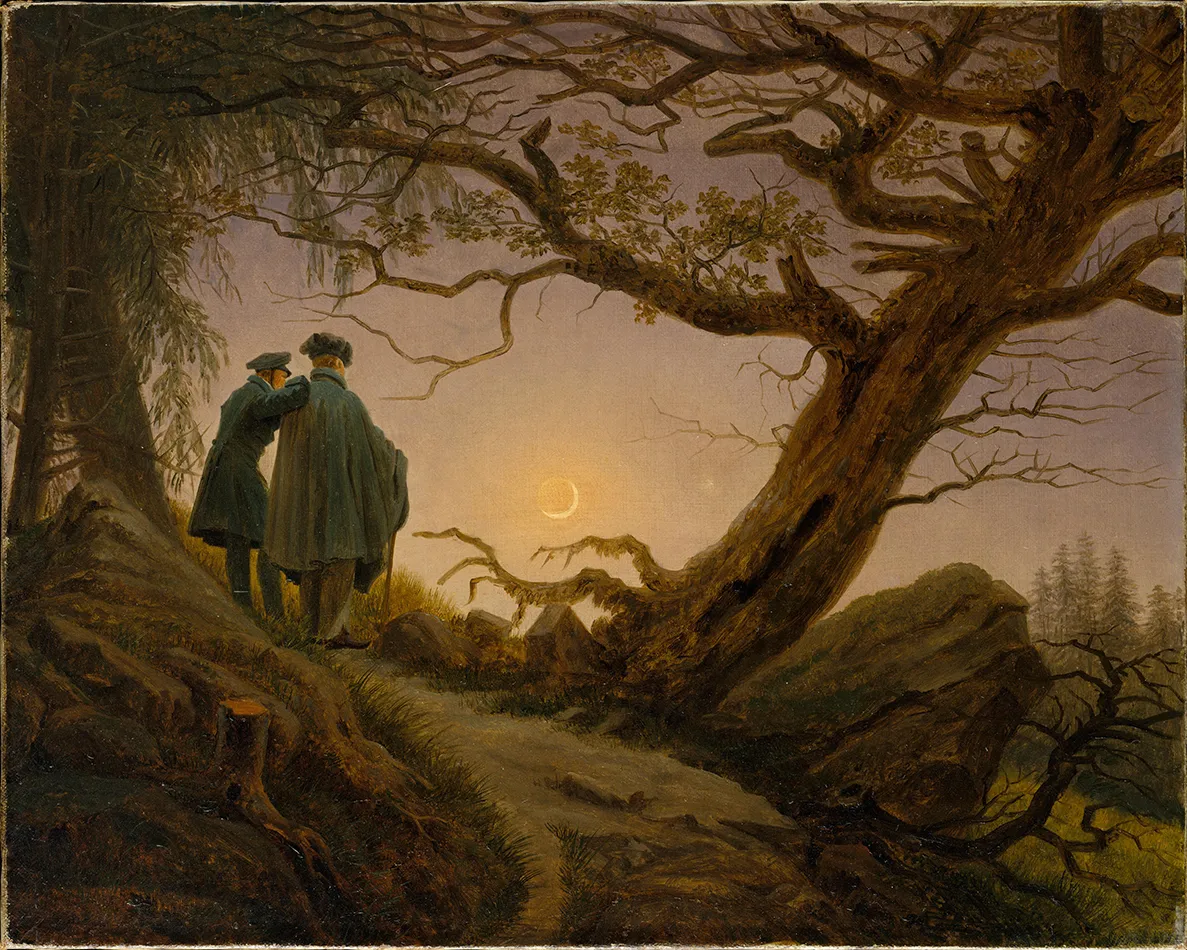
24 Preludes, Op. 28: No. 15 in D-flat Major, "Raindrop"
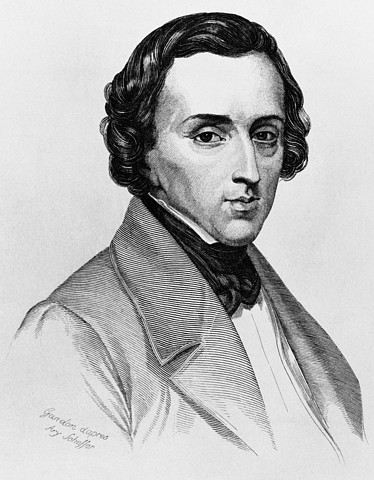
1810–1849 (Poland)
フリデリク・ショパンは、19世紀のロマン派音楽を代表するポーランド出身の作曲家であり、その生涯のほぼすべてをピアノ独奏曲に捧げた人物です。
Confronted with the terror of illness and mortality, an artist entrusted an incessantly pulsing note with the fragile waverings of his spirit and a quiet prayer.
Listen to a recording
24 Preludes, Op. 28: No. 15 in D-flat Major, "Raindrop"
Piece Guide & Analysis
The Scene Behind the Music: The Origin of the Title
What do you hear in this ceaseless, repetitive note?
In the autumn of 1838, Frédéric Chopin set out for the Mediterranean island of Majorca alongside the writer George Sand and her children, seeking refuge from the commotion of Paris and the deterioration of his health. While the party initially envisioned a warm, restorative paradise, local residents grew terrified of contagion once Chopin's tuberculosis became evident, shunning them and driving them from their rented villa. In the end, they sought shelter in a cold, damp, and cell-like room within the abandoned Carthusian monastery of Valldemossa, nestled in the mountains. Amid these austere conditions, haunted by feverish hallucinations and the dread of death, Chopin nonetheless continued composing with astonishing focus.
This cycle of preludes was composed on commission from Camille Pleyel, the piano manufacturer and music publisher. Pleyel paid an advance of 2,000 francs—equivalent to roughly four years' wages for a domestic servant at the time—which Chopin used to finance the journey to Majorca. Yet his creative work on the island proved arduous. The compact Pleyel piano shipped from Paris was delayed for months by customs disputes and treacherous weather, forcing Chopin to work on an inferior local instrument. The eagerly awaited instrument finally arrived in December 1838, and he reported the completion of the cycle the following January.
The subtitle "Raindrop" was not bestowed by Chopin himself, but by the later conductor Hans von Bülow, who took inspiration from the memoirs of George Sand. According to her account, Sand and her children returned to the monastery one day amidst a ferocious storm to find Chopin at the piano in a state of profound agitation. He had been gripped by a terrifying nightmare in which he saw himself drowning in a lake, cold, frozen droplets falling in steady succession upon his chest.
When Sand suggested that he had captured the rhythmic dripping of rain from the monastery roof, Chopin was said to have reacted with fury, vehemently dismissing literal imitations of nature as childish. The truth, however, is somewhat more nuanced. In later years, Chopin himself wrote the word "pluvieux" (rainy) in pencil into a teaching score used by one of his pupils. While he publicly rejected direct imitation of the natural world, he may well have embraced the ceaseless patter of rain as an evocative expressive metaphor in private.
Regarding Sand's account of heavy drops of ice falling upon his chest, some of Chopin's devoted disciples, including Adolf Gutmann, contended that the "true" Raindrop Prelude was actually No. 6 in B minor. In that prelude, the right hand repeats an intensely dark, desolate pattern throughout, leading many to suggest that its brooding character aligns far more closely with Chopin's dire condition at the time.
The Narrative: What Happens in the Music
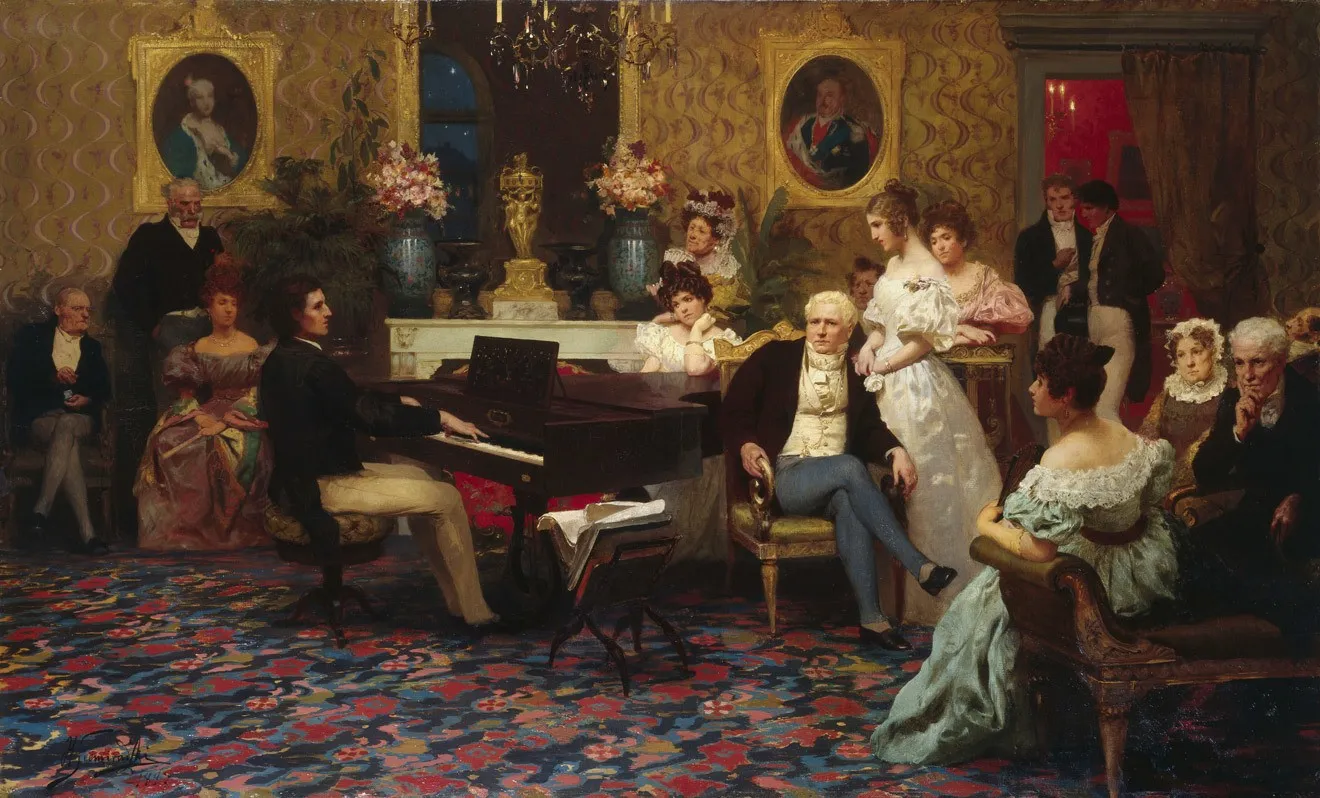
In the public concert life of the era, a "prelude" was little more than an improvisatory, functional curtain-raiser, performed to check the instrument's tuning or capture the audience's attention before embarking on a larger work. Chopin, however, shattered this convention, elevating an ancillary genre into a self-contained artistic universe. This revolutionary vision astonished his contemporaries: Robert Schumann praised the collection with a sense of bewilderment, remarking that "everything is so mixed together, wild and varied," while Franz Liszt hailed them as "poetic preludes belonging to an entirely unique order."
No. 15 is the most expansive among the twenty-four preludes, conceived in a large three-part form: a luminous, songful main section; a central section that transforms into a dark, solemn chorale; and a quiet reprise returning to the original key. At the outset, a sweet, nocturne-like melody unfolds, while beneath it a single note pulses with steady persistence. As the music steps into the middle section, this same note continues to beat, yet the surrounding landscape plunges into sudden darkness. Tolling stubbornly above a heavy bass line, the reiterated note resounds like a funeral bell in a stone monastery. When the opening melody returns as if letting in the light, it sounds far more fragile and fleeting than before, ultimately dissolving as though swallowed into the depths of nature.
Chopin himself never performed all twenty-four preludes together in a single concert. In keeping with the aesthetic conventions of his day, he would select perhaps four at a time, weaving them naturally alongside his mazurkas and nocturnes. At his historic Parisian comeback concert in 1842 following the journey to Majorca, Chopin shared the stage with the celebrated singer Pauline Viardot and the cellist Auguste Franchomme, performing No. 15 with his own hands to rapturous acclaim from the Parisian intelligentsia. The modern recital tradition of performing the entire cycle from start to finish would not become standard until more than a quarter-century after his death.
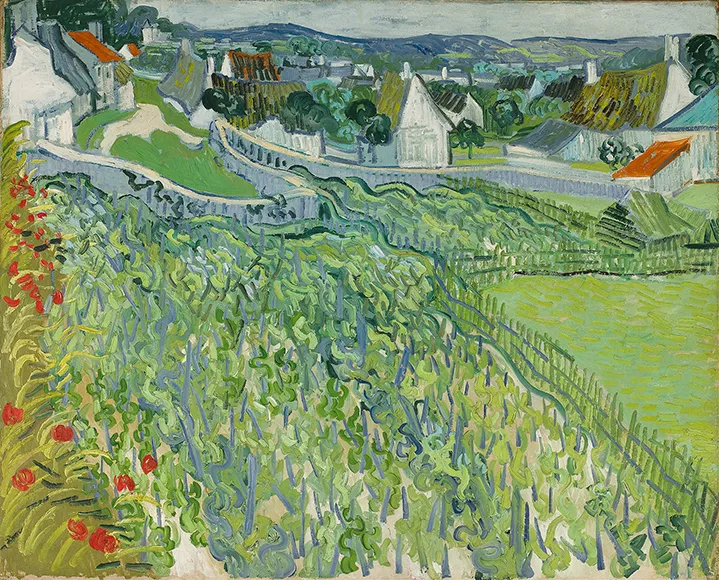
This dramatic sonic canvas has extended far beyond the concert hall, leaving an indelible mark on modern visual culture. In the film Moonraker, it serves as an ironic counterpoint revealing the inner madness of a cold-blooded villain, while in Akira Kurosawa's film Dreams, it provides the musical backdrop as a traveler wanders through the paintings of Vincent van Gogh. In the dystopian horror game Signalis, it functions as a haunting leitmotif, evoking retro-futuristic decay and the dread of mortality.
Musical Analysis: The Emotional Spectrum Ruled by a Single Note
To appreciate this work on a deeper level, let us examine it through two distinct lenses: motivic manipulation and harmonic function. First, motivic manipulation—the way in which the central musical idea unfolds. What binds the piece together structurally is an ostinato: an eighth-note pulse repeated relentlessly on nearly every beat throughout all 89 measures. Ticking quietly in the inner voice of the left hand during the outer sections, this repeated note expands in the central section into heavy, emphatic strokes in the right hand and powerful octaves across both hands.
In lessons with his students, Chopin insisted that the accompanying repeated notes maintain strict, metronomic discipline, while the melody should sing with fluid rubato. The expressive power of the piece springs from the tension between these opposing forces: an unwavering pulse in the accompaniment set against the expressive freedom of the melody. Historic recordings illustrate this polarity: Maurizio Pollini eschews sentimentality, preserving a rigorous tempo to reveal the work's architectural purity, whereas Martha Argerich embraces stark contrasts and spontaneous shifts in pacing, bringing Chopin's psychological crisis vividly to life.
Next is harmonic function—understanding the emotional weight carried by shifting sonorities. The crowning stroke of this prelude lies in its enharmonic transformation. The repeated A-flat of the D-flat major main section and the repeated G-sharp of the C-sharp minor middle section are physically the exact same pitch on the piano keyboard. Yet, as the harmonic context shifts beneath it, the note transforms from a warm, comforting presence into an omen of tragic sorrow. This dynamism, in which a single pitch shifts in meaning from light to shadow and back again, embodies the height of Chopin's Romantic harmonic aesthetic.
Performing this work on a modern piano presents a distinct challenge. The Pleyel instruments favored by Chopin possessed a lighter action and a faster rate of acoustic decay than today's concert grands. Consequently, applying the prolonged pedal markings found in the autograph score—sometimes spanning several measures—directly to a resonant modern piano can turn the textures into an unpleasant harmonic blur. Today's pianists bridge this historical gap through advanced techniques such as finger-pedaling, sustaining key harmony notes with the fingers rather than relying solely on the damper pedal. Striking the very same key, yet taking on an entirely different weight through harmony alone—how did this relentless note sound to your ears?
How Knowledge Transforms the Listening Experience
What departs most strikingly from the conventions of the period is the appearance of a fortissimo marking in the middle section—an exceptional rarity in Chopin's music. A composer renowned for intimate, aristocratic salon nuance here summons a climax of overwhelming sonic violence. This extraordinary outburst reflects the mortal terror and feverish hallucinations he endured within the bleak walls of the Majorcan monastery.
Without a knowledge of the score, one might easily pass it by, yet there is a decisive moment that commands the listener's ear once recognized: a four-note transitional phrase hidden in measure 75. From the abyssal gloom of C-sharp minor, the music is pulled back across merely four notes into the radiant warmth of D-flat major. In Chopin's autograph manuscript, this modulation bears unmistakable evidence of painstaking revision, crossed out and reworked with thick strokes of ink. It is a moment that reveals how deeply he laboured over the boundary separating shadow from light.
One might easily listen to this prelude as a comforting pastoral miniature depicting a gentle, beautiful rainfall. Yet once we understand the mortal dread within that bleak monastery, and how a single unchanging tone transforms through harmonic alchemy, the piece emerges as something far deeper: a prayer charting the soul's fragility before the inexorable footsteps of fate.
Highlights: Where and What to Listen For
The Opening: An Innocent Melody and an Incessant Pulse
As the prelude begins, the soprano voice introduces an unadorned theme imbued with childlike innocence. Beneath it, the left thumb gently marks time with an unwavering beat. Harmonies sway in graceful symmetry, establishing an atmosphere of quiet repose, until a sudden turn toward the minor casts a shadow of quiet melancholy. Even as the music traces subtle gradations between light and shade, and an improvisatory septuplet fioritura graces the melody, the underlying pulse never wavers.
Entering the Middle Section: Descent into Darkness and the Toll of the Bell
After an unresolved cadence in the main section, the music plunges into the shadows of C-sharp minor. The note that once beat with quiet calm is reinterpreted, and the texture thickens dramatically. Above a solemn bass melody, the right hand begins an obstinate repetition of octaves, resounding like a funeral bell echoing through a vast stone monastery. The music climbs relentlessly toward a fortissimo climax, enveloping the listener in a torrential sonic vortex. When the repeated notes are thrust into the upper register, piercing the air with unrelenting intensity, they convey the harrowing vividness of Chopin's waking nightmares.
Recapitulation to Coda: A Phantom Cadenza and the Fading Rain
Following the miraculous four-note transition, the graceful D-flat major theme returns, sounding far more fragile and fleeting than before. Within this recapitulation, Chopin originally sketched an improvisatory cadenza that would have allowed a soloist to display expressive freedom. Ultimately, however, he struck it out with a single stroke of his pen, reshaping the conclusion to welcome silence directly. In the final two measures, an exceptional pianissimo marking takes over. With a delicate application of the una corda pedal, the raindrops gently dwindle, bringing the piece to a close as if dissolving into the abyss of nature. Having erased the cadenza only to fade into absolute stillness, what kind of ending do you hear in this quiet farewell?
The true identity of that ceaseless note, posed at the beginning: perhaps it was never a mere portrait of rain, but the heartbeat of an artist facing the abyss of illness and death, etching into sound the fragile tremors of his own soul.
Your Note
Write down what you felt and learned from this piece in your art notebook.
Please sign up to write notes.
Sign up for freeSources & references
- chopin.nifc.pl
- chopin.nifc.pl
- chopin2020.pl
- www.youtube.com
- en.wikipedia.org
- www.hyperion-records.co.uk
- culture.pl
- crosseyedpianist.com
- chopin.nifc.pl
- piablog.site
- www.scarpantolady.com
- en.wikipedia.org
- media.musicalconcepts.net
- www.youtube.com
- www.ethanhein.com
- fchopin.net
- chopinsociety.org
- clevelandclassical.com
- www.henle.de
- chopin.nifc.pl
Read stories of masterpieces for free
This site is protected by reCAPTCHA, and the Google Privacy Policy and Terms of Service apply.
If you find an error in this content, please let us know here