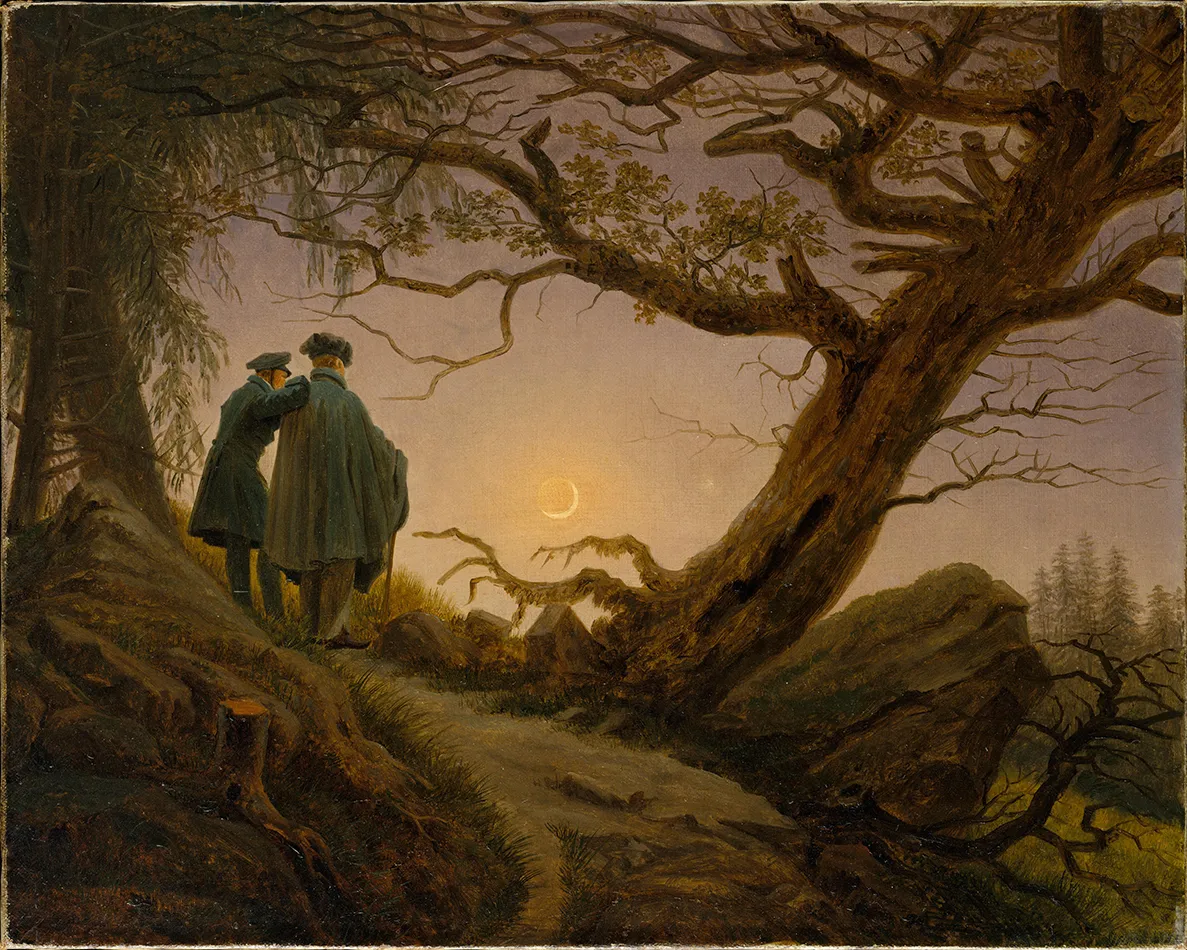
Andante spianato and Grande Polonaise brillante in E-flat major, Op. 22
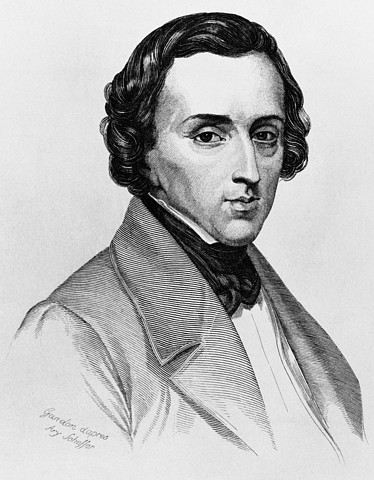
1810–1849 (Poland)
フリデリク・ショパンは、19世紀のロマン派音楽を代表するポーランド出身の作曲家であり、その生涯のほぼすべてをピアノ独奏曲に捧げた人物です。
A tale of the young Chopin's ambition and aesthetics, leaping from an introspective world of dreams to a dazzling celebration of reality.
Listen to a recording
Andante spianato and Grande Polonaise brillante in E-flat major, Op. 22
Piece Guide & Analysis
What Scene Does This Piece Depict? ― Why This Title?
Why does this piece begin with a serene piano solo, only to transform suddenly into a brilliant ballroom scene accompanied by an orchestra?
On April 26, 1835, the hall of the Paris Conservatoire was filled with palpable excitement. It was a benefit concert conducted by François-Antoine Habeneck, a prominent figure in the Parisian musical world renowned for introducing Beethoven's symphonies to France. On this grand stage, the twenty-five-year-old Frédéric Chopin presented his new work—the historic premiere of the Andante spianato and Grande Polonaise brillante in E-flat major, Op. 22.
The term "spianato" in the title is an Italian adjective meaning "level," "even," or "smooth." In musical terminology, it directs the performer to sing gently and evenly, tempering emotional extremes and avoiding excessive accents. This work is the only instance in Chopin's entire oeuvre where he employed this term both as a character indication for a movement and in the title itself, vividly reflecting his unique aesthetic in piano writing.
This magnificent work was composed across two distinct periods during the tumultuous chapter of Chopin's life when he left his native Poland, journeyed through Vienna, and settled in the artistic capital of Paris. The latter portion, the Grande Polonaise brillante, was begun in the autumn of 1830 during his final months in Warsaw, just before departing his homeland, and completed in 1831 upon his arrival in Vienna. During this period, Chopin was producing a series of brilliant concertante works designed to establish himself as a pianist in the European musical arena.
Having relocated to Paris, Chopin received an invitation from Habeneck in 1834 to perform at an important concert at the Paris Conservatoire. Seizing this golden opportunity, he conceived a lyrical and delicate solo piano introduction to precede the already completed Polonaise. Thus, between 1834 and 1835 in Paris, he composed the opening Andante spianato.
The work was dedicated to Baroness Frances Sarah d'Este, Chopin's piano pupil and patron in Paris. While some romanticized biographies claim that Baroness d'Este commissioned the piece directly from Chopin and purchased it as a private, secret gift, it was in fact composed from the outset as a concertante piece for public performance; there is no solid scholarly evidence supporting the theory of a private commissioned gift. This misconception is believed to have arisen from a confusion with the genesis of the Fantaisie-Impromptu, which was likewise found in her album.
The premiere was met with immense acclaim from both audiences and critics, achieving great success. Ironically, however, this triumphant performance in a large concert hall marked the last time Chopin—who favored an introspective, delicate touch—would appear in a major public concert with an orchestra. From that point onward, he shied away from commercial concert venues, retreating into the intimate sphere of salons where small circles of connoisseurs gathered.
The Narrative ― What Unfolds in This Music
This work consists of three clearly defined sections: the solo piano Andante spianato, an orchestral transition, and the main body, the Grande Polonaise brillante. It forms an expansive sonic drama, akin to a journey stepping gradually from a realm of deep meditation into a vivid celebration of reality.
The first part, the Andante spianato, serves as an introduction played entirely by the solo piano. Over rolling arpeggios in the left hand, the right hand sings an exquisitely beautiful, nocturne-like melody. The tranquil sonority, achieved with minimal pedal, invites the listener into a dreamlike reverie. In the middle section, the meter shifts, and a simple, chorale-like hymn is harmonically presented, weaving a moment of profound introspection.
As the Andante fades into silence, an orchestral fanfare suddenly resounds. This is the transitional second section. For the first time, sustained horn notes and the sound of strings enter the space previously occupied solely by the solo piano, awakening the audience from their reverie and drawing them into the vibrant reality of a polonaise ball.
Then begins the third section: the dazzling Grande Polonaise brillante in E-flat major. The main theme, characterized by dynamic leaps and dotted rhythms, is presented with both elegance and brilliance. Highly extroverted and brimming with sumptuous virtuosity, this polonaise forms a stark dualistic contrast to the serene Andante of the opening. Over time, critics occasionally argued that these two parts were aesthetically mismatched, but modern musicology reappraises this very leap—from static meditation to a dynamic celebration of life—as the singular dramatic architecture Chopin intended.
The technical experimentation involved in constructing this fluid acoustic space can also be seen within the creative network of Chopin's circle in the Parisian salons. For instance, Hommage à la Baronne d'Este, composed by Chopin's close friend Ferdinand Hiller as a farewell gift to the Baroness, makes abundant use of plaintive sighing motifs and dramatic harmonic tension, sharing an intimate vein of Romantic lyricism with this Andante. Furthermore, Chopin's own Fantaisie-Impromptu was composed concurrently in Paris during the very same period he was working on this Andante.
Moreover, the narrative power of this piece has played a symbolic role in later cinema. In the closing scene of the film The Pianist, which portrays a real-life musician who survived the Holocaust, the protagonist performs this Grande Polonaise brillante backed by a full orchestra in a magnificent post-war hall. The polonaise's dance-like celebration of life and dazzling virtuosity are sublimely elevated into a symbol of art's eternal triumph over death and the indomitable human spirit.
Musical Analysis ― Acoustic Devices Separating Stillness and Celebration
The unique acoustic space of this work is sustained by meticulously calculated structure and instrumentation. Let us unravel these devices below.
About 979 more words
Unlock this story's ending, and every article on MusicStory
¥07-day free trial
Unlimited access to 334 stories, paintings and pieces
- ・The first 7 days are completely free. Cancel within the trial and nothing is charged.
- ・From day 8, ¥980/month (tax incl.). Cancel anytime from your account page.
- 42Stories
- 282Paintings with commentary
- 10Music Library
- My Notes, unlimited
Already have an account? Log in
Your Note
Write down what you felt and learned from this piece in your art notebook.
Please sign up to write notes.
Sign up for freeSources & references
- www.youtube.com
- www.youtube.com
- www.youtube.com
- chopin.nifc.pl
- ontomo-mag.com
- en.wikipedia.org
- it.wikipedia.org
- www.bearton.pl
- www.classicalconnect.com
- chopin.nifc.pl
- www.indianapolissymphony.org
- www.universaledition.com
- www.alfred.com
- pianoinspires.com
- en.wikipedia.org
- classical.music.apple.com
- chopin.lib.uchicago.edu
- www.reddit.com
- filharmonia.pl
- chopin.nifc.pl
This site is protected by reCAPTCHA, and the Google Privacy Policy and Terms of Service apply.
If you find an error in this content, please let us know here