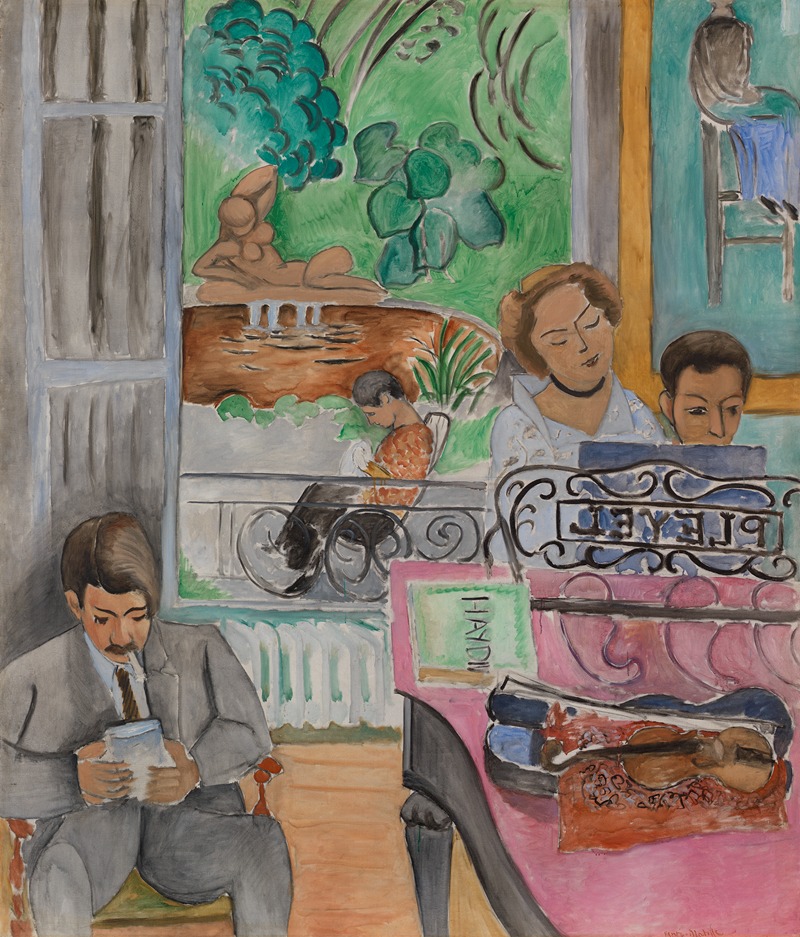
Children's Corner, No. 1 "Doctor Gradus ad Parnassum"
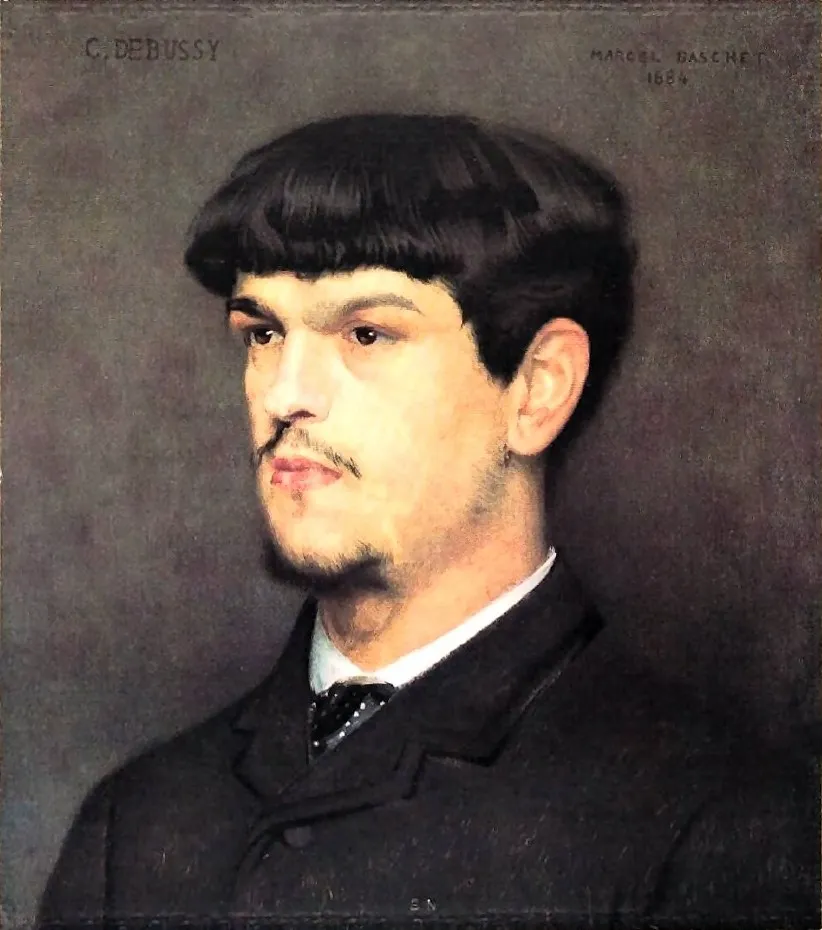
1862–1918 (France)
A leading master of modern French music, active from the late 19th to early 20th century. Breaking free from traditional…
A fatherly and affectionate piano piece depicting a child's boredom and boundless vitality as dry finger exercises dissolve into a world of reverie.
Listen to a recording
Children's Corner, No. 1 "Doctor Gradus ad Parnassum"
Piece Guide & Analysis
The Scene Depicted — Why This Title?
What goes through a child's mind when seated before the piano, practicing a monotonous etude? "Doctor Gradus ad Parnassum," the opening piece of Claude Debussy's 1908 piano suite Children's Corner, begins with precisely such a scene. During this period, Debussy had achieved widespread acclaim with the success of his opera Pelléas et Mélisande, yet his private life was in turmoil following a bitter divorce from his first wife and his move to start a new life with Emma Bardac. Caught in the midst of scandal within conservative Parisian society, he found emotional solace in the arrival of his beloved daughter Claude-Emma—affectionately nicknamed "Chouchou"—born in 1905.
Rather than arising from a commission, this suite was born from Debussy's own intimate, paternal affection and dedicated to Chouchou. At the front of the published score appears the dedication: "To my dear little Chouchou, with her father's tender excuses for what is to follow"—a phrase blending gentle warmth with his characteristic irony. Because Chouchou was only about three years old at the time, the piece was not written for her to play, but rather for Debussy to play for her as he watched her at play surrounded by toys.
The pedantic title "Doctor Gradus ad Parnassum" draws on two landmark pedagogical works in music history: Johann Joseph Fux's 1725 treatise on counterpoint and Muzio Clementi's monumental collection of piano studies published in the early nineteenth century. By prefixing the title with the solemn academic honorific "Doctor," Debussy likely intended a humorous satire of the dry finger exercises and pedantry imposed on children by the academy and strict piano teachers. Furthermore, the English titles used throughout the suite are thought to be a nod of respect to the English nanny hired for Chouchou's education, as well as a witty homage to the anglomania then fashionable among Parisian high society.
Given the title and dedication, this piece is often mistaken for a simple educational study for young learners; in reality, it is a sophisticated work of art in which a mature adult reminisces upon the fantasies and tedium of childhood. Graded among the most demanding repertoire in syllabi such as that of the Royal Conservatory of Music in Canada, delivering these rapid, continuous passages with an even, pearlescent touch remains a formidable technical challenge even for professional pianists.
The Narrative — What Happens in the Music
The music opens with steady, flowing arpeggios in C major, directly mimicking a classical mechanical exercise intended to foster finger independence. At first, the child's fingers move obediently across the keyboard as prescribed by the method book, but soon they begin to stray from this rigid framework. Subtle, unexpected harmonies creep into the traditional sonorities, transporting the listener from the confines of the practice room into a realm of daydreams.
As the piece approaches the middle section, the relentless stream of sixteenth notes begins to falter. The tempo slackens, and the tonality drifts into more distant, shadowy harmonies. Here, Debussy paints the boredom and reverie that overtake a child during monotonous practice. Distracted by the view outside the window or overcome by sudden drowsiness, the child's drifting thoughts are mirrored in exquisite harmonic shifts. It captures the resilient elasticity of the young mind, ever ready to escape dry academic discipline and take flight into imagination.
Robert Schumann's Kinderszenen is celebrated as an earlier landmark piano work on the theme of childhood. Yet while Schumann portrayed the innocent childhood spirit through the lens of Romantic poetic nostalgia—a grown-up's dream of youth—Debussy captures a child's true demeanor, including indolence and petulance, with humorous realism. This documentary-like directness was inspired by Modest Mussorgsky's song cycle The Nursery, which had deeply struck the young Debussy with its uncannily faithful rendering of children's wandering speech.
The piece was later orchestrated by Debussy's disciple André Caplet under the composer's supervision. In this version, the shimmering sixteenth-note patterns of the piano are brilliantly redistributed to agile woodwinds such as the flute and oboe. Caplet translated the tactile dexterity of the keyboard into a play of light and shadow across the orchestra, using dialogue between harp arpeggios and woodwind colors to give the child's daydream an even more vivid, three-dimensional presence.
Musical Analysis — Shifting Metres and Nuances of Color
The enduring appeal of this piece rests not merely on its scenic charm, but on Debussy's meticulous compositional craftsmanship. The following exploration examines its secrets through two lenses: harmonic function and rhythmic transformation.
About 882 more words
Read stories of masterpieces for free
Your Note
Write down what you felt and learned from this piece in your art notebook.
Please sign up to write notes.
Sign up for freeSources & references
- www.youtube.com
- www.youtube.com
- www.scribd.com
- en.wikipedia.org
- www.pianolibrary.org
- jeanmichelserres.com
- www.ebay.com
- fcsymphony.org
- wildarts.org.uk
- dokumen.pub
- www.broadwaybach.org
- raythompsonmusic.co.uk
- eliseymysin.com
- interlude.hk
- openspaces.unk.edu
- climber.uml.edu.ni
- imslp.org
- www.invaluable.com
- concert.lisztacademy.hu
- www.schubertiademusic.com
This site is protected by reCAPTCHA, and the Google Privacy Policy and Terms of Service apply.
If you find an error in this content, please let us know here