
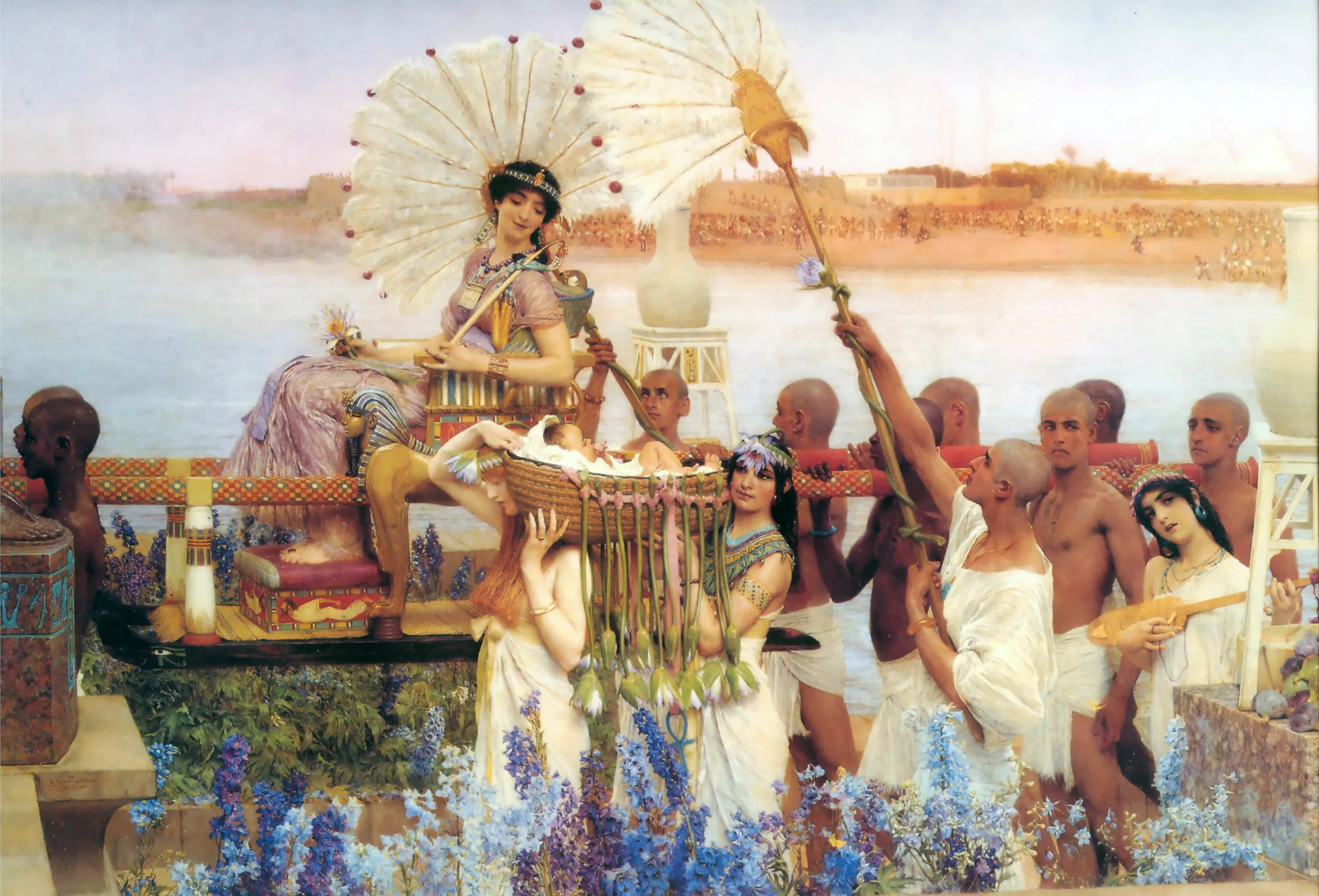
The Finding of Moses
1904
ヴィクトリア朝のイギリスを代表する画家であり、王立芸術院(ロイヤル・アカデミー)会員。オランダで生まれ、後にイギリスへ移住して同国に帰化した。
A magnificent festive procession parades along the banks of the Nile. The Pharaoh's daughter, clad in translucent pink attire, smiles gently from atop a lavish palanquin carried by priests. In the foreground, vibrant blue delphiniums bloom profusely, and in a cradle adorned with pink ribbons and lotus flowers lies the infant (Moses), just rescued from the river.
This work captures a dazzling scene from ancient Egypt. Yet, in reality, this painting was the culmination of painter Lawrence Alma-Tadema's almost obsessive 'perfectionism' and relentless dedication.
In 1902, invited to the opening ceremony of the Aswan Dam, he visited Egypt and became utterly captivated by the historical allure of the land. Already possessing a strong obsession with historical accuracy, he frequented institutions like the British Museum, meticulously researching ancient artifacts. From jewelry to chair decorations, and even the hieroglyphs visible in the background, he filled every corner of the canvas with authentic details, striving for archaeological precision.
About 198 more words
Read stories of masterpieces for free
Your Note
Write down what this painting made you feel in your art notebook.
Please sign up to write notes.
Sign up for freeRecommended Artworks
More artists




If you find an error in this content, please let us know here
This site is protected by reCAPTCHA, and the Google Privacy Policy and Terms of Service apply.