
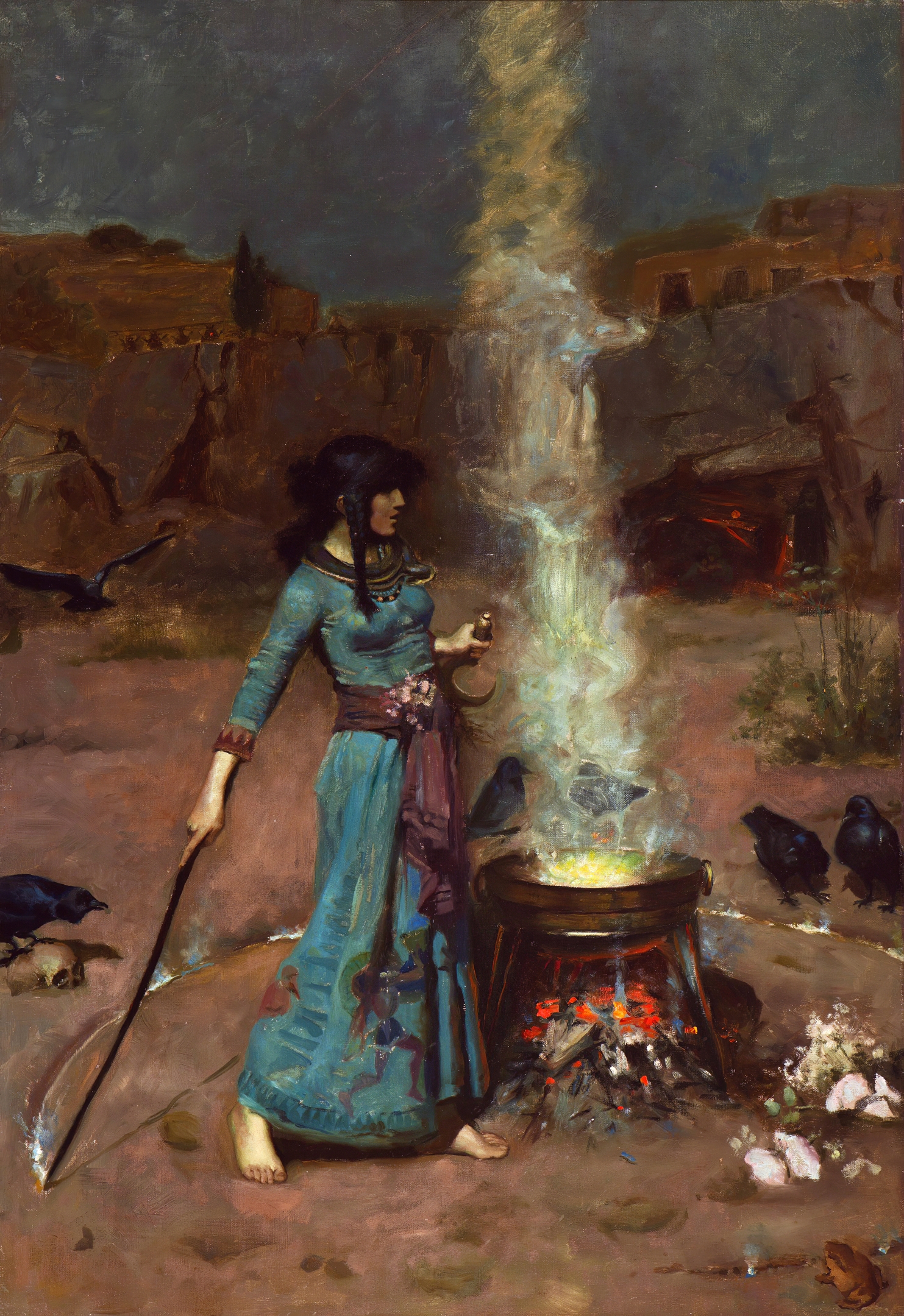
The Magic Circle
1886
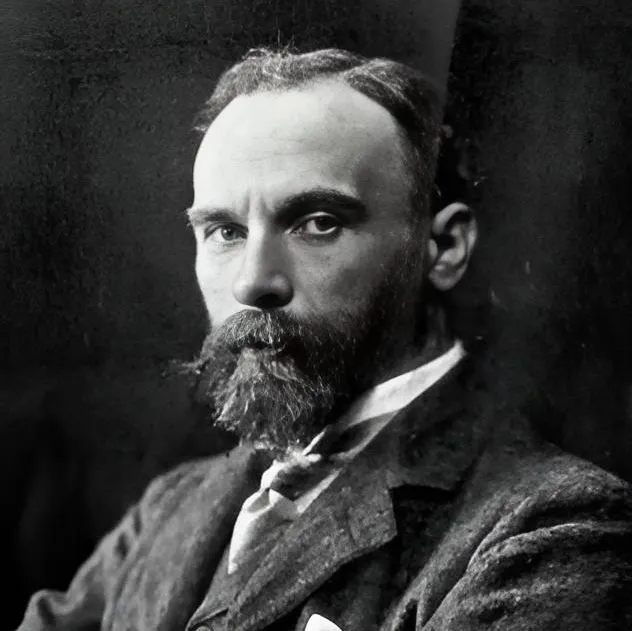
An English painter deeply influenced by the spirit of the Pre-Raphaelite Brother…
On a desolate landscape, a beautiful sorceress stands alone, draped in an exotic gown. With a wand in hand, she traces a blazing circle of fire upon the dirt. A live serpent coils around her neck. Outside the perimeter, crows and toads—harbingers of evil—swarm in the shadows, yet they are powerless to cross the threshold of her sacred boundary. It is a single, captivating snapshot of a bewitching and mystical ritual.
Yet behind this imagery lies a turbulent reality. When the painting was unveiled in 1886, the British art world was suffocating under a heavy sense of stagnation. Frustrations with the rigid, archaic establishment of the prestigious Royal Academy had boiled over, sparking bitter rivalries among artists. Critics were merciless, panning the exhibitions as some of the worst in memory. Adding to the intrigue, the painter himself, John William Waterhouse, was a man of mystery. Leaving behind virtually no personal records, he was rumored to have secret ties to the occult societies that were trending at the time.
In the art of that era, witches were almost always cast as vindictive, brooding figures or malevolent femmes fatales destined to ruin men. Waterhouse, however, dared to do something different. He envisioned an overwhelmingly noble, autonomous woman commanding magic by her own sovereign will. Even the patterns on her gown are said to depict Medusa—an ancient talisman worn to repel the malice of others.
About 55 more words
Read the rest of this commentary —
and step into a secret gallery
opened just for you
An "art letter" delivered to you every Saturday morning
Works, music and words chosen for your sensibility, from your artist-type result and the paintings you love
A library of masterpieces and music you can enjoy "in your own words", not just look at
A "digital art notebook" (unlimited) where your impressions build into your own taste
Unlimited likes and notes
¥980 / month¥0 today
¥980/month (tax incl.) from day 8. Cancel anytime.
Already have an account? Log in
Your Note
Write down what this painting made you feel in your art notebook.
Please sign up to write notes.
Sign up for freeRecommended Artworks
.webp)
.webp)
More artists



If you find an error in this content, please let us know here
This site is protected by reCAPTCHA, and the Google Privacy Policy and Terms of Service apply.