
 日本語 (JA)
 English (EN)
- Dimensions
- 76.2 × 101.6 cm
- Medium
- Oil on canvas
- Collection
- National Gallery of Art, Washington
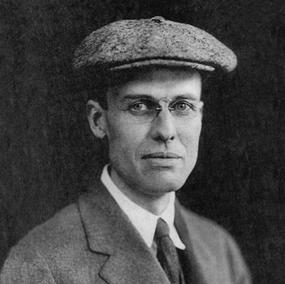
A defining figurative painter of twentieth-century American art, he captured urb…
A quiet warning against the gathering clouds of the era and the fraying of human connection. Through the estranged couple and a dog unsettled by an invisible presence, the work reflects the isolation and anxiety of modern society.
✦ Highlights (technique & color)
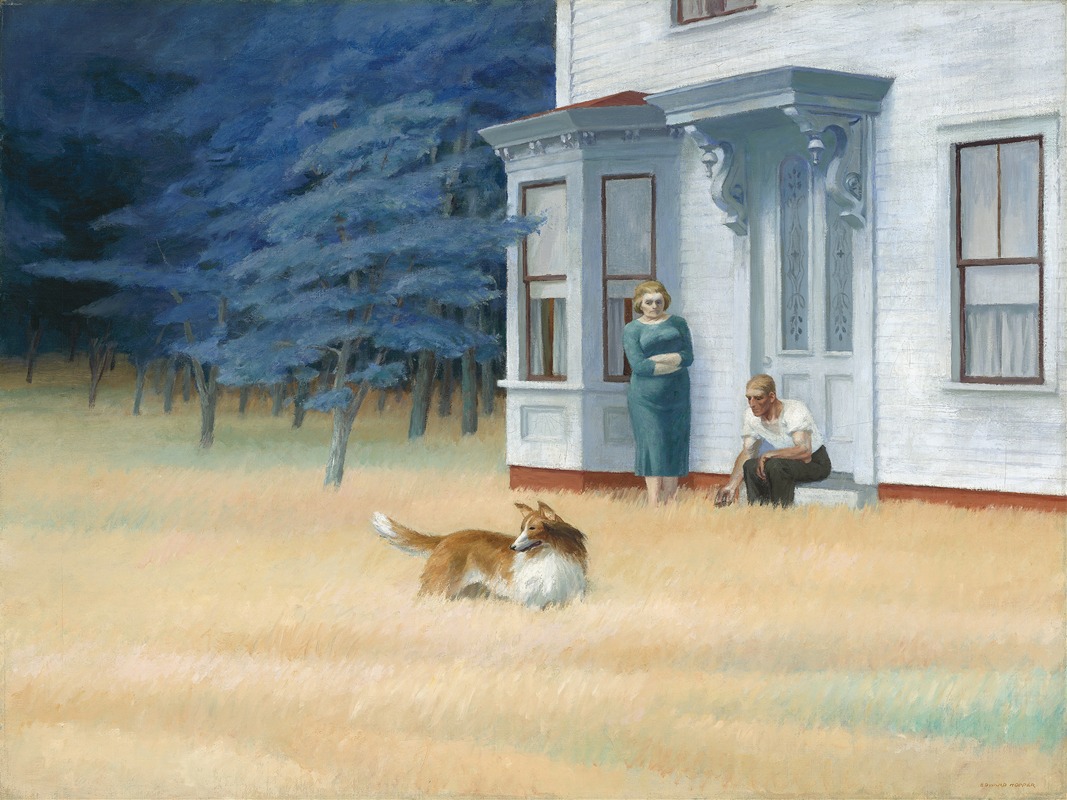
The white house dominating the upper right features pale blue shadows and a red foundation, while a grove of dark green locust trees encroaches from the left. The woman's dress is painted in the same bottle green as the woods, harmonizing with nature's quiet invasion. Through the composition of an alienated couple and a dog responding to an unseen threat, a quiet dread is masterfully evoked.
✦ The setting of this painting
The scene is set in South Truro, Massachusetts. Rather than painted directly from life, however, it is an imagined landscape assembled from various sources: a doorway from a house in Orleans twenty miles away, a nearby grove of locust trees, and dry grass seen from the artist's studio window. The historical backdrop of a former whaling town facing depopulation subtly reinforces the painting's pervasive sense of desolation.
✦ Historical context
Painted in July 1939, on the eve of World War II. The figures are modeled after the Finnish and Swedish immigrants who lived on Cape Cod at the time. By transforming the call of the whippoorwill—traditionally an emblem of peaceful domestic life—into an omen of unease, the work alludes to the looming specter of war and a restless, troubled society.
At dusk, in front of a white Victorian house.
A woman stands with her arms folded, while a man sits on the steps, reaching toward a dog.
A quiet rural twilight.
It might seem like a peaceful snapshot of everyday life, shared by a couple and their dog.
Yet the true subject of this painting is a creature that appears nowhere on the canvas.
July 30, 1939.
Edward Hopper completed this painting in South Truro, Massachusetts.
The record book kept by his wife, Jo, reveals a striking detail:
the piece was originally going to be titled "The Whippoorwill."
A whippoorwill is a nocturnal bird that calls from the edge of the woods at dusk.
While popular songs of the era sang of it as a symbol of domestic tranquility, Hopper reversed that meaning, rendering it as an omen of encroaching anxiety.
Look at the brown-and-white collie standing in the center of the canvas.
Though its owner reaches out, the dog ignores him completely.
With its ears pricked toward the right side of the canvas, toward the cry of the unseen whippoorwill, the dog is intensely alert.
Hopper went to great lengths to capture the dog's form.
Aiming for anatomical accuracy, he made a trip to the Truro library to consult an encyclopedia.
Yet he could not find adequate reference material.
Just as he returned, disappointed, to the post office parking lot—
by pure chance, an ideal collie stepped out of the car in front of him, accompanied by a child.
While his wife, Jo, petted the dog and chatted with the child to keep them in place, Hopper quickly pulled out his sketchbook in the car and completed a pencil study.
It was through this teamwork between husband and wife that the dog's tense, watchful presence was brought to life.
About 216 more words
Read the rest of this commentary —
and step into a secret gallery
opened just for you
An "art letter" delivered to you every Saturday morning
Works, music and words chosen for your sensibility, from your artist-type result and the paintings you love
A library of masterpieces and music you can enjoy "in your own words", not just look at
A "digital art notebook" (unlimited) where your impressions build into your own taste
Unlimited likes and notes
¥980 / month¥0 today
¥980/month (tax incl.) from day 8. Cancel anytime.
Already have an account? Log in
Your Note
Write down what this painting made you feel in your art notebook.
Please sign up to write notes.
Sign up for freeRecommended Artworks
Sources & references
More art movements
Pre-Baroque
1 artworks
Victorian era
10 artworks
Impressionism
48 artworks
Late Pre-Raphaelite
10 artworks
Baroque
2 artworks
American Impressionism
5 artworks
Realism
4 artworks
Pre-Raphaelite
3 artworks
Barbizon School
5 artworks
Academic art
5 artworks
Luminism
3 artworks
Rococo
2 artworks
Symbolism
22 artworks
Neo-Impressionism
3 artworks
Ukiyo-e
1 artworks
Japonism
4 artworks
Edo period
1 artworks
Fauvism
1 artworks
Naturalism
9 artworks
Russian Realism
1 artworks
Post-Impressionism
13 artworks
Genre painting
9 artworks
Neoclassicism
3 artworks
ウィーン分離派
7 artworks
自然主義
1 artworks
ナショナル・ロマンティシズム
1 artworks
未来派
1 artworks
More artists
If you find an error in this content, please let us know here
This site is protected by reCAPTCHA, and the Google Privacy Policy and Terms of Service apply.