An American Realist painter who geometrically synthesized actual landscapes with personal memory in his studio, capturing human isolation and psychological voids in modern society as suspended, motionless spaces.
LifeLife and works
Edward Hopper's painting was an endeavor to project his own inner experience onto canvas through the objective observation of the external world. Rather than merely transcribing real landscapes, he treated painting as a vessel for reconstructing personal memory and the subconscious mind. The depicted architecture, interiors, and human figures all serve as synthesized symbols to articulate the artist's inner realm.
In 1899, aspiring to become a commercial illustrator, he enrolled in the New York Correspondence School of Illustrating before transferring the following year to the New York School of Art, where he studied under Robert Henri and others. From Henri, he absorbed the core philosophy of painting the world around him and the conviction that art is the trace of an artist's inner state. Following sojourns in Paris, he developed a profound affinity for French literature and the Impressionist handling of light; upon his return to the United States, however, he faced a prolonged period of neglect. Although he sold a single oil painting at the landmark 1913 Armory Show, he did not sell another canvas for over a decade, sustaining himself through commercial illustration—such as magazine covers and corporate advertisements—work he personally detested.
During this period, he turned his creative energy toward etching. Through printmaking, he established the visual hallmarks of his mature style: elevated bird's-eye viewpoints, diagonal compositions forged by strong raking light, and sharp contrasts of black and white. His 1921 etching Night Shadows signaled the formal vocabulary that would underpin his subsequent work.
In the summer of 1923, a reunion in Gloucester, Massachusetts, with his former classmate Josephine "Jo" Nivison transformed his artistic career. At her urging, he took up watercolors, one of which was acquired by the Brooklyn Museum. The couple married the following year, and after a solo exhibition of his watercolors at a commercial gallery sold out, he was able to leave commercial illustration behind for good. Following their marriage, Jo modeled for nearly every female figure in his paintings and assumed complete management of his career, keeping meticulous ledgers that recorded sketches of each work, pigments used, and details of purchasers.
Returning to oils, he refined his singular realism characterized by harsh sunlight, geometric architectural arrangements, expressionless figures, and the psychological barrier of windowpanes. Painted in 1925, House by the Railroad depicted an actual Victorian residence, yet the railroad tracks slicing horizontally across the foreground emphasized the severance between past architectural grace and modern progress. In 1930, this work became the first painting acquired for the permanent collection of the newly founded Museum of Modern Art in New York.
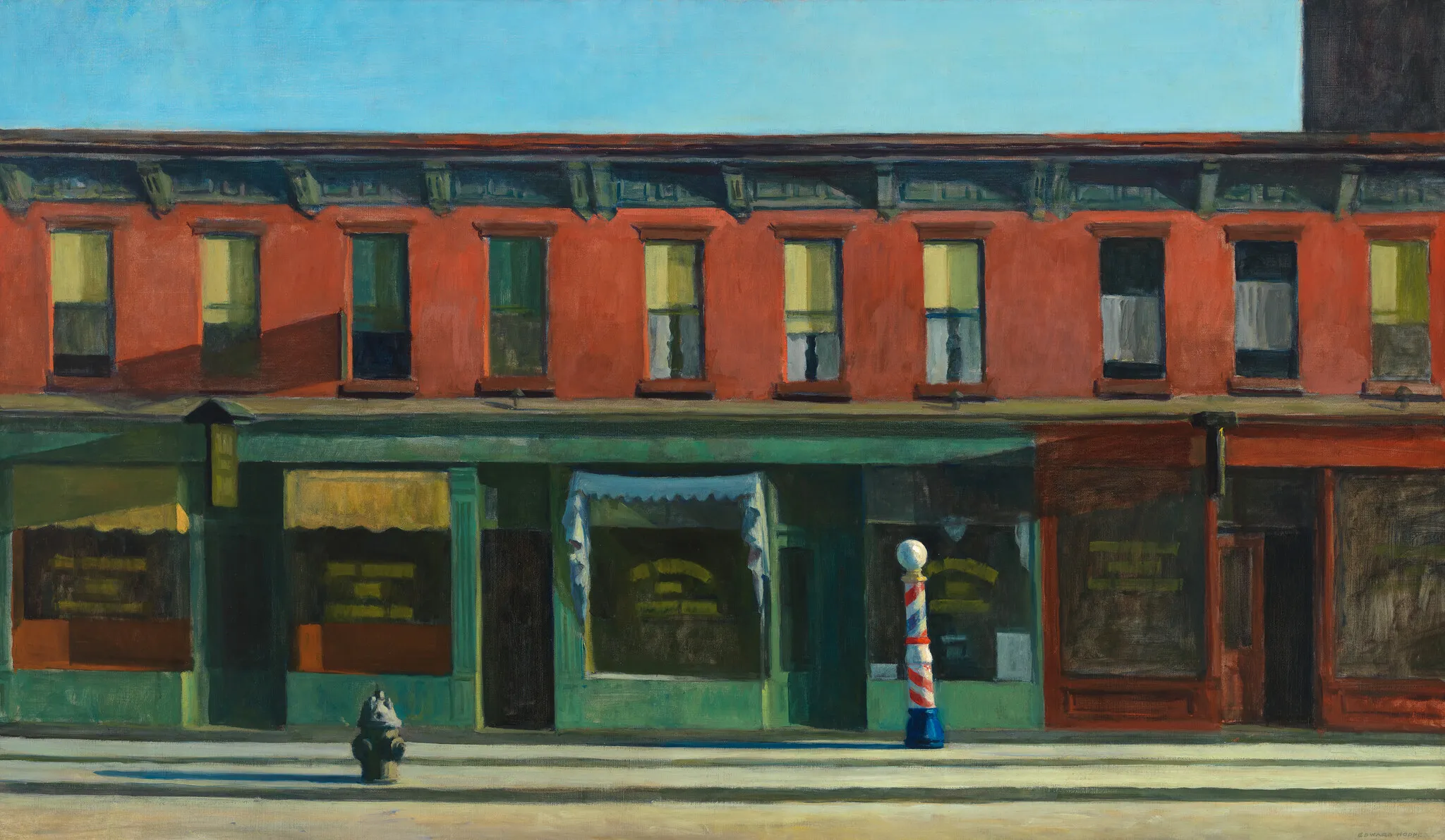
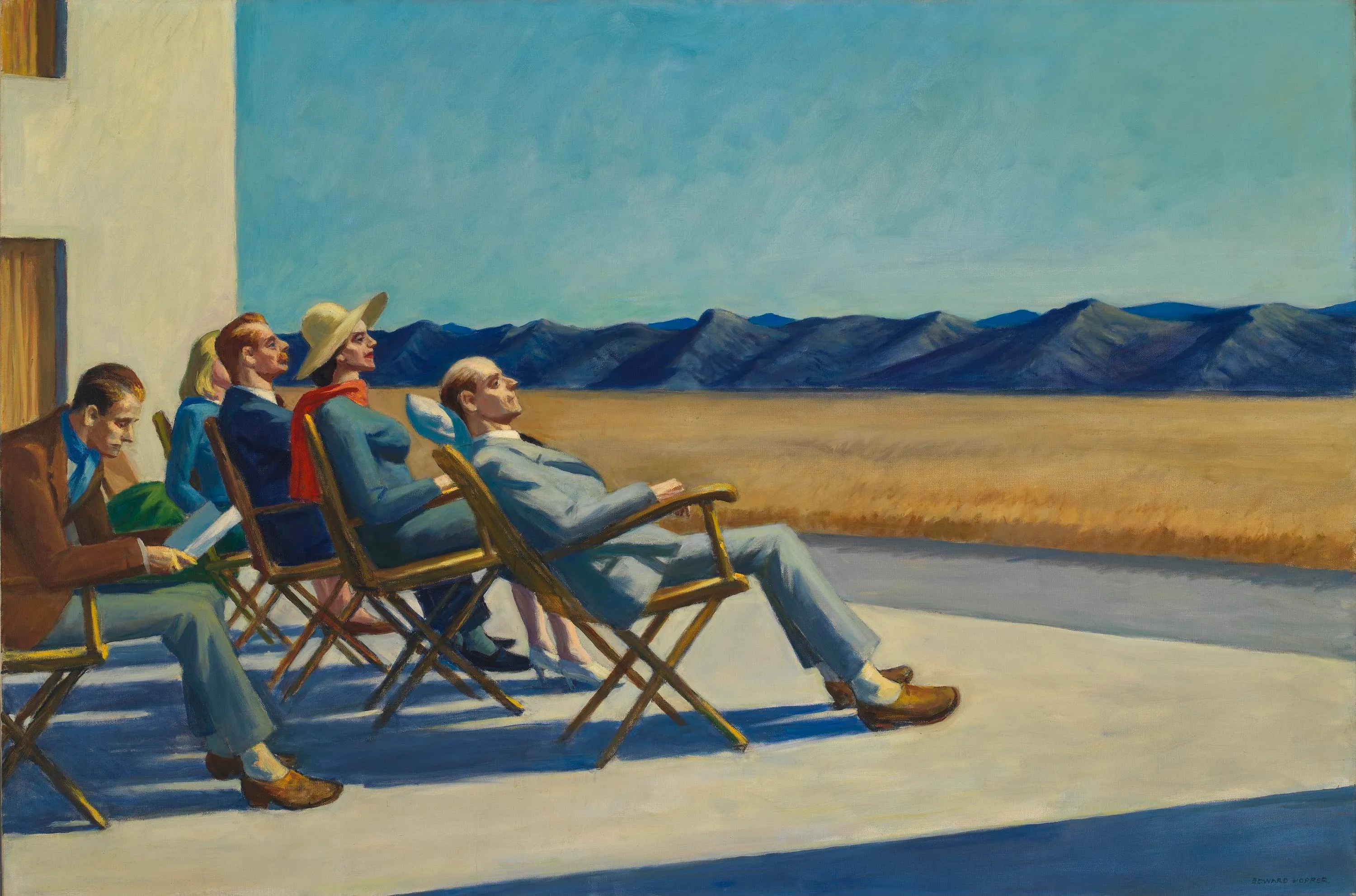
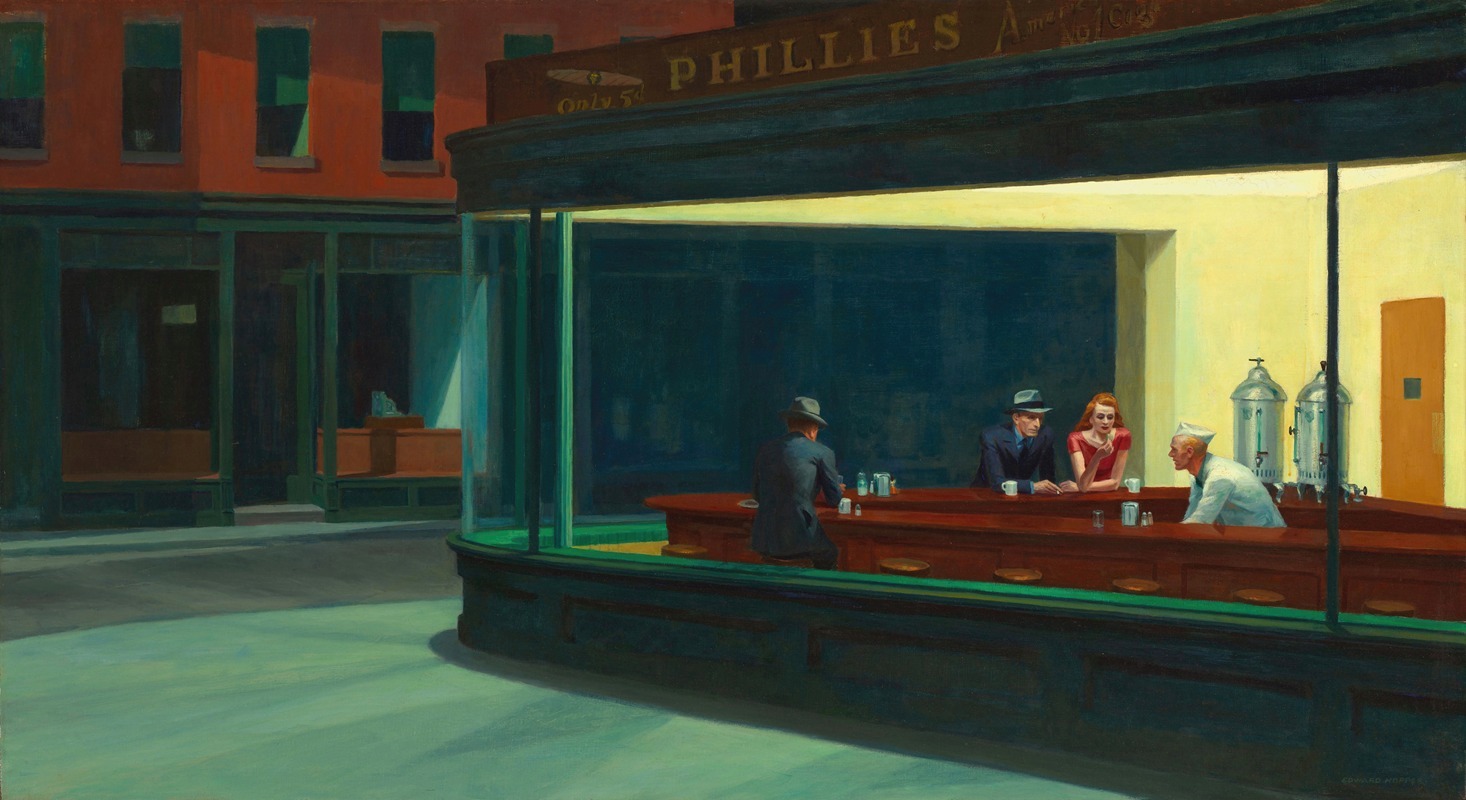
Hopper's life was divided between two main centers: the Manhattan studio where he lived for 54 years, and Truro on Cape Cod, Massachusetts, where he spent nearly every summer beginning in the 1930s. The city inspired views of elevated railways and nighttime office interiors glimpsed through windows, while the rural retreat introduced a palette of dry, blinding natural light and solitary homes. In Nighthawks, completed in 1942, he depicted a late-night diner through curved plate glass, eliminating any visible doorway to create an aquarium-like space sealed off from the outside world.
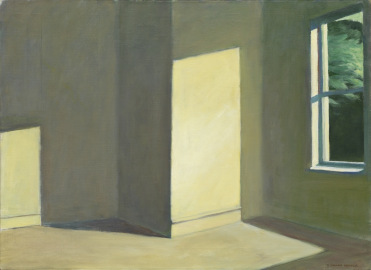
In his final years, narrative elements receded from his canvases; in spaces where even the human presence was erased, the geometric planes of sunlight falling on walls and floors became the primary subject. He once remarked that all he ever wanted to do was to paint sunlight on the side of a house. In Two Comedians, his final oil painting completed in 1966, the year before his death, a man and woman dressed in white stand on a stage, taking their final bow before a darkened theater. Representing Hopper and his wife, Jo, the figures gracefully signal their departure from the stage of life.