
People in the Sun
1960
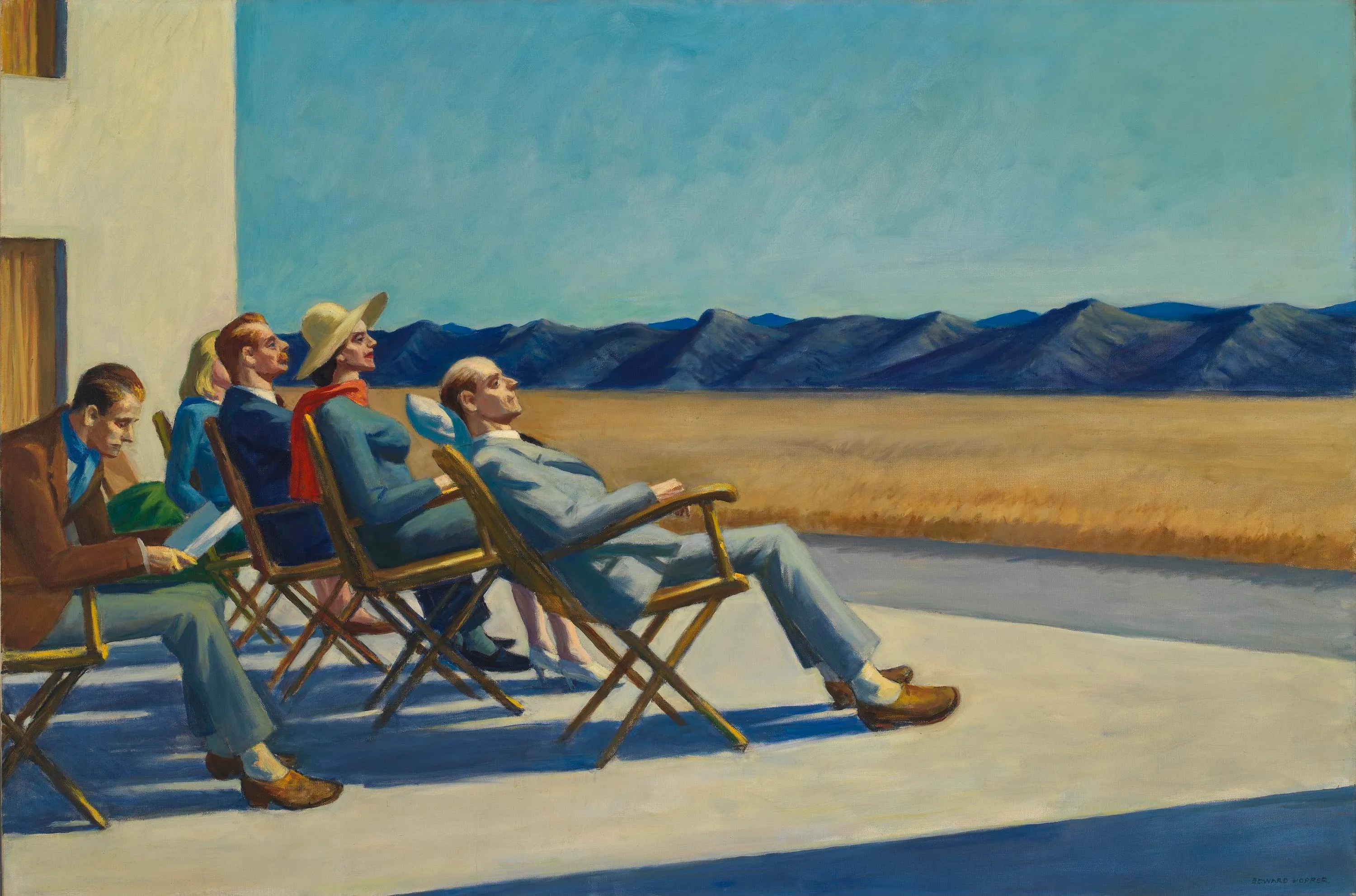
Image: Edward Hopper, People in the Sun, 1960, oil on canvas, 40 3/8 x 60 3/8 in. (102.6 x 153.4 cm.), Smithsonian American Art Museum, Gift of S.C. Johnson & Son, Inc., 1969.47.61
- Dimensions
- 102.6 × 153.4 cm
- Medium
- Oil on canvas
- Collection
- Smithsonian American Art Museum
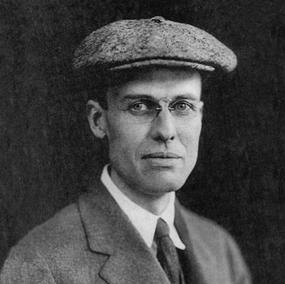
A defining figurative painter of twentieth-century American art, he captured urb…
A quiet challenge through figurative painting against an art world swept by Abstract Expressionism. Through cold light and masterful spatial composition, Hopper etched onto canvas the modern individual's estrangement from nature and their profound inner emptiness.
✦ Highlights (technique & color)
While appearing as straightforward realism at first glance, the rigid quality of the light is constructed through meticulous priming and multiple overlapping layers of color. In capturing light, Hopper purged it of warmth and sentimentality, deliberately minimizing yellow in his white pigments to apply cold, stark highlights across the figures' clothing and the concrete. This unforgiving glare cruelly exposes the inner void of the sitters.
✦ The setting of this painting
The depicted setting is not a real scenic location, but an imagined landscape combining Hopper's observations of city dwellers sunbathing in New York's Washington Square Park with his memories of the vast natural vistas of the American West encountered during road trips. The incongruous pairing of the artificial concrete terrace and the rugged mountain range reflects the artist's own unease and psychological alienation toward the untamed Western wilderness.
✦ Historical context
In the United States of the 1950s and early 1960s, the rise of mass car ownership firmly established a leisure culture of driving into the great outdoors and sunbathing at resort hotels. Beneath the surface, however, lay a pervasive sense of homogenized emptiness bred by advanced consumer society. In the art world, Abstract Expressionism reigned supreme, and figurative painting was increasingly dismissed as outmoded.
Deck chairs are lined up on a concrete terrace against a backdrop of vast blue skies and rolling mountains.
Facing the intense sunlight, five men and women sit in a row.
At first glance, they might appear to be tourists enjoying a leisurely holiday at a resort in the American West.
During the 1950s and 1960s, a culture of leisure blossomed as people drove their cars into the great outdoors to bask in the sun.
This painting is often described as depicting just such a vacation scene.
Yet in truth, this is not an actual scenic location in the West.
Nor do these figures feel even the slightest joy of a vacation.
In the autumn of 1960.
In his studio on Washington Square in New York, the seventy-eight-year-old Edward Hopper completed this painting.
At the time, the American art world was dominated by Abstract Expressionism, championed by figures like Jackson Pollock.
It was an era when figurative painting was dismissed as outdated.
Struggling with a creative slump and the physical decline of old age, Hopper was able to produce only about two large oil paintings a year.
Even so, he continued to believe in the power of figurative art to portray the human interior, even signing a formal protest against museums that favored abstract art almost exclusively.
This work was an entirely self-directed endeavor, where he cast onto canvas a theme he had long nurtured within himself.
Hopper and his wife, Jo, had crossed the American continent by car for years, visiting places throughout the West, including the Grand Canyon.
Yet Hopper himself felt a deep sense of disorientation and unease in the face of the West's blinding light and immense scale—
so much so that he lost the creative drive he had felt on the East Coast.
The setting of this painting is an imaginary landscape synthesized from his memories.
The inspiration for the figures came from city dwellers soaking up the sun on benches in Washington Square Park, just steps from his studio.
Hopper merged this urban crowd with the rugged mountain ranges of the West that had overwhelmed him.
In preparing the composition, he produced numerous preparatory sketches.
In his early drawings, the figures were positioned closer together, resembling a natural scene at a tourist destination.
Yet as he moved to the oil canvas, he deliberately widened the spaces between them and gave the angles of the chairs a strict geometric precision—
all to heighten the impossibility of dialogue and a sense of eerie stillness.
About 177 more words
Unlock this story's ending, and every article on MusicStory
- 42
Stories1–2 new every week
An archive of paintings paired with great music, made for a weekend night and a cup of coffee
- 282
Paintings with commentarygrowing daily
From simply looking to truly reading — the brushwork and the obsession of the masters
- 10
Music Librarygrowing daily
Know it first, and what reaches your ear changes — background music becomes art you keep for life
My Notes, unlimited
Every reading adds to a digital art notebook that is yours alone
Already have an account? Log in
Your Note
Write down what this painting made you feel in your art notebook.
Please sign up to write notes.
Sign up for freeRecommended Artworks
Sources & references
More artists
If you find an error in this content, please let us know here
This site is protected by reCAPTCHA, and the Google Privacy Policy and Terms of Service apply.