You Don't Have to Like Everything: A Frustration-Free Guide to Contemporary Music

Modern and Contemporary MusicMinimal Music

You Don't Have to Like Everything: A Frustration-Free Guide to Contemporary Music

Steve Reich · Arvo Pärt

2026.6.19

Piano Phase Composed in 1967

Please note: I'm Japanese and still learning English, so I use AI for translations. Doing my best! Feel free to correct me if I make a mistake! 🙏

It's often said that contemporary music is difficult.

But is it really the music that's difficult?
Or is it the way we listen?

Many people love classical music, but tense up at the mention of 'contemporary music'.

Imagining 'incomprehensible' things like pianos being struck with their lids or endless dissonances, many have quietly avoided it. You are probably not alone.

Today, I'd like to talk about how to ease that apprehension a little.

Listen to Music as You Would Walk Through a Museum
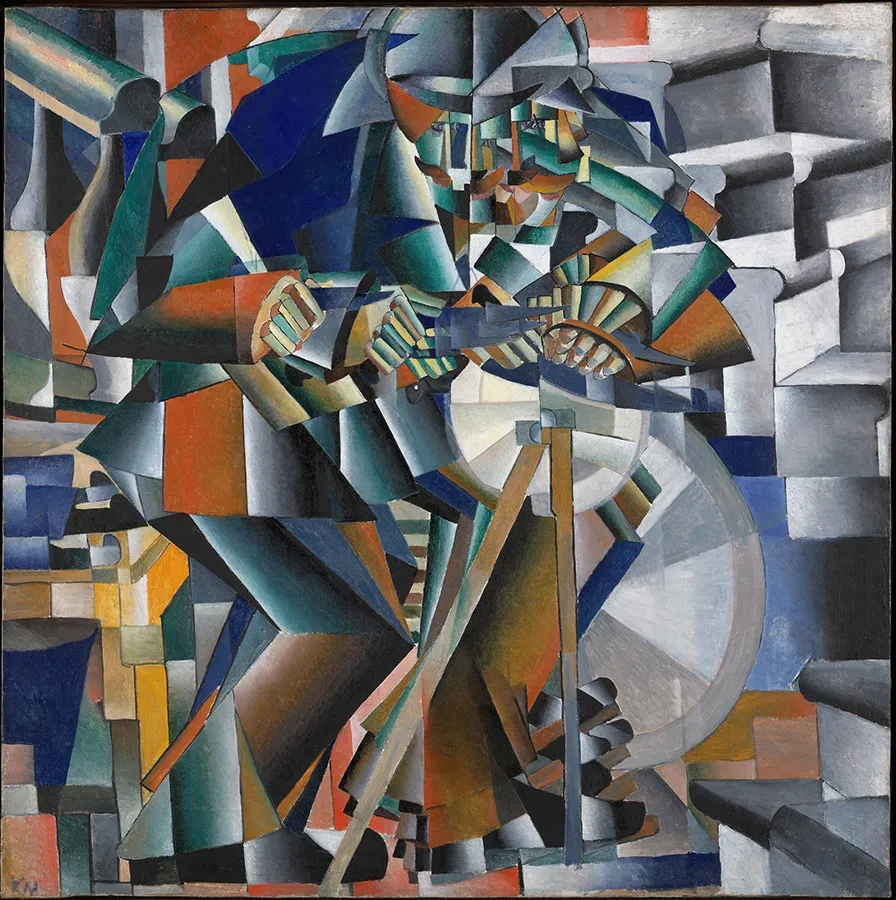
It might surprise you, but even those who specialize in music rarely 'like everything' in contemporary music.

The same goes for classical music. While some may love Bach, Chopin, and Stravinsky, few, if any, adore all of their works.
It's natural to have pieces you like, pieces that don't resonate, and pieces you dislike. That's perfectly normal.

Yet, when the label 'contemporary music' appears, we suddenly feel compelled to 'understand' it.
As if we're not qualified to listen unless we've read through an abstruse commentary from beginning to end.

But there's no need for that. It's like not having to scrutinize every painting in a museum.

You stop in front of a painting that catches your eye. With music, you can start with a piece that resonates with you.

Music That Doesn't Make You Wait for "What Happens Next"
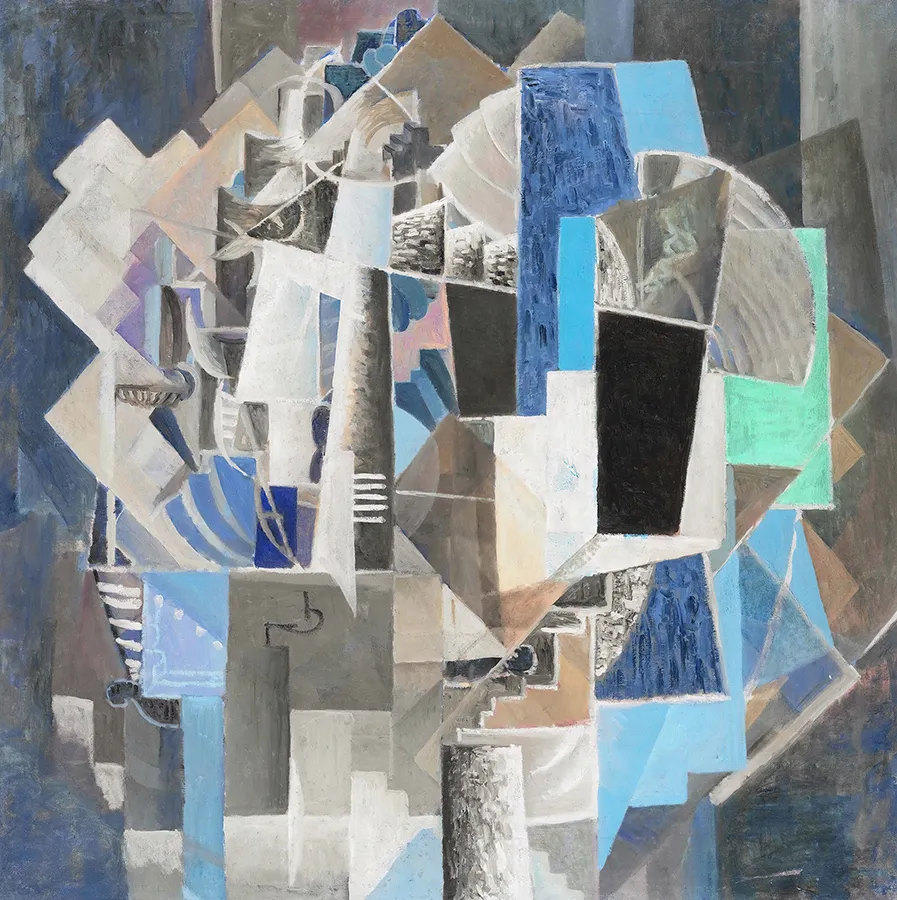
Still, you might wonder, 'Where should I start listening?'

For your first piece, I recommend a genre called "Minimal Music".
As the name suggests, it's music that repeats a very small number of sonic elements, gradually changing them.

This resonates surprisingly pleasantly even with first-time listeners.

A representative composer of this genre is the American Steve Reich. Please listen to his piece, Piano Phase, written in 1967.

The mechanism is very simple. Two pianists begin playing the exact same short phrase simultaneously.

However, one of them slightly accelerates the tempo.
As a result, the two perfectly synchronized sounds gradually drift apart.

This divergence creates a strange effect. Even though they are playing the same notes, the changing overlap makes it seem as if a different melody emerges.
As you listen, your ears might trick you into thinking, 'Did a new melody just appear?'

Reich himself called this 'music as a gradually unfolding process'.
There are no dramatic developments or moving climaxes. We simply follow the quiet progression of rules with our ears. The process itself becomes the music.

Here lies the first trick to enjoying contemporary music:
Instead of waiting for 'what happens next,' listen intently to 'what is happening now.'
Bring stories of art that stay with youinto your everyday life.

Stop chasing melodies, and observe the changes in sound. Suddenly, what might have seemed like a boring repetition becomes fascinating.

The Ultimate Simplicity Discovered by a Man Exhausted by the Avant-Garde

Allow me to introduce another piece, of a completely different type.

The Estonian composer Arvo Pärt. His piece, Spiegel im Spiegel (Mirror in the Mirror), written in 1978, is a curious work of contemporary music that most listeners find 'beautiful'.

The piano repeats slow arpeggios, like the sound of tiny bells.
Above this, a violin (there are also versions for cello and clarinet) moves with long, sustained notes, ascending and descending like steps, one note at a time.

Pärt named this style of clear sound 'tintinnabuli' (little bells).
Just the constituent notes of three chords and a simple melody. There is absolutely no ornamentation.

The phrases always return to the central note.
Pärt himself described it as 'returning home after being away'.

What's surprising is the background to this piece's creation.

In Estonia, under the Soviet regime, Pärt had been writing avant-garde and aggressive dissonant music.

But at one point, he reached an impasse with this 'dry intellectual game', and almost stopped composing for several years. It was a period of silence. When he began writing music again, what emerged was this infinitely simple, infinitely quiet music.

The ultimate simplicity, reached at the end of complexity. Here, the image of 'contemporary music = complex and difficult' is pleasantly subverted.

Relax and Step into a New World of Sound

Reich's Piano Phase and Pärt's Spiegel im Spiegel

Though both are 'contemporary music,' they are completely different.
One offers the intellectual pleasure of observing the progression of rules. The other, the beauty of a mind simply settling into tranquility.

What they have in common is that you can approach both without apprehension.

Was it the music that was difficult, or the way of listening?

Most likely, it was largely the 'way of listening'...
No, more precisely, it was in the 'apprehension' itself.

The misconception that you must understand everything, or like everything.
If you let go of that, contemporary music opens up before you as simply a new world of sound.

You don't have to like everything. Just one piece is enough.
You're sure to find other pieces that suit you.

Going forward, we will continue to introduce contemporary composers and their works, along with their stories.
If you'd like to read more, please register for free! We'd be delighted to help you discover your 'favorite piece'!

Bring stories of art that stay with youinto your everyday life.

If you find an error in this content, please let us know here

Listen to this piece

Your Note

What did this music and painting make you feel?
Write it down in your art notebook.

Please sign up to write notes.

Sign up for free

Music and art
are waiting for you.

Broaden your own world through the stories of art.
We will notify you by email when new articles are published.

Sign up free to read