
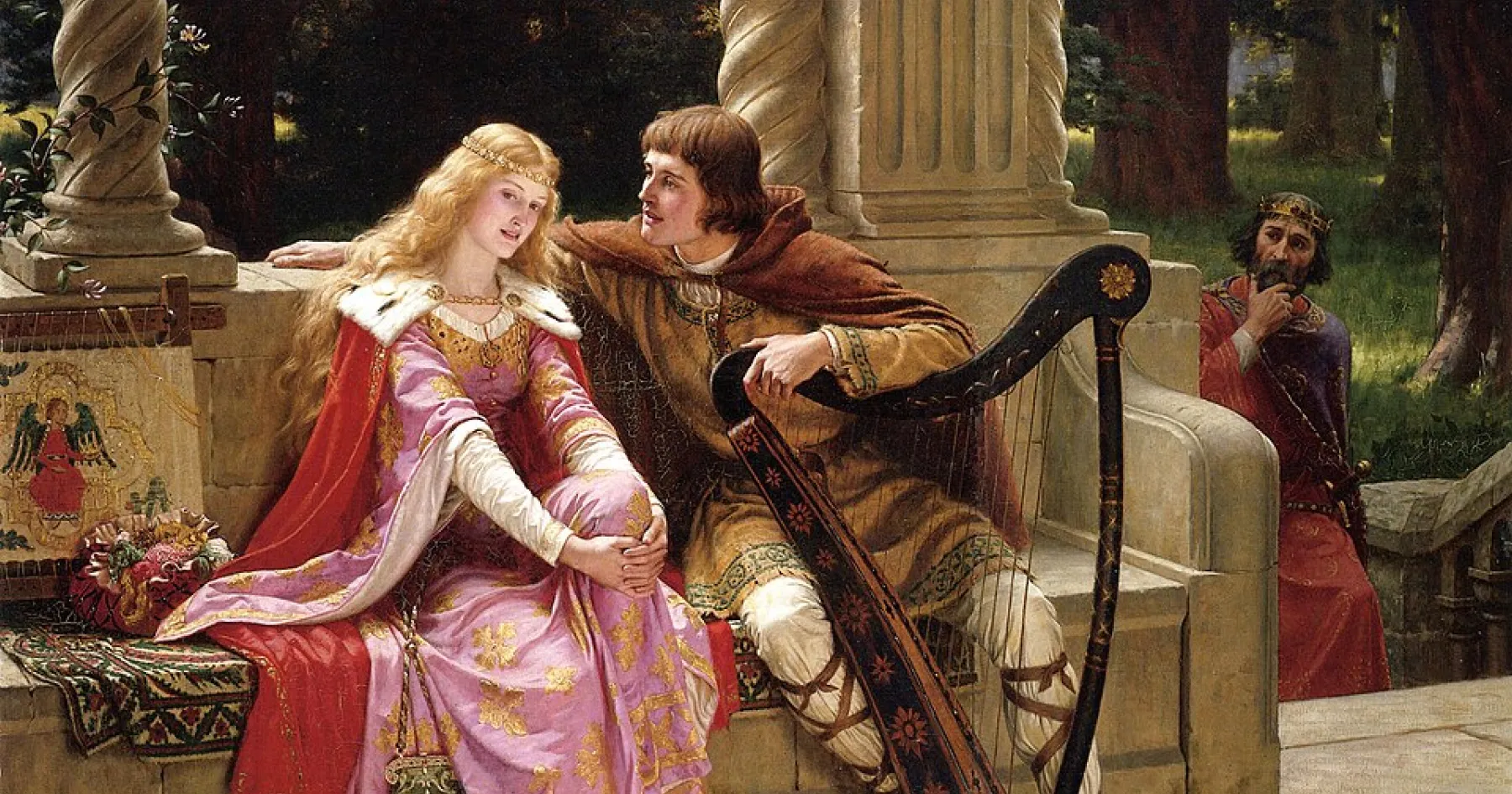
The End of the Song
1902
.webp)
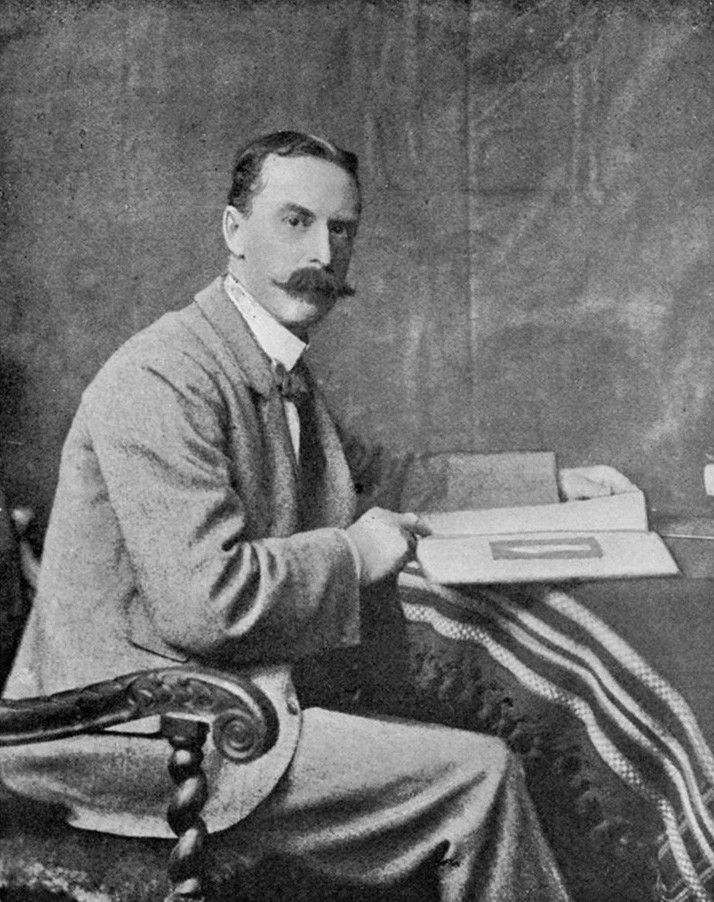
Active in London during the late Victorian and Edwardian eras, he was an artist…
On the palace terrace, a young minstrel has just finished playing his harp, creating a sweet moment. The beautiful princess has paused her embroidery, quietly listening to his passionate whispers.
The honeysuckle entwined around the pillars symbolizes 'bonds of love'. The two are completely absorbed in their own world, oblivious even to the approaching King (her father) from the staircase behind them. The King, stroking his beard, watches the young couple with a somewhat gentle gaze.
However, in reality, when this painting was first completed, the King's figure was entirely different.
About 136 more words
Read stories of masterpieces for free
Stories featuring this painting
Your Note
Write down what this painting made you feel in your art notebook.
Please sign up to write notes.
Sign up for freeRecommended Artworks
More artists

If you find an error in this content, please let us know here
This site is protected by reCAPTCHA, and the Google Privacy Policy and Terms of Service apply.