
 日本語 (JA)
 English (EN)
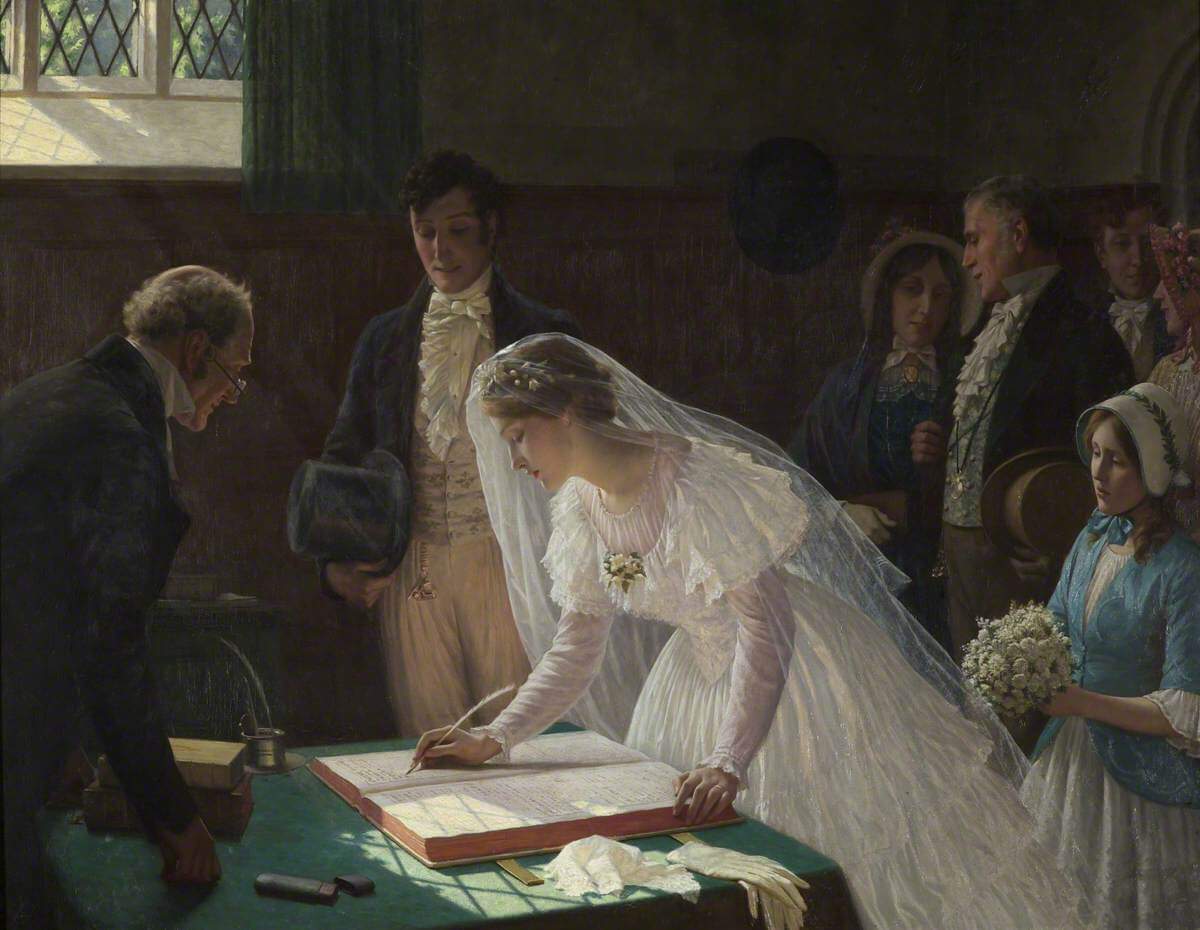
- Dimensions
- 91.4 × 118.5 cm
- Medium
- Oil on canvas
- Collection
- Bristol Museum & Art Gallery
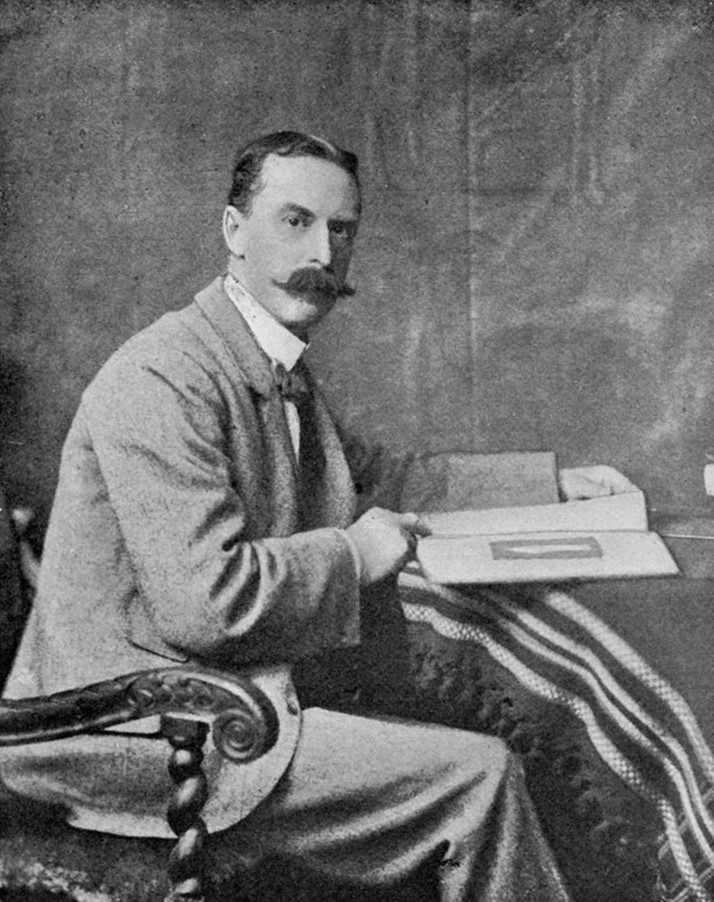
Active in London during the late Victorian and Edwardian eras, he was an artist…
A quiet resistance against the ascendancy of modern art, expressed through serene beauty and classical technique. Amid the turmoil of postwar society, the aging artist committed to canvas the irrevocable moment where love and law unite, driven by an unwavering conviction.
✦ Highlights (technique & color)
Employing the classical oil technique of glazing—applying thin, translucent layers of paint—the artist brilliantly renders the sheen of the satin gown and the delicate translucence of the silk veil. Furthermore, the geometric composition is carefully calculated so that both the light streaming from the upper-left window and the gazes of all the figures converge on the bride's hand as she signs, creating a heightened sense of narrative tension.
✦ The setting of this painting
The setting evokes an English church vestry or the registry of a manor house during the Regency era of the late 18th to early 19th century. Rather than depicting a real location, it is an idealized space constructed by the artist in his studio in Bedford Park, west London, using his collection of antique furniture and latticed window frames.
✦ Historical context
Painted in 1920, just after the end of the First World War, this work dates from a time when British society was undergoing profound transformation. Coping with the devastating losses of the war, the public harbored a deep nostalgia for the past. Meanwhile, modern art was gaining prominence, and classical narrative paintings such as Leighton's were increasingly dismissed by avant-garde critics.
Soft light filters through a latticed window into a room paneled in dark wood.
Dressed in a white bridal gown, the bride leans forward slightly toward the table.
With one silk glove removed, she holds a quill pen in her hand.
The groom, in a dark suit holding his top hat, watches with a deeply pensive gaze as his bride-to-be signs.
Opposite them sit a bespectacled official and a flower girl holding a large bouquet.
Everyone holds their breath, their eyes fixed on the nib of the pen gliding across the paper.
Unveiled in 1920, this painting is often assumed to depict a contemporary wedding of that period.
Others have spoken of it as a personal record, with the painter's own daughter posing as the model.
Yet that is not quite the case.
In truth, it is an "imagined past" from a century earlier, meticulously staged within the artist's studio.
The painter was Edmund Blair Leighton.
By 1920, he was in his late sixties.
The era was one in which the upheaval of the First World War had only just subsided.
Following the catastrophic losses of the war, the traditional family order of British society had been profoundly shaken.
In the art world, modern movements such as Cubism and abstraction were rapidly gaining ground.
His style of classical narrative painting, rooted in the Victorian era, was sometimes met with cold indifference by avant-garde critics as mere nostalgia for a bygone age.
About 227 more words
Read the rest of this commentary —
and step into a secret gallery
opened just for you
An "art letter" delivered to you every Saturday morning
Works, music and words chosen for your sensibility, from your artist-type result and the paintings you love
A library of masterpieces and music you can enjoy "in your own words", not just look at
A "digital art notebook" (unlimited) where your impressions build into your own taste
Unlimited likes and notes
¥980 / month¥0 today
¥980/month (tax incl.) from day 8. Cancel anytime.
Already have an account? Log in
Stories featuring this painting
Your Note
Write down what this painting made you feel in your art notebook.
Please sign up to write notes.
Sign up for freeRecommended Artworks
Sources & references
More art movements
Pre-Baroque
1 artworks
Victorian era
10 artworks
Impressionism
48 artworks
Late Pre-Raphaelite
10 artworks
Baroque
2 artworks
American Impressionism
5 artworks
Realism
4 artworks
Pre-Raphaelite
3 artworks
Barbizon School
5 artworks
Academic art
5 artworks
Luminism
3 artworks
Rococo
2 artworks
Symbolism
22 artworks
Neo-Impressionism
3 artworks
Ukiyo-e
1 artworks
Japonism
4 artworks
Edo period
1 artworks
Fauvism
1 artworks
Naturalism
9 artworks
Russian Realism
1 artworks
Post-Impressionism
13 artworks
Genre painting
9 artworks
Neoclassicism
3 artworks
ウィーン分離派
7 artworks
自然主義
1 artworks
ナショナル・ロマンティシズム
1 artworks
未来派
1 artworks
More artists
If you find an error in this content, please let us know here
This site is protected by reCAPTCHA, and the Google Privacy Policy and Terms of Service apply.