
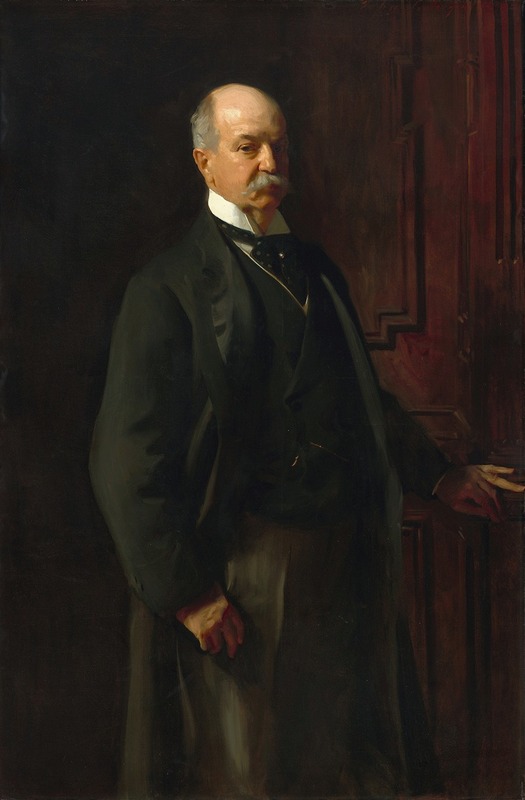
Peter A. B. Widener
1902
- Dimensions
- 148.9 × 98.4 cm
- Medium
- Oil on canvas
- Collection
- National Gallery of Art (Washington, D.C.)
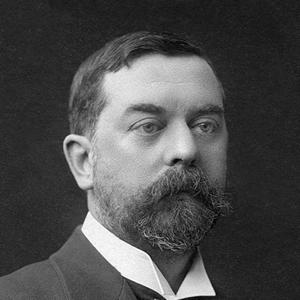
Born in Italy to American parents, he spent his early years in Paris before esta…
✦ Highlights (technique & color)
Paying homage to 17th-century Dutch and Flemish painting, Sargent employs striking chiaroscuro. Light falling from the upper left casts deep shadows across the right side of the subject's face and behind him, enhancing his commanding presence. The trousers and pocket watch chain are masterfully captured with just a few swift brushstrokes.
✦ The setting of this painting
This work was created in Sargent's studio on Tite Street in London. Upon its completion, the portrait was hung directly above the mantelpiece in the Van Dyck Room of Widener's palatial estate, Lynnewood Hall, surrounded by his collection of Old Master portraits.
✦ Historical context
The late 19th and early 20th centuries in America, known as the Gilded Age, saw the rise of a new class of wealthy elites through rapid industrialization. To showcase their social standing and cultural sophistication, they avidly collected European Old Masters and commissioned portraits from renowned painters like Sargent.
Against a dark background, light from the upper left illuminates an elderly man.
He wears a dark green coat, and his right hand rests on a wooden door behind him.
The man's name is Peter Arrell Brown Widener.
Born into a working-class family in Philadelphia and trained as a butcher, he amassed his initial fortune by supplying meat to the Union Army during the Civil War.
He later invested in streetcars and urban transportation, rising to become one of America's wealthiest men.
In 1902, he visited Sargent's studio in London.
The completed portrait was displayed in his immense mansion, Lynnewood Hall.
Its place was directly above the fireplace in the 'Van Dyck Room'.
He sought to align his own image with the lineage of classical court portraits.
In 1903, Sargent himself visited Widener's estate.
Their intellectual exchange was such that a second portrait was painted there.
Everything seemed to be going smoothly.
About 107 more words
Read stories of masterpieces for free
Your Note
Write down what this painting made you feel in your art notebook.
Please sign up to write notes.
Sign up for freeRecommended Artworks
.webp)
Sources & references
More artists
If you find an error in this content, please let us know here
This site is protected by reCAPTCHA, and the Google Privacy Policy and Terms of Service apply.