
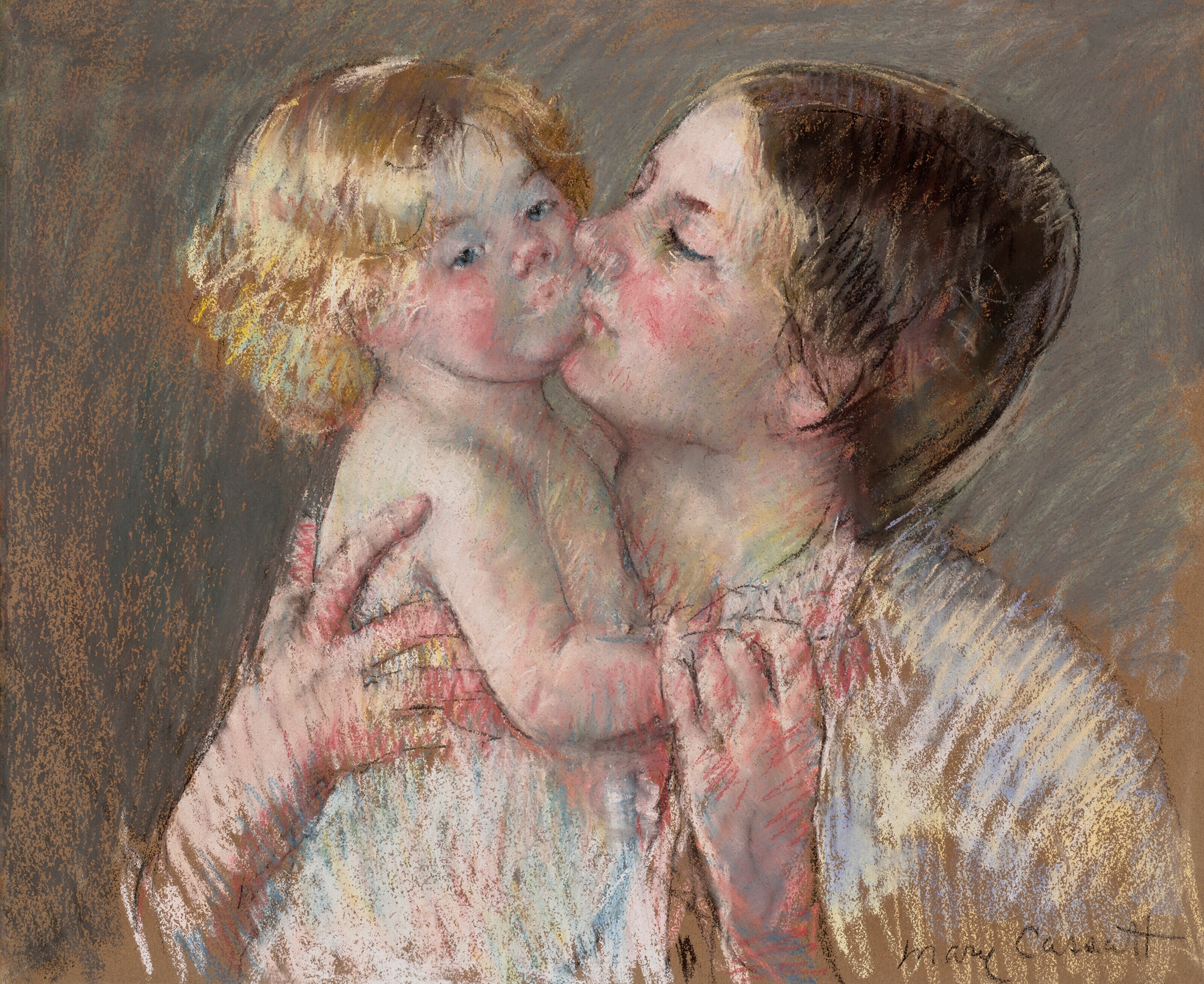
A Kiss for Baby Ann (No. 3)
1897
19世紀後半から20世紀初頭にかけて、主にフランスのパリを拠点に活躍したアメリカ人女性画家。
Plump, rosy cheeks.
A woman gently presses her lips to a golden-haired toddler she holds close.
A mother and child, full of tender love, embracing the viewer's heart with warmth.
Mary Cassatt is renowned as a painter who depicted such maternal and filial affection. Her paintings are often said to convey universal maternal love across all eras. However, this is not entirely true.
She herself remained unmarried throughout her life. She never held a child in her arms.
Furthermore, the models in this painting are not a real mother and child. They are merely a hired nanny and a child belonging to someone else.
A fabricated family. Why did she continue to paint mothers and children so persistently?
Born into a wealthy family in Pennsylvania, USA, in 1844, she lived in an era when it was expected for women to marry and become good wives and homemakers. However, she abandoned all of that. Defying strong family opposition, she chose the path of a professional artist.
She moved to Paris, where a solitary struggle began. In 1879, at the age of 35, Cassatt joined the Impressionists at Degas' invitation. While male painters freely depicted the outside world, she, as a woman, faced restrictions. Unable to even go to a café alone, she chose the private interior space as her subject.
Having forgone conventional happiness, she invited acquaintances' children and nannies to her studio. There, she created scenes with paint and pastels that she could never experience herself.
About 230 more words
Unlock this story's ending, and every article on MusicStory
- 42
Stories1–2 new every week
An archive of paintings paired with great music, made for a weekend night and a cup of coffee
- 282
Paintings with commentarygrowing daily
From simply looking to truly reading — the brushwork and the obsession of the masters
- 10
Music Librarygrowing daily
Know it first, and what reaches your ear changes — background music becomes art you keep for life
My Notes, unlimited
Every reading adds to a digital art notebook that is yours alone
Already have an account? Log in
Your Note
Write down what this painting made you feel in your art notebook.
Please sign up to write notes.
Sign up for freeRecommended Artworks
More artists

If you find an error in this content, please let us know here
This site is protected by reCAPTCHA, and the Google Privacy Policy and Terms of Service apply.