
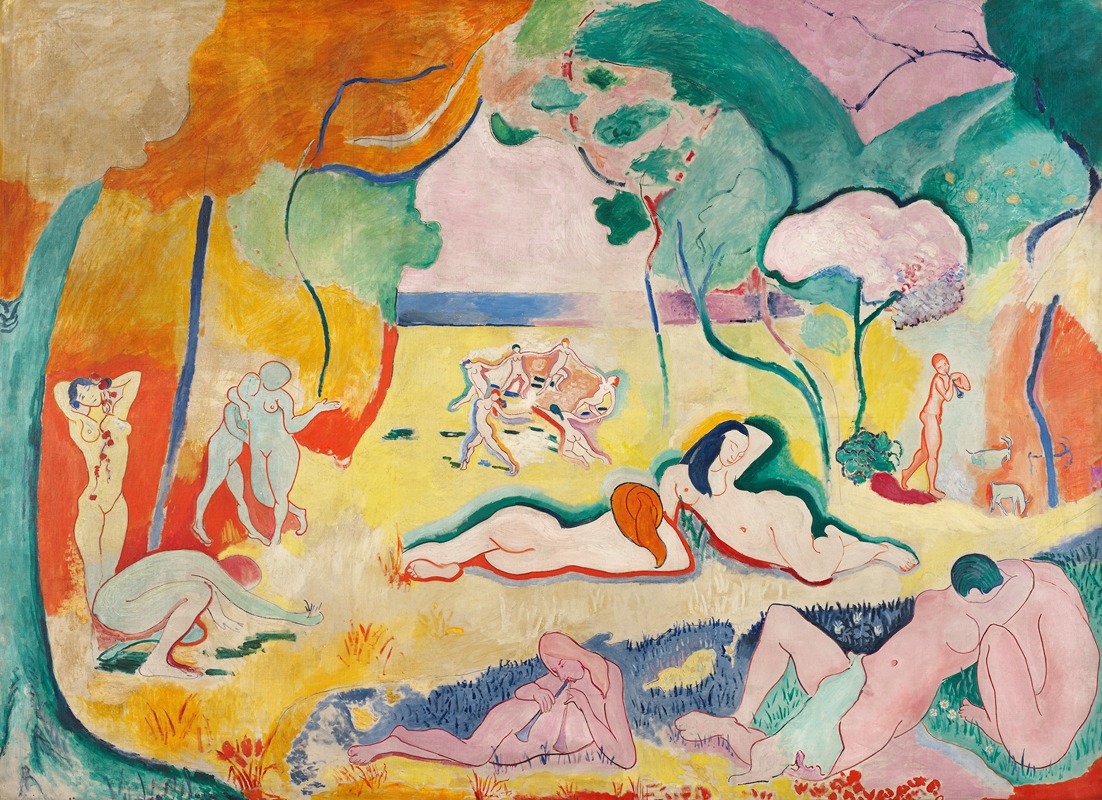
Le Bonheur de vivre, also called The Joy of Life
1905
- Dimensions
- 176.5 x 240.7 cm
- Medium
- Oil on canvas
- Collection
- The Barnes Foundation
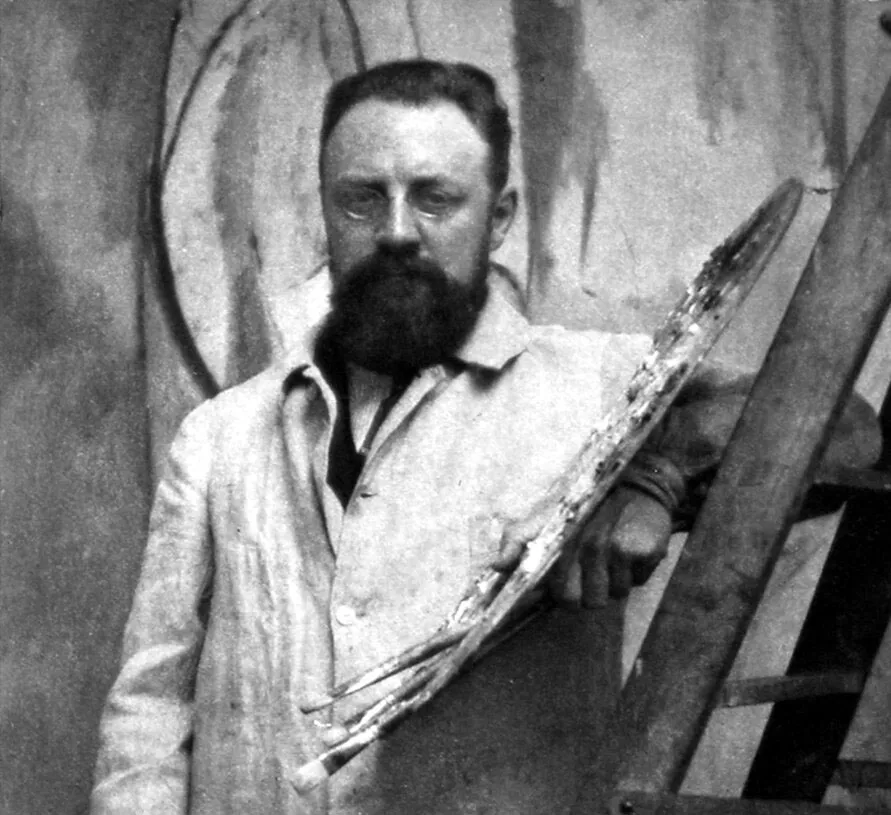
A French visual artist of the early 20th century, he detached color from the imi…
✦ Highlights (technique & color)
Executed in oil on canvas, this work commands an impressive presence, measuring 176.5 by 240.7 centimeters. The dazzling colors characteristic of Fauvism fill the entire canvas, captivating the viewer. Unbound by the colors of the natural world, this expressive palette powerfully conveys the essence of the "Joy of Life," true to its title.
✦ The setting of this painting
Once completed, this monumental work was displayed in the salon hosted by the siblings Gertrude and Leo Stein. As a gathering place for the avant-garde artists of the time, the salon served as a vibrant hub for innovative art. It was here that a young Pablo Picasso would encounter Matisse's masterpiece hanging on the wall—a truly fateful moment in modern art history.
✦ Historical context
The early 20th century saw the birth of Fauvism, a groundbreaking movement that revolutionized modern painting. Rather than faithfully replicating the colors of reality, the Fauves applied vivid hues guided purely by emotion and sensation, sending shockwaves through the art world. This painting is widely celebrated as one of the defining masterpieces of the movement.
The Joy of Life. True to its name, the canvas bursts with vivid colors. An overwhelming light. Between 1905 and 1906, Henri Matisse faced this monumental canvas. Measuring 176.5 centimeters high by 240.7 centimeters wide, it was large enough to look up to in awe. In the early 20th century, it became a masterpiece of Fauvism—a new form of expression known as the "Wild Beasts."
Once completed, the painting was displayed in a special place: the salon hosted by the siblings Gertrude and Leo Stein. It was a gathering place for the new art.
One day, a young man visited the salon: Pablo Picasso.
This huge painting, displayed in the Stein siblings' salon, left the young Picasso with an unimaginable shock. He was struck speechless.
The Joy of Life, painted by Matisse. Its overwhelming colors and expression violently shook the young Picasso’s heart. Was it jealousy of Matisse's talent? Or pure amazement? He likely could not tear his eyes away from the canvas.
About 148 more words
Unlock this story's ending, and every article on MusicStory
- 42
Stories1–2 new every week
An archive of paintings paired with great music, made for a weekend night and a cup of coffee
- 282
Paintings with commentarygrowing daily
From simply looking to truly reading — the brushwork and the obsession of the masters
- 10
Music Librarygrowing daily
Know it first, and what reaches your ear changes — background music becomes art you keep for life
My Notes, unlimited
Every reading adds to a digital art notebook that is yours alone
Already have an account? Log in
Your Note
Write down what this painting made you feel in your art notebook.
Please sign up to write notes.
Sign up for freeRecommended Artworks
Sources & references
More artists
If you find an error in this content, please let us know here
This site is protected by reCAPTCHA, and the Google Privacy Policy and Terms of Service apply.