
The Fallen Angel
1847
19世紀フランス美術界の頂点に立った、アカデミック絵画を代表する巨匠。
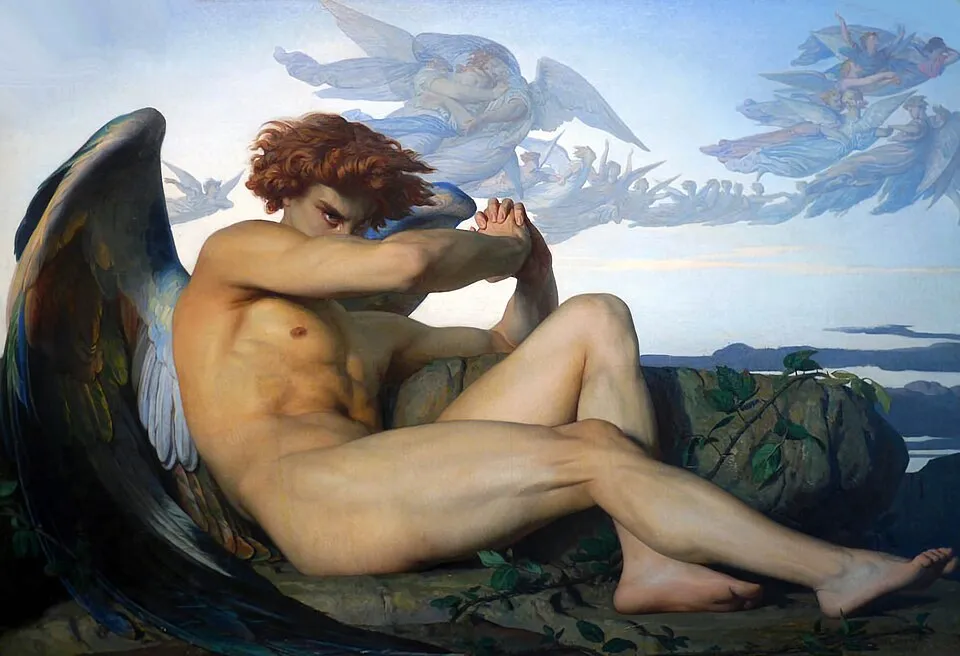
A beautiful and well-proportioned nude youth, reminiscent of a Greek sculpture, lies on a rocky outcrop, fixing the viewer with a piercing gaze. Behind his tightly crossed arms, which seem to conceal his face, a single, large tear is about to fall from his eye.
His true identity is Lucifer (Satan), the fallen angel who has just rebelled against God and been cast out of heaven. In stark contrast to the angels dancing joyfully in the bright sky behind him, the world into which he has fallen is enveloped in dark, somber shadows.
In fact, at the time this painting was created, choosing "the devil" as a subject for a painting was highly unusual in the conservative French art world, and it greatly shocked the judges who saw the work. The artist, Cabanel, was a mere 24 years old at the time. He painted this ambitious work in Italy, where he was staying after winning the prestigious Prix de Rome, a gateway for elite artists, drawing inspiration from John Milton's epic poem Paradise Lost.
About 82 more words
Unlock this story's ending, and every article on MusicStory
- 42
Stories1–2 new every week
An archive of paintings paired with great music, made for a weekend night and a cup of coffee
- 282
Paintings with commentarygrowing daily
From simply looking to truly reading — the brushwork and the obsession of the masters
- 10
Music Librarygrowing daily
Know it first, and what reaches your ear changes — background music becomes art you keep for life
My Notes, unlimited
Every reading adds to a digital art notebook that is yours alone
Already have an account? Log in
Stories featuring this painting
Your Note
Write down what this painting made you feel in your art notebook.
Please sign up to write notes.
Sign up for freeRecommended Artworks
More artists
If you find an error in this content, please let us know here
This site is protected by reCAPTCHA, and the Google Privacy Policy and Terms of Service apply.