
Sun in an Empty Room
1963
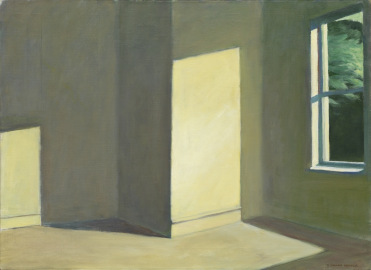
Image: エドワード・ホッパー『Sun in an Empty Room』(1963年) 出典:Wikipedia
- Dimensions
- 73.0 × 100.3 cm
- Medium
- Oil on canvas
- Collection
- Private collection
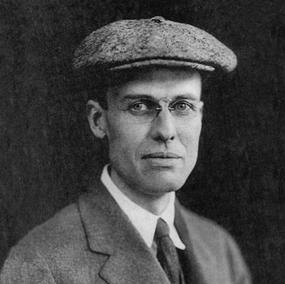
A defining figurative painter of twentieth-century American art, he captured urb…
A definitive departure from narrative storytelling and sentimental depictions of solitude. Facing his own aging, Hopper sublimated the core of his spirit into pure light and geometry—an ultimate self-portrait.
✦ Highlights (technique & color)
A key highlight is the contrast between the muted green walls and the striking planes of pale yellow light cast through the window. The paint is applied exceptionally thinly, brushed smoothly while preserving the texture of the ground beneath. Although descriptive details are stripped away, the boundaries between light and shadow are controlled with razor-sharp precision, creating powerful diagonals across the canvas.
✦ The setting of this painting
Inspired by the Hoppers’ summer studio in South Truro on Cape Cod, Massachusetts. Rather than a faithful rendering of a specific room, this inventive space was reconstructed from the artist’s memories and geometric composition, grounded in his careful observation of the autumn afternoon light streaming into the studio.
✦ Historical context
The early 1960s was a period of transition in the American art world, moving from Abstract Expressionism toward Pop Art and Minimalism. While Hopper steadfastly maintained his distinctive realism throughout his life, here he completely stripped away figurative narrative, arriving at a geometric composition forged solely from planes and beams of light—a work often regarded as his own response to abstraction.
An empty room, devoid of furniture and human presence.
Only the autumn afternoon sunlight streaming through the window illuminates the wall and floor.
Edward Hopper is widely known as a painter of urban solitude.
This painting, too, might seem to symbolize the loneliness left behind after someone has departed,
or perhaps a space calculated from the very beginning to be vacant.
It is easy to assume so.
Yet in truth, he did not set out to depict an empty room from the start.
October 1963, South Truro, Massachusetts.
Hopper had spent every year here since building his studio in 1934.
The intense coastal light shifted constantly.
At the age of eighty-one, he was facing a severe decline in physical strength.
His painting pace had slowed, managing to finish only one or two works a year.
After completing a piece in the spring, several months of silence followed.
Then in the autumn, with no commission and driven solely by his own impulse, he set to work on this canvas.
In his early preparatory sketches,
he had positioned the figure of a woman standing in the room.
Yet, as the work progressed, he made the decision to remove the figure entirely.
Hopper himself later recalled the reason:
"I had a figure in the sketch, but it was too big."
About 225 more words
Read stories of masterpieces for free
Your Note
Write down what this painting made you feel in your art notebook.
Please sign up to write notes.
Sign up for freeRecommended Artworks


Sources & references
More artists

If you find an error in this content, please let us know here
This site is protected by reCAPTCHA, and the Google Privacy Policy and Terms of Service apply.