
 日本語 (JA)
 English (EN)
- Dimensions
- 縦 56.0 cm × 横 37.6 cm
- Medium
- Oil on mahogany panel
- Collection
- The Clark Art Institute (Williamstown, Massachusetts, United States)
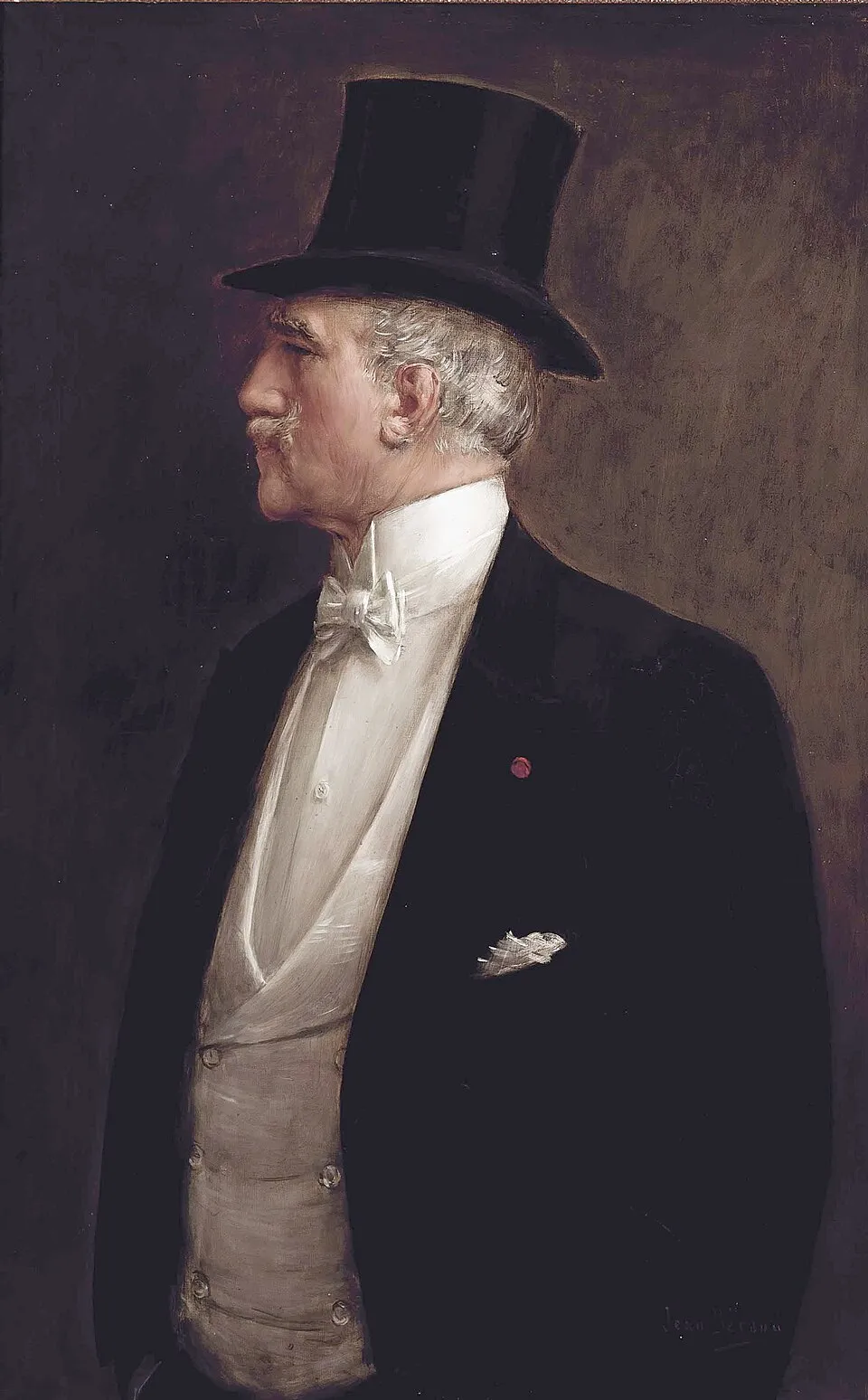
19世紀末から20世紀初頭のフランスにおいて、目まぐるしく変化する大通りの人間模様をスナップショットのように切り取った芸術家である。
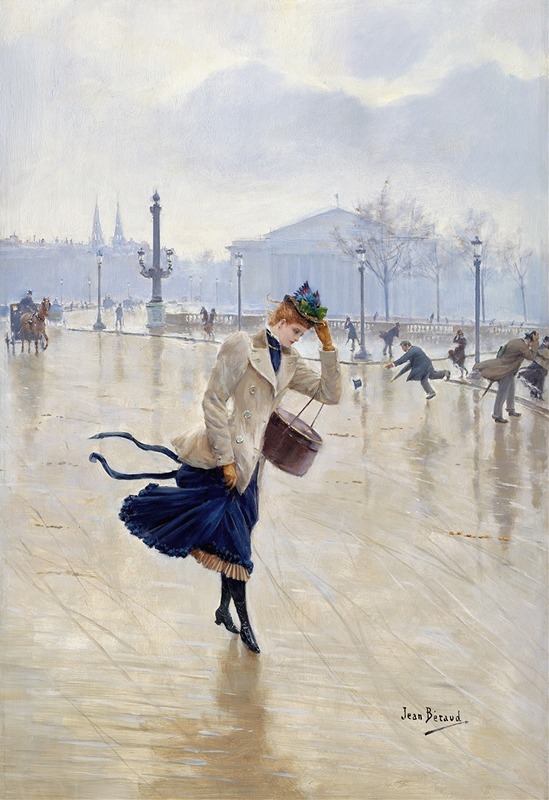
A deliberate act of forgetting that bleaches away the bloody memories of the Revolution, recasting the square as a stage for an elegant modern comedy. Bypassing monumental landmarks, it captures only the peaceful everyday moments of citizens striding briskly into a new era—a heartfelt ode to beloved Paris.
✦ Highlights (technique & color)
Painted on a mahogany panel 0.8 centimeters thick, this work employs a wet-on-wet technique, with the pavement rendered in remarkably thin, spontaneous brushwork. Amid the muted, pearl-gray palette, the woman's violet hatbox and teal buttons provide vivid accents.
✦ The setting of this painting
The setting is the Place de la Concorde in the 8th arrondissement of Paris. Once known as the Place de la Révolution, it carries a blood-stained history as the site of countless executions. Following the late-nineteenth-century modernization of Paris, complete with asphalt paving and modern sewage systems, it was reborn as the city's most splendid and expansive modern urban space.
✦ Historical context
Paris in the 1890s was in the midst of the glittering Belle Époque. As portable cameras grew in popularity, the concept of capturing a fleeting snapshot took root, while modern urban improvements fostered a vibrant consumer culture, allowing women dressed in the latest fashions to stroll through the city with newfound independence.
In Paris after the rain, a heavy, pearl-gray atmosphere hangs in the air. Fierce gusts of wind disrupt the bustling lives of passersby traversing the wet cobblestones. In the midst of such inclement weather, a young woman strides briskly forward. With her right hand clad in a golden glove, she firmly holds down her magnificent hat, which threatens to be blown away at any moment, while in her left arm, she carefully cradles a cylindrical purple hatbox. Although the wind whips her navy dress wildly around her, exposing black boots lined with delicate white buttons, her stride remains resolute. Behind her, men caught in the squall have had their top hats sent flying, leaning forward in comically awkward postures as they chase after them. Oblivious to these minor everyday catastrophes, she steadfastly braves the wind.
What She Protects Amid the Howling Wind
She is attired in an exquisitely elegant ensemble reflecting the cutting edge of fashion at the time. Her leg-of-mutton jacket, retaining the somewhat slender cut characteristic of this transitional period, is accented with striking turquoise buttons. Her reddish-blonde hair harmonizes beautifully with her ochre gloves and the golden embellishments lining the interior of her hat. Yet what catches the eye above all is the very hat she is so determined to protect. Luxuriously adorned with plumes of purple, red, teal, and blue, it is tied at the front with a vivid green ribbon. Far from being a mere shield against the rain, it represents her refined aesthetic sensibilities.
The purple hatbox clasped in her left arm might perhaps hold a new hat meant for a special evening soiree ahead, or it could be a personal indulgence found at a favorite milliner. In any case, to her, it is a cherished treasure that must be shielded from the powerful gusts at all costs.
She walks across the Place de la Concorde, the vastest and most magnificent urban expanse in Paris. Silvery reflections dance upon the rain-slicked cobblestones, while in the distance, veiled in a pearl-gray mist, the Greek-temple facade of the Chamber of Deputies emerges, backed further still by the twin spires of the Basilica of Sainte-Clotilde.
Once, Paris was a maze of muddy, cramped alleyways. Yet sweeping urban renovations brought asphalt and macadam pavements along with an advanced sewage infrastructure, enabling women like her to stroll safely and cleanly through the streets even on rainy days, reveling in their fashionable attire. Her buoyant step is testament to the way she fully embraces the benefits of this newly reborn, modern Paris.
About 544 more words

Read the rest of this commentary —
and step into a secret gallery
opened just for you
An "art letter" delivered to you every Saturday morning
Works, music and words chosen for your sensibility, from your artist-type result and the paintings you love
A library of masterpieces and music you can enjoy "in your own words", not just look at
A "digital art notebook" (unlimited) where your impressions build into your own taste
Unlimited likes and notes
¥980 / month¥0 today
¥980/month (tax incl.) from day 8. Cancel anytime.
Already have an account? Log in
Your Note
Write down what this painting made you feel in your art notebook.
Please sign up to write notes.
Sign up for freeRecommended Artworks
Sources & references
More art movements
Pre-Baroque
1 artworks
Victorian era
10 artworks
Impressionism
48 artworks
Late Pre-Raphaelite
10 artworks
Baroque
2 artworks
American Impressionism
5 artworks
Realism
4 artworks
Pre-Raphaelite
3 artworks
Barbizon School
5 artworks
Academic art
5 artworks
Luminism
3 artworks
Rococo
2 artworks
Symbolism
22 artworks
Neo-Impressionism
3 artworks
Ukiyo-e
1 artworks
Japonism
4 artworks
Edo period
1 artworks
Fauvism
1 artworks
Naturalism
9 artworks
Russian Realism
1 artworks
Post-Impressionism
13 artworks
Genre painting
9 artworks
Neoclassicism
3 artworks
ウィーン分離派
7 artworks
自然主義
1 artworks
ナショナル・ロマンティシズム
1 artworks
未来派
1 artworks
More artists







If you find an error in this content, please let us know here
This site is protected by reCAPTCHA, and the Google Privacy Policy and Terms of Service apply.