
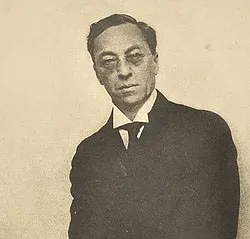
Ramon Subercaseaux (c.1880)
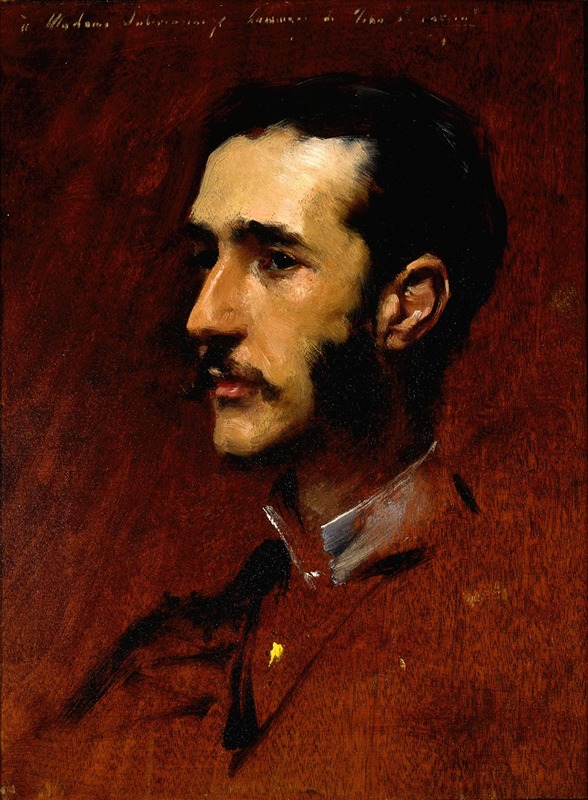
- Dimensions
- 35.6 × 26.7 × 1.6 cm
- Medium
- Oil on panel
- Collection
- Saint Louis Art Museum

Born in Italy to American parents, he spent his early years in Paris before esta…
✦ Highlights (technique & color)
Painted in oil on a wooden panel rather than canvas, the work reflects an Impressionist approach that captures the subject with swift brushstrokes. Across the top of the panel is an inscription written in Sargent's own hand, dedicated to his wife, Amalia.
✦ The setting of this painting
Created around 1880, likely in Venice or Paris. Rather than a formal studio setting, the work evokes an intimate, private space born of a close personal relationship. The background, rendered in a uniform reddish-brown, imparts a quiet serenity that leaves the specific location unspecified.
✦ Historical context
In the 1880s, Paris was a cultural epicenter attracting artists and wealthy patrons from across the globe. In an era when critical reception at the Salon heavily influenced an artist's career, building connections with influential patrons was vital for emerging painters.
A man with black hair and prominent sideburns emerges from a reddish-brown background.
His white collar peeks out, and he gazes quietly forward and slightly to the side.
His name is Ramón Subercaseaux.
A wealthy diplomat from Valparaíso, Chile, he was also an active landscape painter himself.
Painted around 1880, this work is rendered on a small wooden panel rather than canvas.
Look closely at the top of the panel.
There, a handwritten message from the artist Sargent to Subercaseaux's wife, Amalia, is inscribed.
This was not a formal portrait commissioned by a client.
It was a private gift, born of a close friendship.
Sargent was 24 years old at the time.
Based in Paris, he was just beginning to emerge as a promising young portrait painter.
For him, Subercaseaux, the Chilean consul in Paris, became his first significant patron, with whom he forged an artistic partnership.
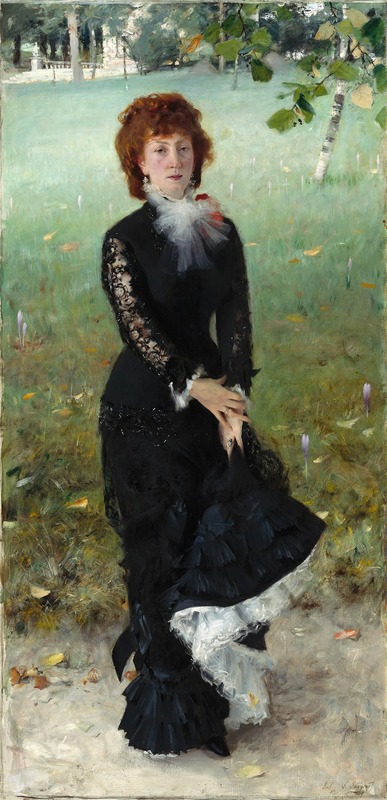
Subercaseaux commissioned Sargent to paint a life-size portrait of his wife, Amalia.
The completed masterpiece was exhibited at the Paris Salon in 1881.
It won a remarkable second prize.
This marked Sargent's first brilliant success in Paris.
Following this award, commissions from high-ranking society figures surged, propelling him to become the darling of his era.
About 113 more words
Read stories of masterpieces for free
Your Note
Write down what this painting made you feel in your art notebook.
Please sign up to write notes.
Sign up for freeRecommended Artworks
.webp)
Sources & references
More artists




If you find an error in this content, please let us know here
This site is protected by reCAPTCHA, and the Google Privacy Policy and Terms of Service apply.