La Salle à manger de George Sand à Nohant (George Sand's Dining Room in Nohant), Late 19th Century
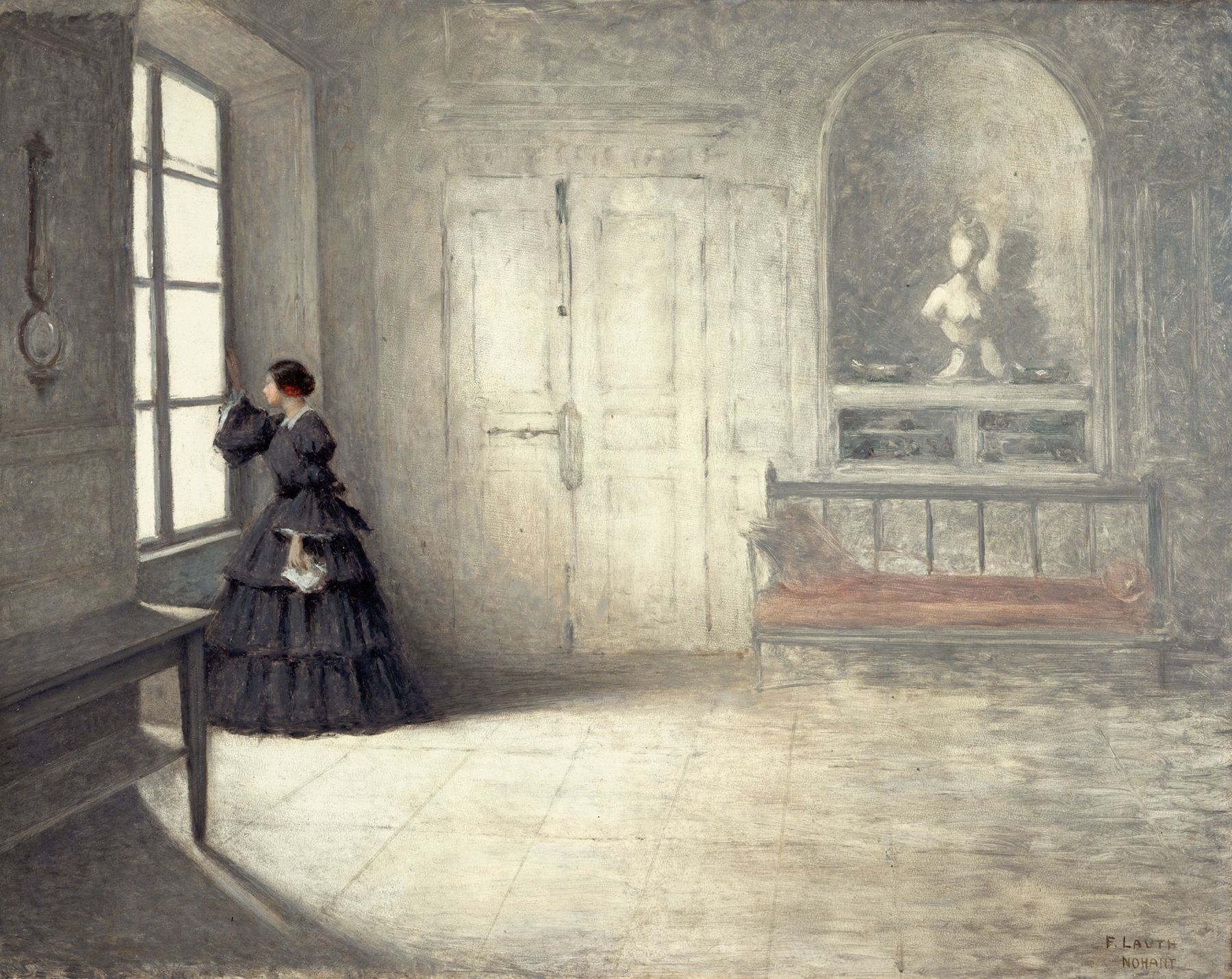

A polished cherry wood table. On the pristine white tablecloth, strawberry-patterned plates and colorful glasses are arranged. Yet, no one is present. Above, a blue chandelier, crafted in Murano, quietly gleams.

This painting is generally said to be a record of the brilliant culture of the 19th century. The residence of the great writer George Sand. A salon where Chopin, Liszt, Flaubert, and others once conversed through the night. A historical interior painting depicting that splendid dining table. Many people pass by this painting with such an understanding.

But in fact, it's not.

This is not a record of glorious days. It is a 'box' commissioned by a single woman, enduring the pain of loss, to eternally preserve the memories of her loved ones.

The protagonist of this story is Aurore Sand, the granddaughter of the great writer George Sand, the owner of the house.

In 1876, when she was 10 years old, her great grandmother passed away. In 1889, at the age of 23, she married Frédéric Lauth, a young painter of 24. They frequented this house and spent happy times there. However, in 1909, Aurore, at 43, lost her beloved sister Gabrielle, who was only 41.

Her parents, grandmother, and sister were all gone. Having no children, she was left all alone in the vast Nohant estate, which required immense effort and expense to maintain.

"You should let it go."

That's what people around her said. Indeed, she offered to donate the estate to both the Academy and the department. However, all offers were rejected due to the enormous maintenance costs. The vast garden. The deteriorating buildings. The lonely days. An ordinary person would have sold everything. Yet, she absolutely refused to part with this place, filled with memories.

The beautiful chair where her grandmother used to sit. The blue and amber glass cups gifted by Chopin. Cards bearing the names of famous guests.

She left everything exactly as it was in those days.

And she commissioned her husband, the painter, to depict this dining room. While museum catalogs contain academic observations regarding variations in dimensions and production years, that is not the crucial point. The important fact is that this painting was not created on a typical canvas, but rather on a robust, thick wooden panel using oil paint.

Never to tear. Never to fade. She sought eternal durability for this cherished family space.


Knowing this fact, look at the painting once more.

An empty dining room. But it is not truly empty. In Aurore's memory, her beloved family is about to take their seats.

The chandelier's light reflecting on the wood grain of the table. It is her own poignant gaze, fixed on the warmth of days gone by. The stillness that envelops the entire canvas is an endless love for what has been lost.

She protected this estate until her death in 1961 at the age of 95, finally entrusting it to the nation. For over half a century, she continued to live beside this uninhabited dining table, listening to the laughter of her absent family.

This silent room, painted on a thick wooden panel.

Perhaps it was the sole charm that comforted her, who had seen through her solitary struggle.

If you find an error in this content, please let us know here

19世紀後半から20世紀初頭にかけて活躍したフランスの画家。パリの国立高等美術学校(エコール・デ・ボザール)でアレクサンドル・カバネルらに師事し、主に肖像画家と…

Your Note

Write down what this painting made you feel in your art notebook.

Please sign up to write notes.

Sign up for free

Music and art
are waiting for you.

Broaden your own world through the stories of art.
We will notify you by email when new articles are published.

Sign up free to read