
The Willows
1880
- Dimensions
- 66.68 × 81.92 cm
- Collection
- Corcoran Collection (former Corcoran Gallery of Art, transferred 2015)
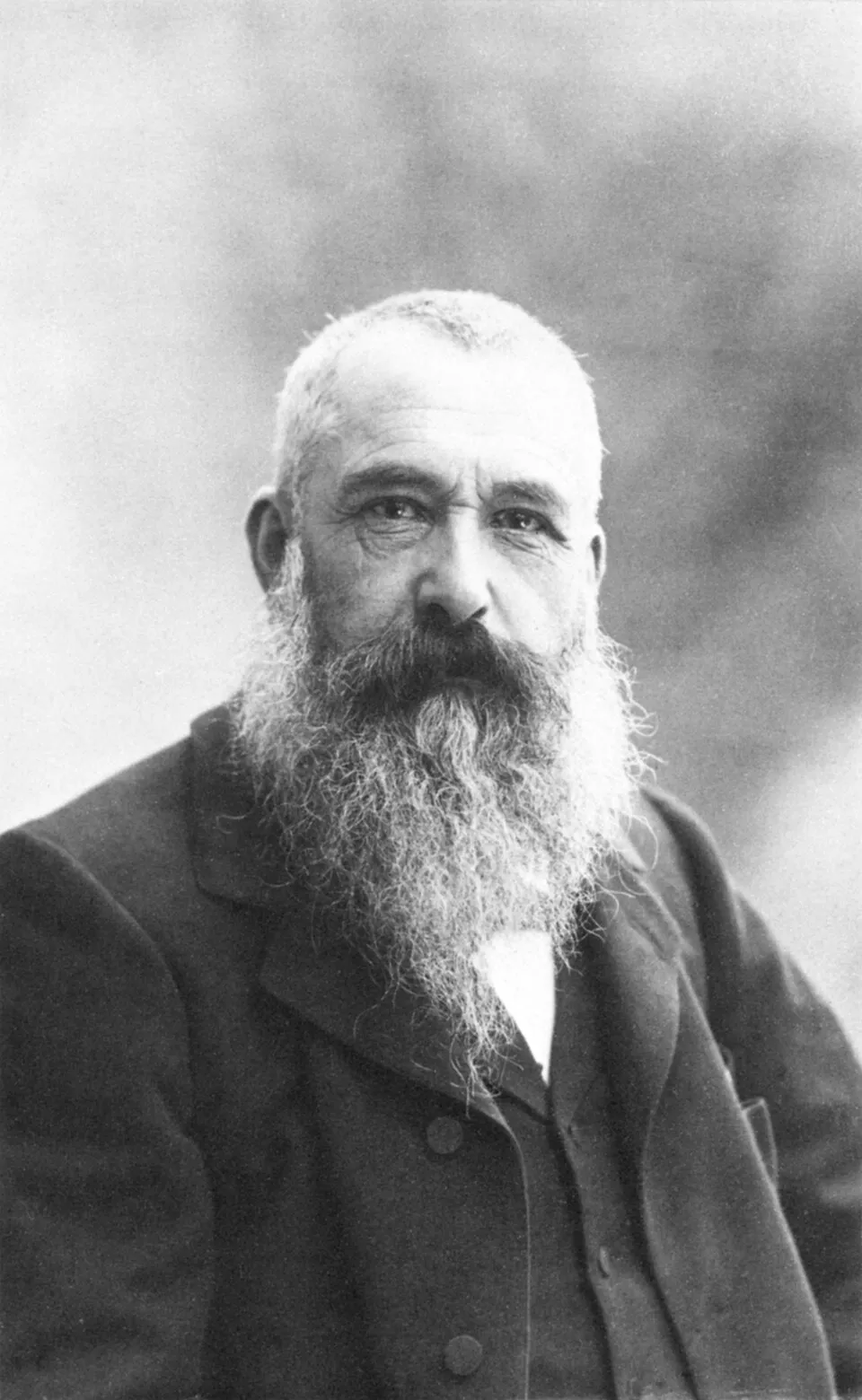
Celebrated as a founding figure of Impressionism, he is one of France’s most ren…
✦ Highlights (technique & color)
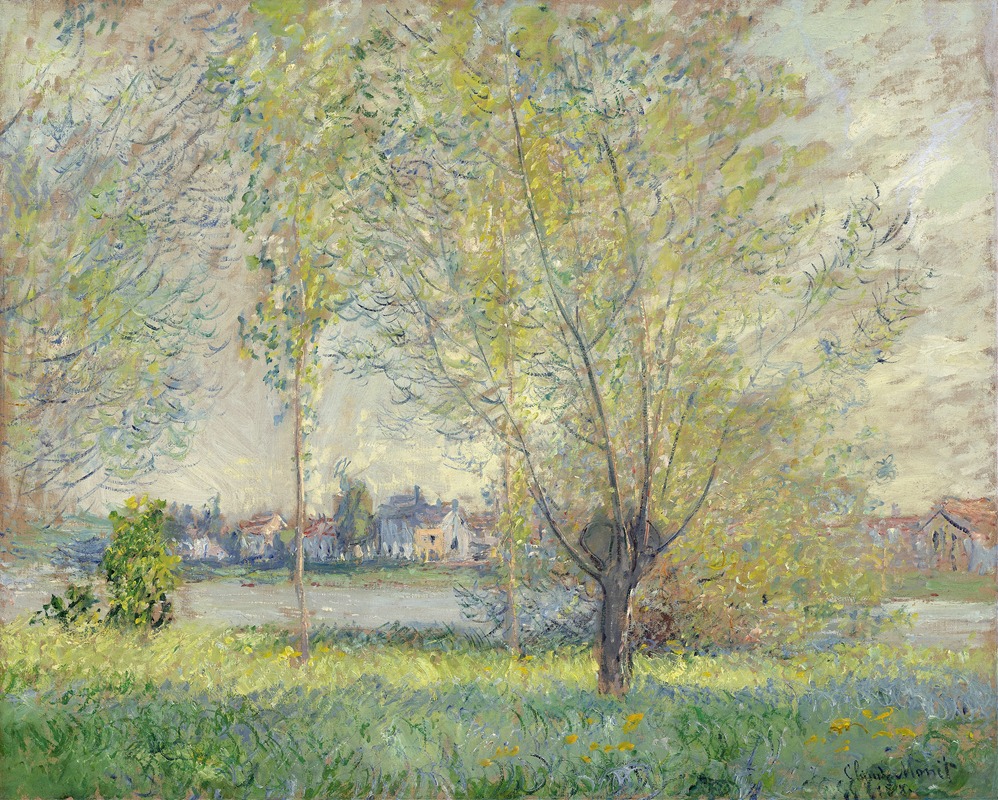
Free of human figures, the composition focuses purely on the waterside trees and landscape. The cluster of buildings on the opposite bank is rendered in soft blues that blend gently with the yellow hues of the sky, capturing the warm light and shimmering atmosphere of Vétheuil with remarkable finesse.
✦ The setting of this painting
This is the riverbank of Vétheuil, a picturesque rural village located about 70 kilometers northwest of Paris along a gentle bend of the Seine. Unlike the rapidly modernizing suburbs of Paris, Vétheuil retained its charming medieval character. In the foreground stands a willow tree, while a settlement near Vétheuil is depicted on the opposite bank of the Seine.
✦ Historical context
In 1880, Monet withdrew from the Impressionist group exhibitions and resumed submitting work to the conservative official Salon. During this period, he sought commercial success through avenues such as a solo exhibition organized by a publisher. In his personal life, having lost his wife Camille the previous year, he shared a complex living arrangement with his patron's family, marking a major financial and emotional turning point.
Willow leaves swaying in the breeze, and a calm water's surface.
On the opposite shore, houses seem to dissolve into soft blues and yellows.
With no human presence, only a tranquil waterscape stretches out before us.
In 1880,
Claude Monet was living in Vétheuil, a rural village roughly 70 kilometers northwest of Paris.
Yet his daily life was harsh, in stark contrast to the serene scenery.
The previous September, his beloved wife Camille had died of illness at the young age of thirty-two.
Monet was left to care for his young children.
Furthermore, following the bankruptcy of his patron, he ended up sharing a home with the family of Alice Hoschedé.
It was a life of extreme hardship for a household of twelve.
There were days when he could not even afford paint.
In despair, he wrote to his friends that he no longer had the strength to keep fighting under such conditions.
About 172 more words
Sign up free and enter Your Museum
Read the stories behind great paintings and music for free, in Your Museum
Your Note
Write down what this painting made you feel in your art notebook.
Please sign up to write notes.
Sign up for freeRecommended Artworks

Sources & references
More artists
If you find an error in this content, please let us know here
This site is protected by reCAPTCHA, and the Google Privacy Policy and Terms of Service apply.