
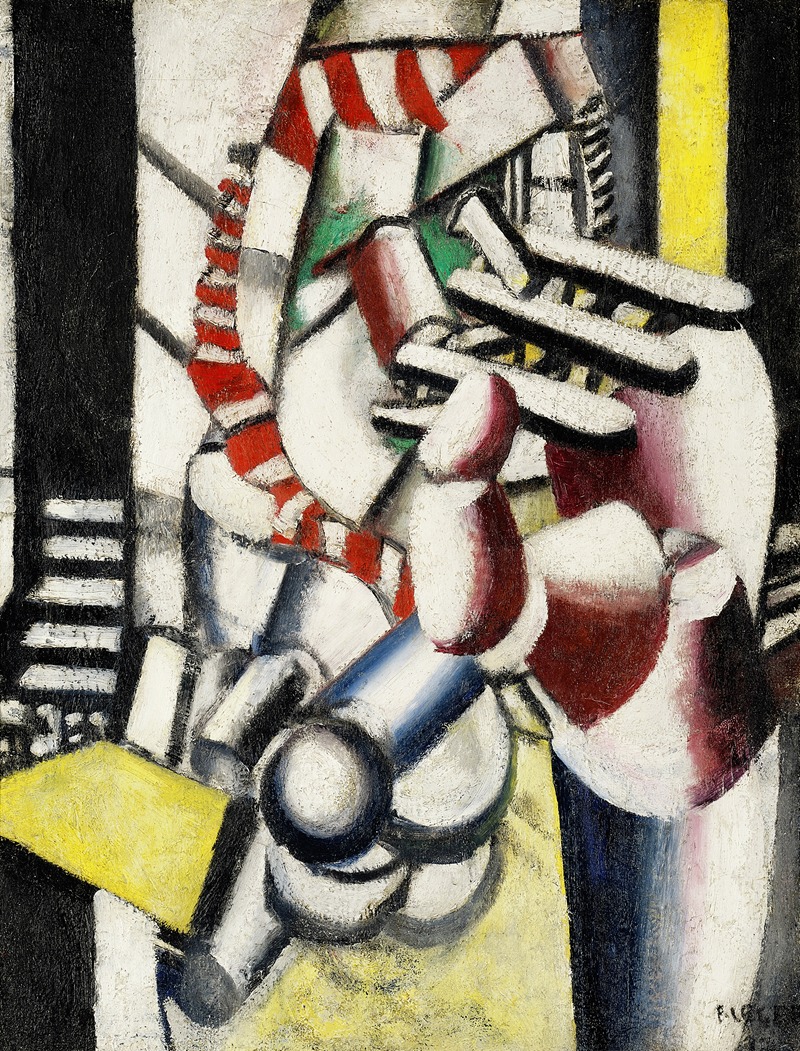
Le Blessé
1917
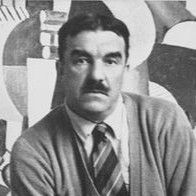
Joseph Fernand Henri Léger was a French painter, sculptor, and filmmaker. In his…
Fragmented, cylindrical masses. Red and white, intertwined with cold, metallic gray. This is the depiction of a 'human being'.
Fernand Léger is often said to be a painter who celebrated the 'beauty of machines' in modern industry, depicting cold, emotionless, robot-like figures. However, understanding the context in which this painting was created completely changes that impression.
In fact, this fragmented, disassembled style was not merely an aesthetic experiment. It was the very 'reality' he witnessed on the hellish battlefield.
In 1914, at the age of 33, Léger was conscripted into World War I. He was assigned to the front lines in places like Verdun, known for intense fighting. His duty was one of the most dangerous: a stretcher-bearer (brancardier). Day after day, amidst falling shells, he carried his mud-covered, torn comrades.
Until then, he had been among intellectual artist friends in Paris. But in the trenches, he was surrounded by nameless common people—miners and laborers. 'I want to paint with the same robustness and precision as their slang,' he resolved. He made this decision in the extreme conditions of living side-by-side with death.
In 1916, he suffered a German gas attack and hovered on the brink of death. Though he survived, his injuries forced him to leave the front lines and undergo a period of convalescence. The following year, drawing on his battlefield experiences, he created this work, one of only three oil paintings from that period.
About 228 more words
Read stories of masterpieces for free
Your Note
Write down what this painting made you feel in your art notebook.
Please sign up to write notes.
Sign up for freeRecommended Artworks
.webp)
Sources & references
More artists
If you find an error in this content, please let us know here
This site is protected by reCAPTCHA, and the Google Privacy Policy and Terms of Service apply.