
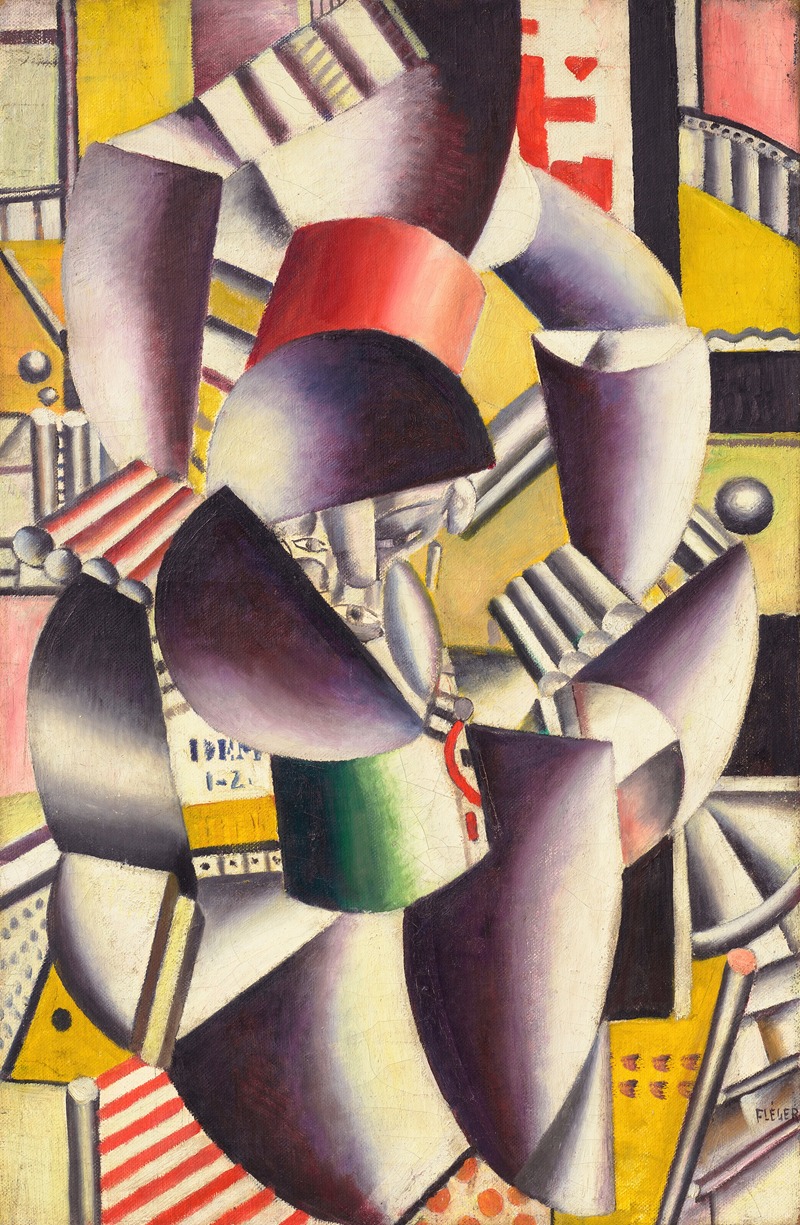
Les deux acrobates
1918
- Dimensions
- 89.3 x 58.3 cm
- Medium
- Oil on canvas
- Collection
- Private collection
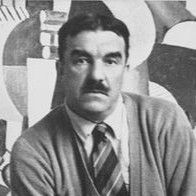
Joseph Fernand Henri Léger was a French painter, sculptor, and filmmaker. In his…
✦ Highlights (technique & color)
This work showcases the pinnacle of "Tubism," in which the figures' arms and torsos are rendered like cylindrical metal pipes. Vivid primary colors contrast sharply with planes of gray and black, while fragments of the human body—such as the curves of ears, fingers, and cheeks—are superimposed onto circus signs and architectural structures, generating an intense visual rhythm.
✦ The setting of this painting
This painting is set at the legendary Cirque Médrano, located in Paris's Montmartre district. Frequented by many avant-garde artists, it was more than just a place of leisure for Léger; it was an extraordinary realm where light, color, and movement converged. Here, it is depicted as a stage that embodies the speed and dynamism characteristic of the modern city.
✦ Historical context
The year 1918 marked the closing stages of World War I. Léger himself had been severely wounded by poison gas at the front and was discharged that same year. Returning from the devastation of war, he moved away from his pre-war pure abstraction to express the everyday vitality of the people and an optimistic faith in social reconstruction.
Arms and torsos resembling cylindrical metal pipes rise vertically, defying gravity.
Vibrant hues of red, blue, and yellow.
They clash sharply against geometric planes of muted gray and black.
A powerful rhythm seems to reverberate across the entire canvas.
1918.
This year marked a major turning point in the life of Fernand Léger.
The First World War broke out in 1914.
He was dispatched to the front lines as a combat engineer and later served as a stretcher-bearer.
There, he confronted horrific devastation alongside the cold, unyielding metallic machinery of modern warfare.
In 1916, he fell victim to poison gas at the Battle of Verdun and was hospitalized with severe injuries.
After lingering between life and death, he was finally discharged from the military in 1918.
- This work is part of “6 works for you” for The Avant-Garde Pioneer → See
About 199 more words
Unlock this story's ending, and every article on MusicStory
- 42
Stories1–2 new every week
An archive of paintings paired with great music, made for a weekend night and a cup of coffee
- 319
Paintings with commentarygrowing daily
From simply looking to truly reading — the brushwork and the obsession of the masters
- 10
Music Librarygrowing daily
Know it first, and what reaches your ear changes — background music becomes art you keep for life
My Notes, unlimited
Every reading adds to a digital art notebook that is yours alone
Already have an account? Log in
Your Note
Write down what this painting made you feel in your art notebook.
Please sign up to write notes.
Sign up for freeRecommended Artworks
Sources & references
More artists
If you find an error in this content, please let us know here
This site is protected by reCAPTCHA, and the Google Privacy Policy and Terms of Service apply.