
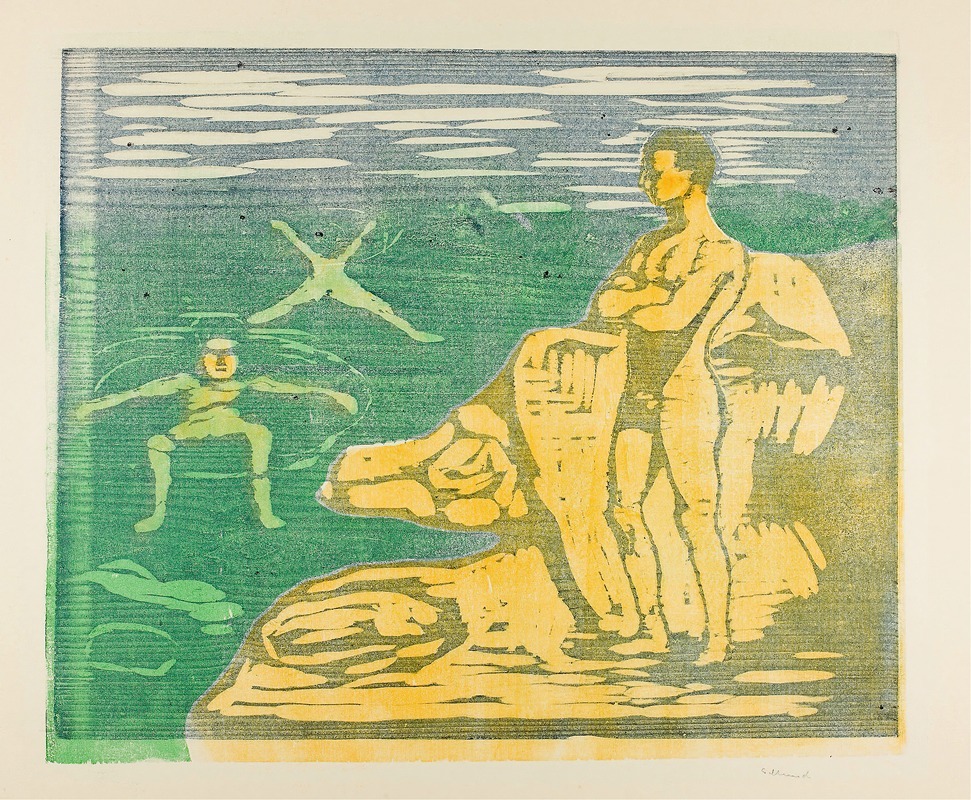
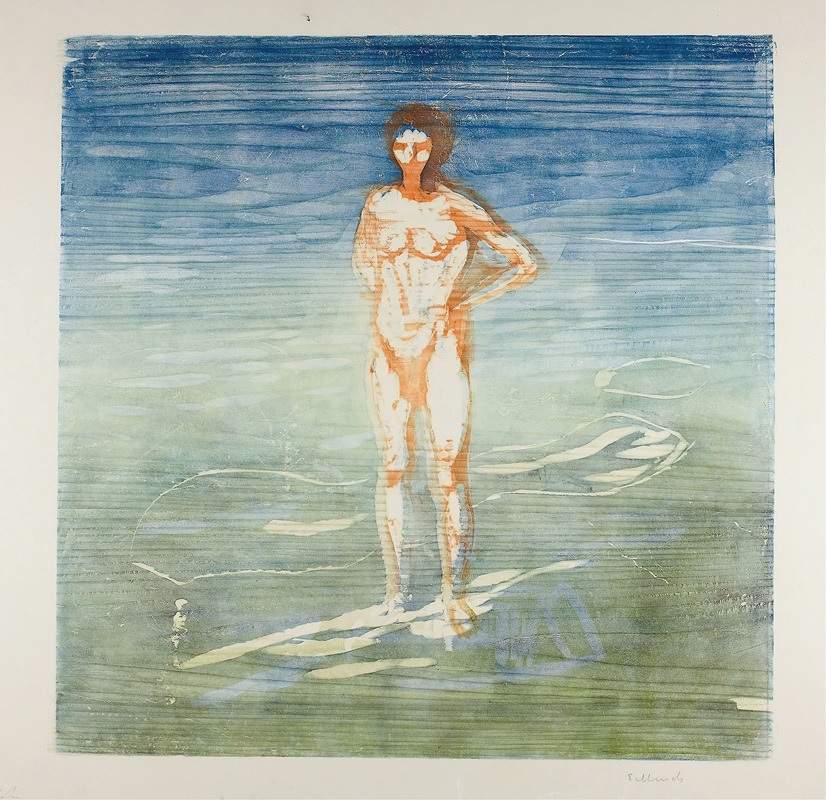
Boys Bathing
1899
- Dimensions
- 36.0 × 44.2 cm
- Medium
- Woodcut
- Collection
- Munch Museum (Oslo)
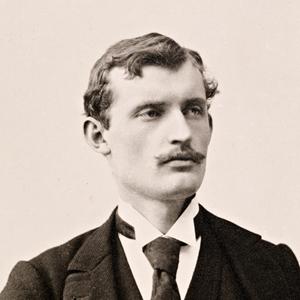
A celebrated Norwegian painter active from the late nineteenth century to the fi…
✦ Highlights (technique & color)
This work is distinguished by its bold, rugged white lines, gouged deeply into the block with a round chisel. Munch also captured the tangible textures of the sky and water by rubbing and transferring the horizontal wood grain directly onto the paper. The irregular printing pressure achieved in collaboration with his master printers was also embraced to great artistic effect.
✦ The setting of this painting
The scene is set on the beach at Åsgårdstrand. This coastal village, where Munch spent his summers, is characterized by gentle shorelines and smooth granite rocks rounded by glacial erosion. In this work, the contours of the waves and bedrock are simplified to their absolute essentials and restructured into concentric, decorative patterns.
✦ Historical context
In 1899, Europe saw a growing vogue for primitivist woodcuts that sought to escape the artifices of urban civilization and channel the primal forces of life through raw, visceral expression. It was also an era that witnessed the emergence of the Life Reform movement (Lebensreform), which promoted natural healing and sunbathing, fostering a widespread longing for healthy, vigorous bodies.
A boy stands on a rock, arms crossed, gazing quietly at the sea.
In his line of sight, other boys are swimming, stretching their limbs in the water.
In 1899, Edvard Munch was in deep distress.
His mental state was unstable due to severe asthma and alcoholism.
He was forced to recuperate in a sanatorium in Norway.
He felt a strong sense of inadequacy regarding his own frail body.
As if to escape from this, he became fixated on the 'nude body' as a healthy living form.
At that time, Gauguin's primitivist woodcuts were being introduced in Europe.
It was a trend to escape the deceit of urban civilization and entrust the 'source of life' to wild, untamed expression.
Munch, too, transitioned from refined copperplate engravings to woodcuts, which conveyed a powerful sense of materiality.
He sought to carve out primitive life impulses with his own hands.
For the creation of this work, Munch collaborated with the skilled printer Kildebø.
What Munch sought was an uneven 'fading' or 'streaking'.
This involved adjusting the press pressure irregularly to deliberately emphasize the wood grain.
Kildebø provided full technical support for the artist's experimental endeavors.
About 97 more words
Read stories of masterpieces for free
Your Note
Write down what this painting made you feel in your art notebook.
Please sign up to write notes.
Sign up for freeRecommended Artworks
.webp)
.webp)
.webp)
Sources & references
More artists
If you find an error in this content, please let us know here
This site is protected by reCAPTCHA, and the Google Privacy Policy and Terms of Service apply.