
 日本語 (JA)
 English (EN)
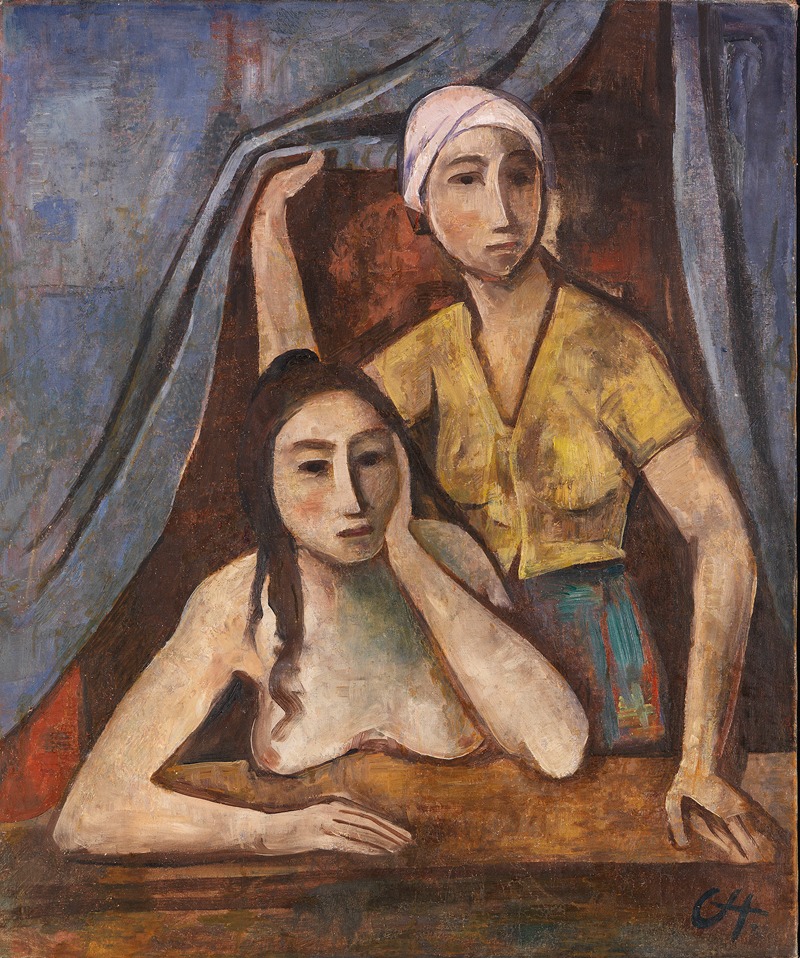
At the Window
1922
- Dimensions
- 70.7 x 59 cm
- Medium
- Oil on canvas
- Collection
- Private collection, Southern Germany
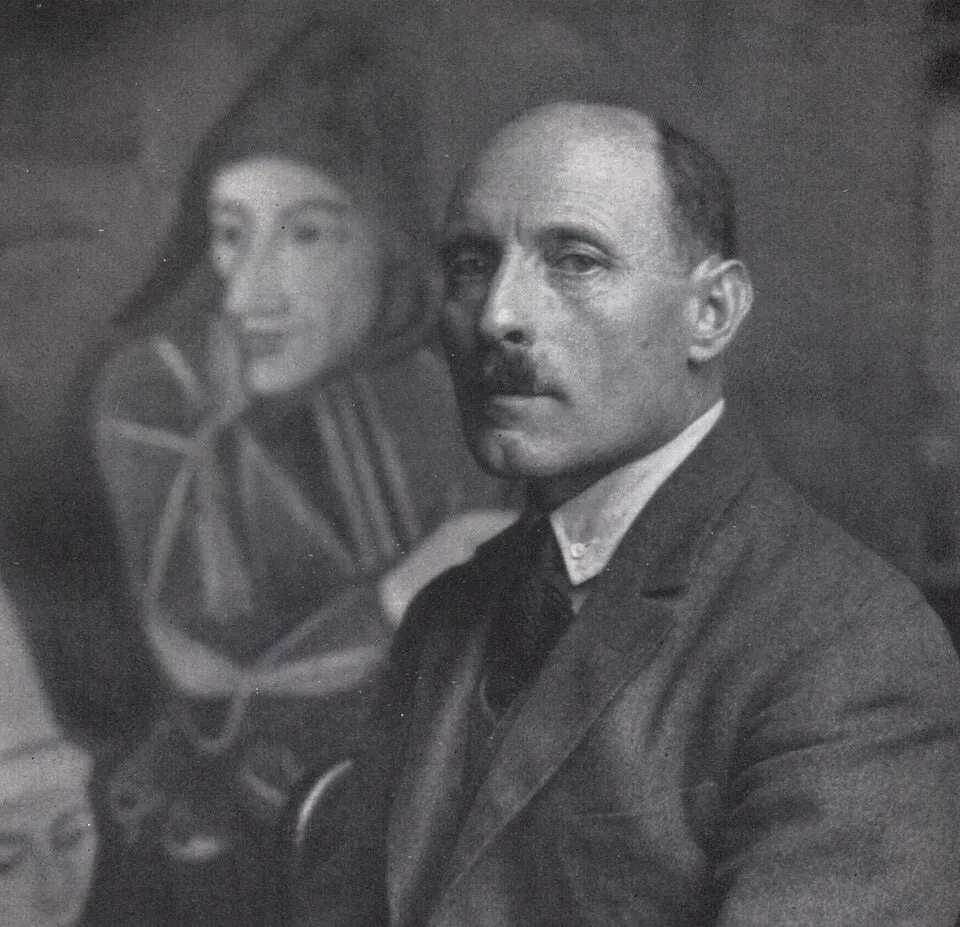
Karl Christian Ludwig Hofer or Carl Hofer was a German expressionist painter. He…
✦ Highlights (technique & color)
Employing a triangular composition reminiscent of Early Renaissance depictions of saints, the painting achieves a grounded sense of stability and sculptural order. Unnecessary details are stripped from the figures' bodies and garments, allowing deep, warm tones to resonate quietly against their pale skin. Furthermore, due to wartime shortages, the artist scraped away a landscape on the reverse side of the canvas to reuse it; this rough, uneven texture underpins the coexistence of materiality and spirituality.
✦ The setting of this painting
Two women are depicted within a dim interior, one gazing out of the window and the other lingering beside it. The window serves as a threshold mediating between the "inner world"—an intimate, enclosed psychological realm—and the "outer world" of society, which is unknown and at times threatening. The act of lifting the curtain symbolizes a duality: the yearning for contact with the outside world juxtaposed with a defensive impulse to shield oneself from the gaze of others.
✦ Historical context
The year 1922 was a tumultuous period for the Weimar Republic, marked by the chaos following defeat in World War I, the aftermath of revolution, and the looming approach of severe hyperinflation. The sense of disorder and spiritual void that hung over German society drove the artist toward a deeply introspective expression. The mask-like, impassive faces and postures that reject interaction with others sharply reflect the human alienation of the era.
A dimly lit room.
One woman quietly lifts the curtain covering the window, while the other, bare to the waist, rests gently against the window frame.
Their eyes do not meet.
Each seems immersed in deep silence.
The year is 1922.
Germany was in turmoil following its defeat in the First World War.
It was a time of immense upheaval, with the specter of hyperinflation looming.
The painter Karl Hofer was also among those deeply scarred by the war.
In the summer of 1914, while staying in France, he was detained as an enemy alien.
Three arduous years of internment followed.
He finally returned to Berlin in 1919.
Appointed a professor at the art academy, he began to regain his standing in society.
Yet the trauma of war lingered in his mind.
The nihilism pervading society also weighed heavily upon him.
It was then that the model Elisabeth Schmidt entered his life.
While still married to his wife, Hofer began living almost as husband and wife with her in Berlin.
Elisabeth became his most vital muse.
Her classical features became the archetype for the "new image of woman" that Hofer portrayed.
Germany at the time suffered from severe material shortages.
Obtaining a new canvas was a difficult task.
Hofer scraped away an earlier landscape he had painted.
He then reused the reverse side to complete this painting.
The rough, textured surface.
It bears the imprint of the harsh realities of that era,
along with the painter's obsession—an undeniable urge to paint despite it all.
About 141 more words
Read the rest of this commentary —
and step into a secret gallery
opened just for you
An "art letter" delivered to you every Saturday morning
Works, music and words chosen for your sensibility, from your artist-type result and the paintings you love
A library of masterpieces and music you can enjoy "in your own words", not just look at
A "digital art notebook" (unlimited) where your impressions build into your own taste
Unlimited likes and notes
¥980 / month¥0 today
¥980/month (tax incl.) from day 8. Cancel anytime.
Already have an account? Log in
Your Note
Write down what this painting made you feel in your art notebook.
Please sign up to write notes.
Sign up for freeRecommended Artworks
Sources & references
More art movements
Pre-Baroque
1 artworks
Victorian era
10 artworks
Impressionism
48 artworks
Late Pre-Raphaelite
10 artworks
Baroque
2 artworks
American Impressionism
5 artworks
Realism
4 artworks
Pre-Raphaelite
3 artworks
Barbizon School
5 artworks
Academic art
5 artworks
Luminism
3 artworks
Rococo
2 artworks
Symbolism
22 artworks
Neo-Impressionism
3 artworks
Ukiyo-e
1 artworks
Japonism
4 artworks
Edo period
1 artworks
Fauvism
1 artworks
Naturalism
9 artworks
Russian Realism
1 artworks
Post-Impressionism
13 artworks
Genre painting
9 artworks
Neoclassicism
3 artworks
ウィーン分離派
7 artworks
自然主義
1 artworks
ナショナル・ロマンティシズム
1 artworks
未来派
1 artworks
More artists
If you find an error in this content, please let us know here
This site is protected by reCAPTCHA, and the Google Privacy Policy and Terms of Service apply.