Breaking away from narrative conventions and rigid outlines, he captured the shifting play of light and atmospheric vibrations on canvas through juxtaposed pure color.
LifeLife and works
Around 1855 to 1856, at roughly fifteen years of age, Claude Monet drew caricatures in Le Havre that exaggerated the features of local figures. Sold for ten to twenty francs each, these drawings earned him local renown and caught the eye of landscape painter Eugène Boudin. Encouraged by Boudin to join him in painting outdoors en plein air, Monet was captivated by the constantly shifting quality of natural light, sparking his enduring dedication to landscape painting.
By the mid-1860s, Monet committed himself to the direct observation of light outdoors. In 1865, working in the Forest of Fontainebleau, he painted Bazille and Camille to study how dappled sunlight filtered through the trees onto clothing. In his personal life, however, he faced extreme financial hardship. In 1867, his partner Camille gave birth to their first son, Jean, but Monet's father, Adolphe, demanded he end the relationship and cut off all financial support. Evicted from an inn in 1868, Monet attempted suicide in the Seine.
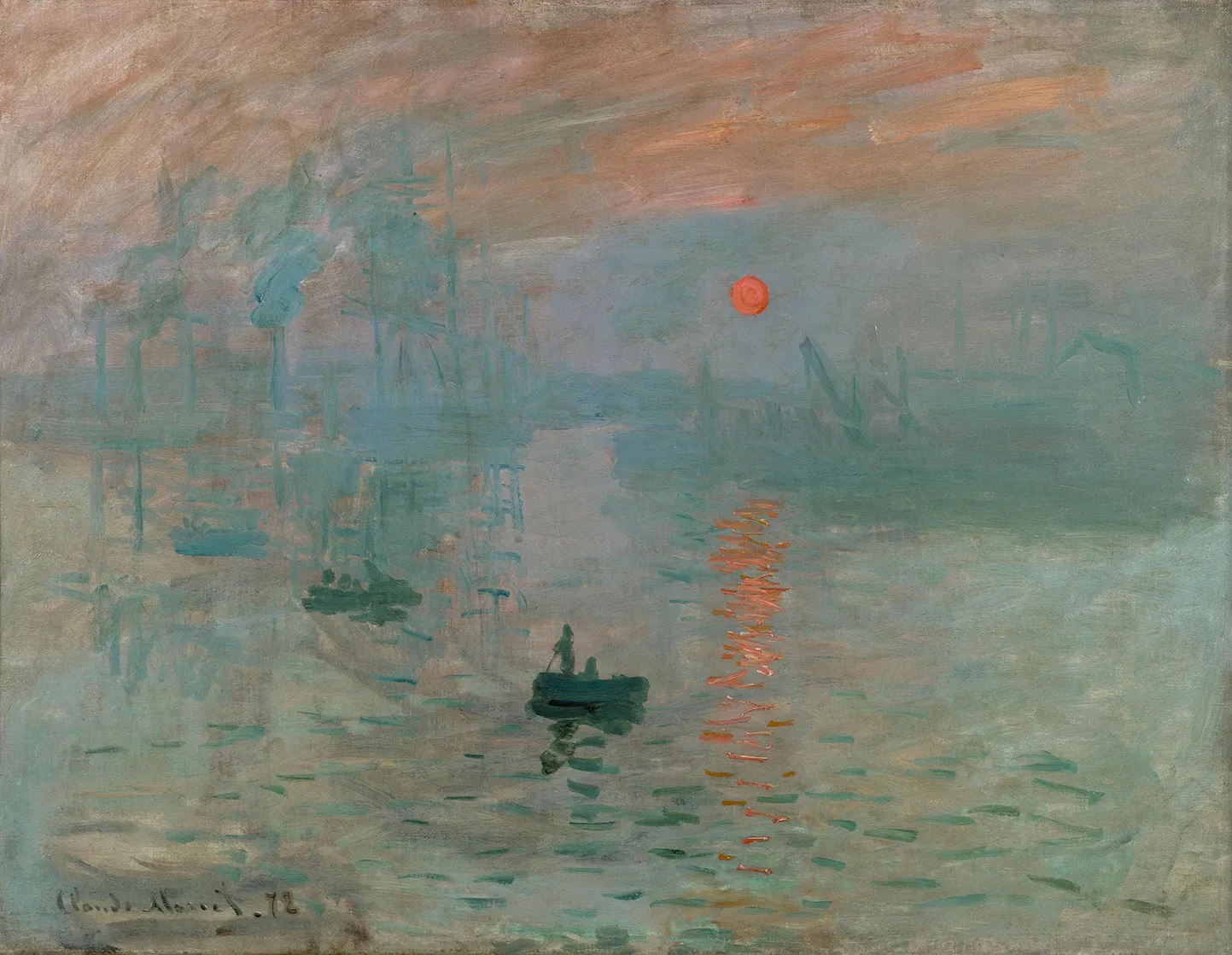
Monet married Camille in 1870 and fled to London and the Netherlands to escape the Franco-Prussian War and the turmoil of the Paris Commune, before settling in Argenteuil near Paris in late 1871. There, he documented the modernizing suburb, painting sailboats on the Seine and the newly erected railway bridge. In 1873, he outfitted a small boat as a floating studio to observe water reflections directly from the river's surface. In 1874, he helped organize the First Impressionist Exhibition, showcasing a technique of placing unblended brushstrokes side by side to convey the vibration of light. In 1877, at Gare Saint-Lazare in Paris, he produced a series of twelve paintings capturing the interplay of light and steam billowing beneath the station's glass canopy.
In 1878, after his patron Ernest Hoschedé went bankrupt, Monet moved to Vétheuil with a combined household of twelve, including Hoschedé’s wife, Alice, and her six children. When Camille died in September 1879 at the age of thirty-two, harsh weather kept the grieving artist indoors, where he turned to still lifes of apples and grapes. In 1880, he chose not to participate in the Fifth Impressionist Exhibition, instead submitting to the conservative official Salon, which accepted his painting The Seine at Lavacourt. Around this period, he began taking canvases started outdoors back into the studio to rework and refine them through superimposed layers of pigment.
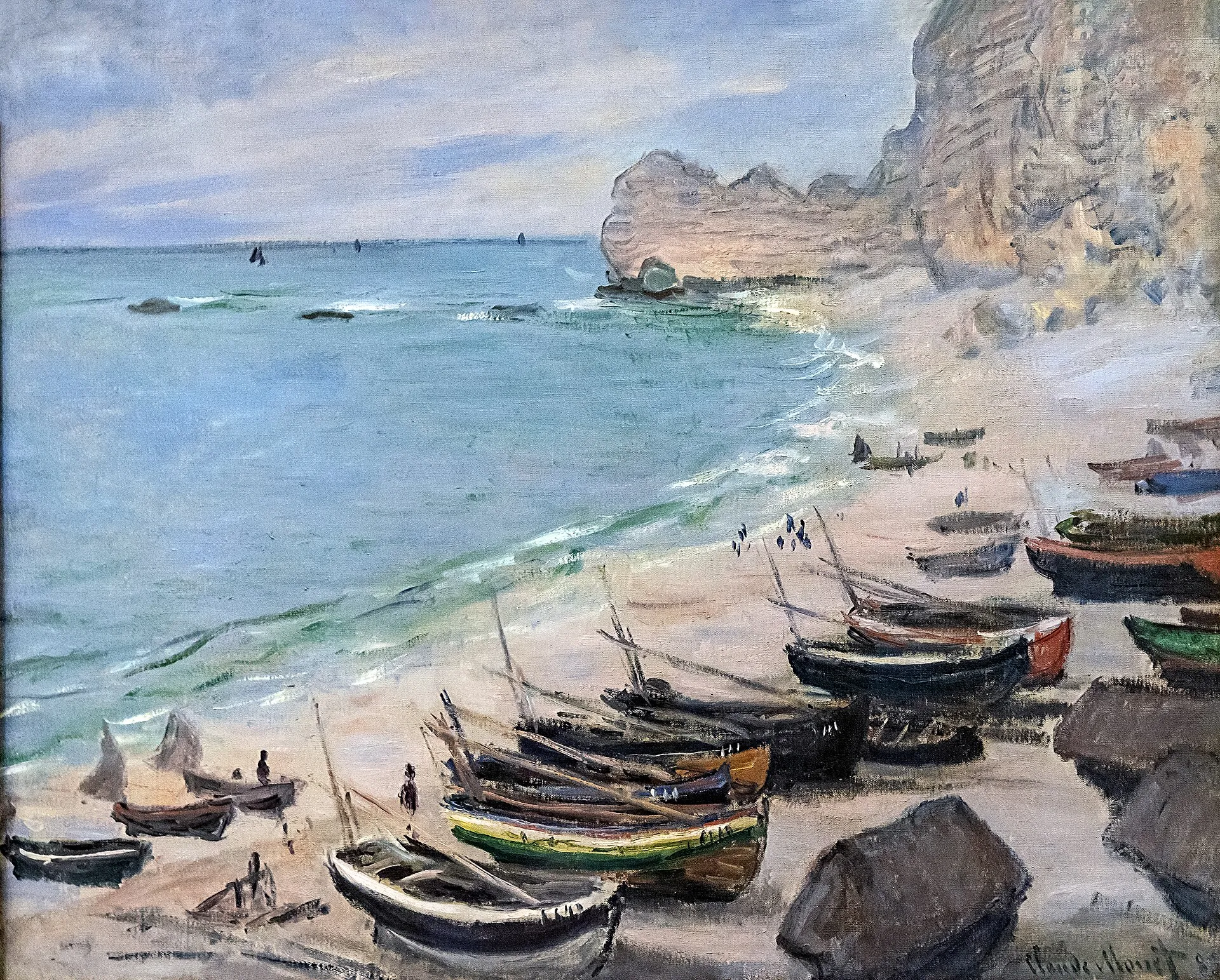
Entering the 1880s, Monet shifted his focus from modern urban settings to the raw, untamed forces of nature. In 1882, at Pourville in Normandy, he painted unpeopled landscapes dominated by sheer cliffs and the sea. In 1884, he spent nearly three months in Bordighera on the Mediterranean coast, rendering the dazzling sunlight and exotic vegetation in high-chroma palettes. On the coast of Étretat in 1885 and on the rugged island of Belle-Île in 1886, he recorded the clash of churning Atlantic waves against dark rock formations with somber tones and thick impasto. In the winter of 1895, he traveled to Sandviken in Norway, mounting his canvases on sleds to paint snowscapes amidst sub-zero blizzards.
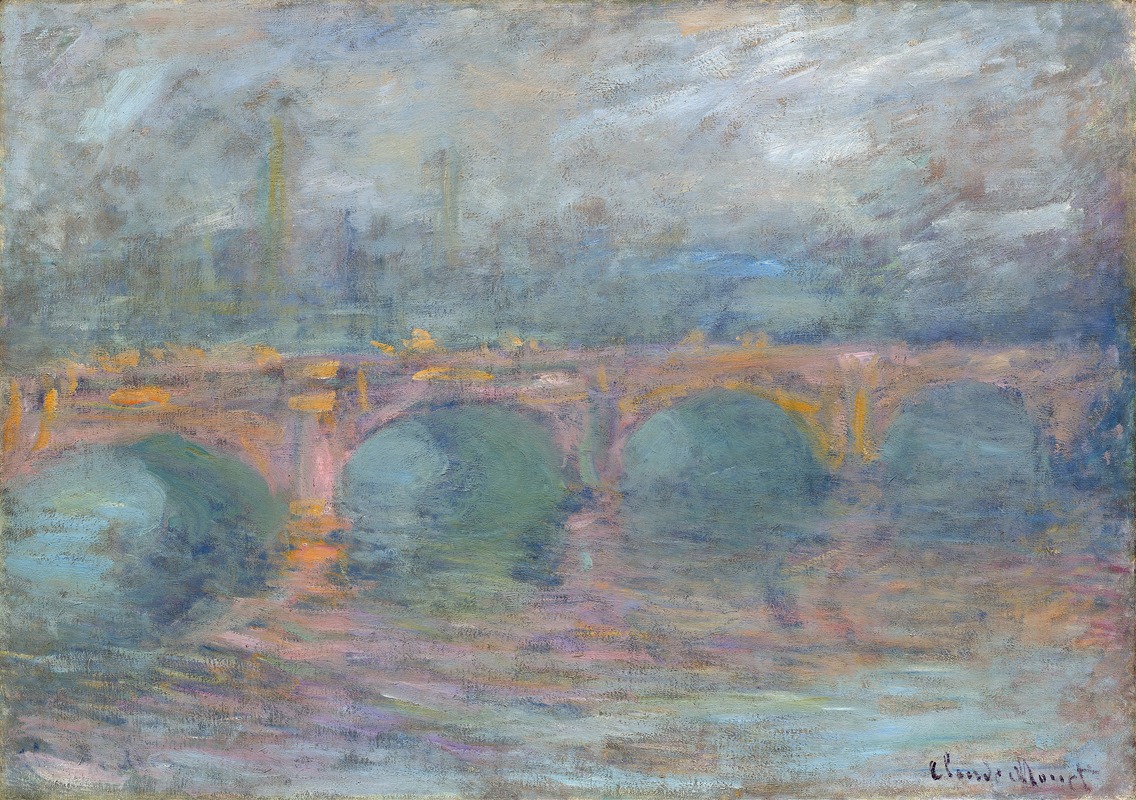
From the 1890s onward, he concentrated on series paintings, exploring how light altered a single motif over the course of the day and across changing weather. During winter stays in London between 1899 and 1901, he painted from his room at the Savoy Hotel, observing the bridges over the Thames shrouded in dense industrial fog. Having begun roughly one hundred canvases on site, he spent years refining them in his Giverny studio, completing the series around 1903 and 1904.
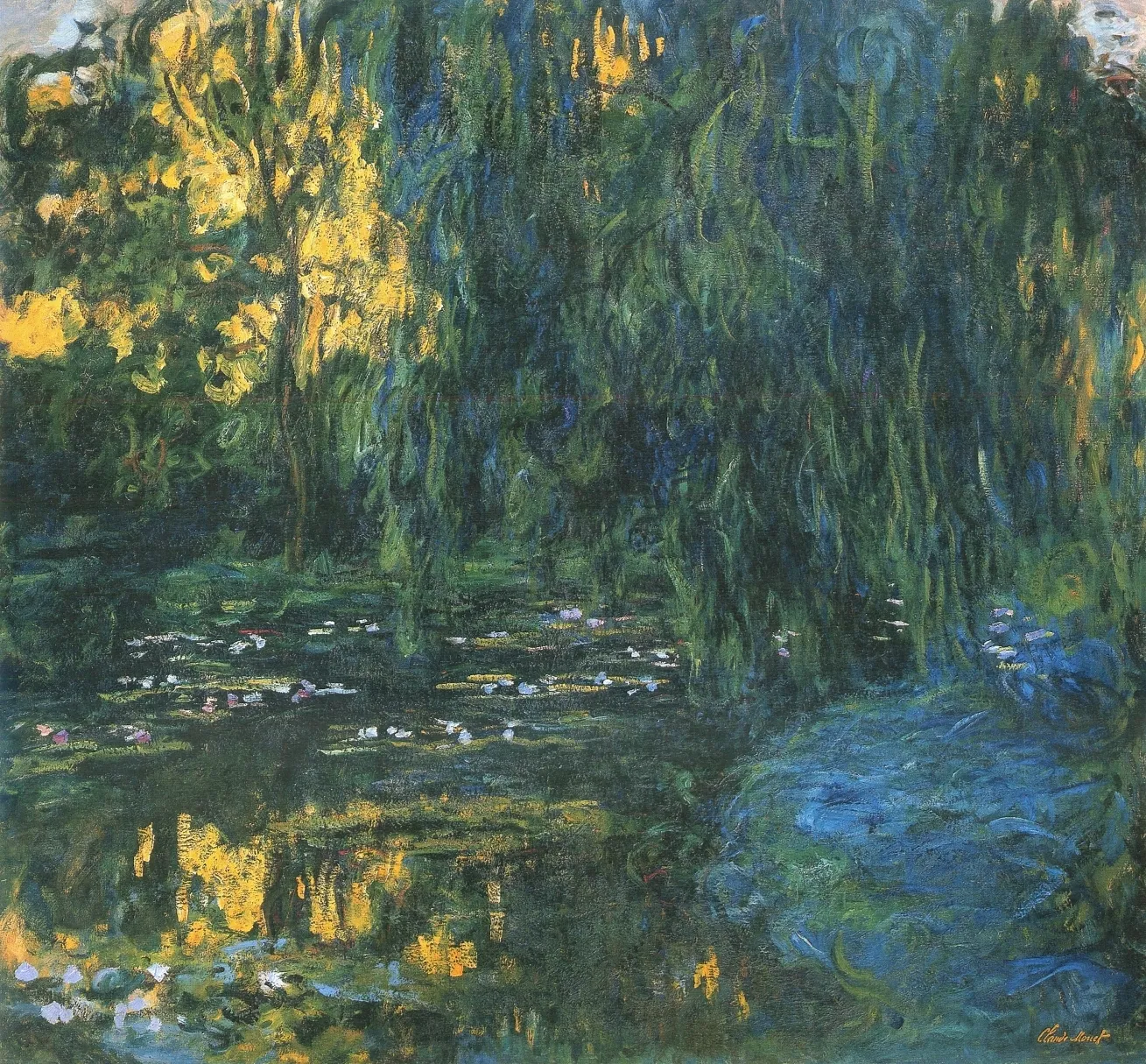
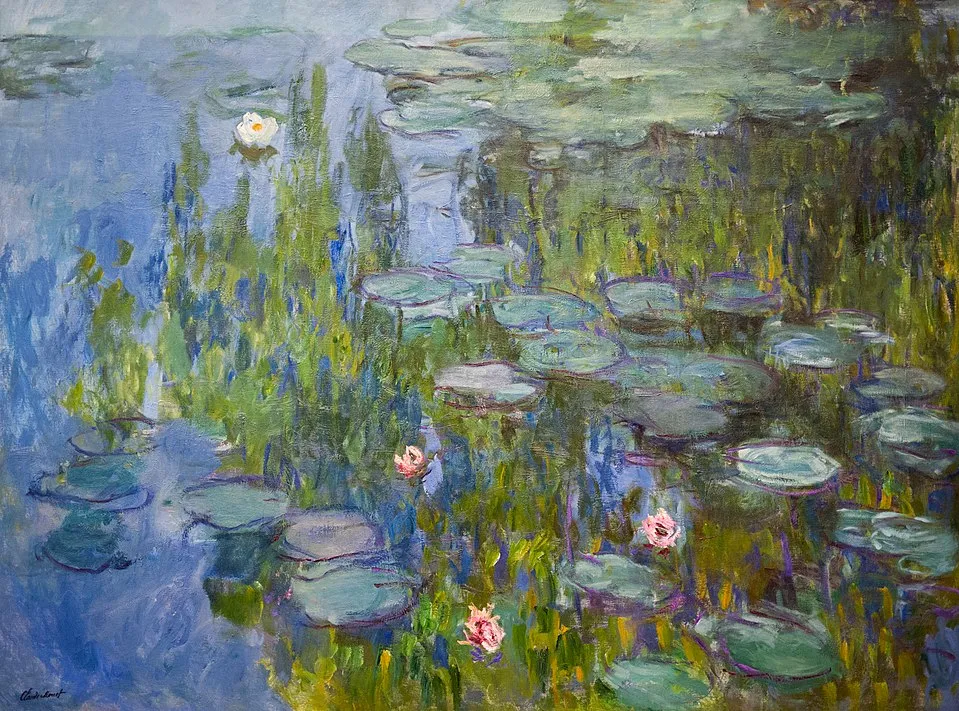
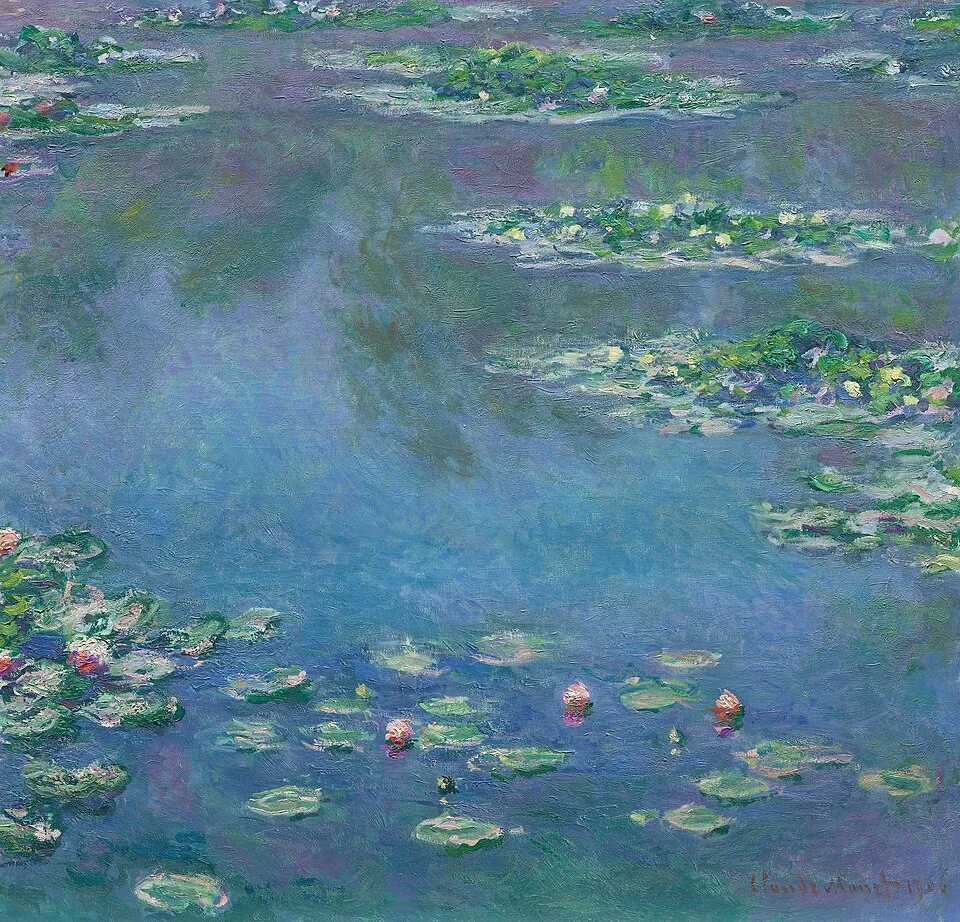
In 1893, having purchased an adjacent parcel of land, Monet began designing a landscaped water garden, enlarging an existing pond and building a Japanese-style arched bridge. In his 1906 painting Water Lilies, he eliminated the conventional anchors of landscape painting, dispensing with both horizon and sky. Across the nearly square canvas, only the lily pads on the water and the mirrored reflections of the sky and willows remain, rendered through multiple, layered glazes of color.
_Claude_Monet_-_Muse%CC%81e_des_Beaux-Arts_de_Lyon_(W821)+(1).webp)
Stories Featured stories
Impressionism
Why Did Monet Paint the Same Landscape So Many Times?
Premium ImpressionismWaterWater surface
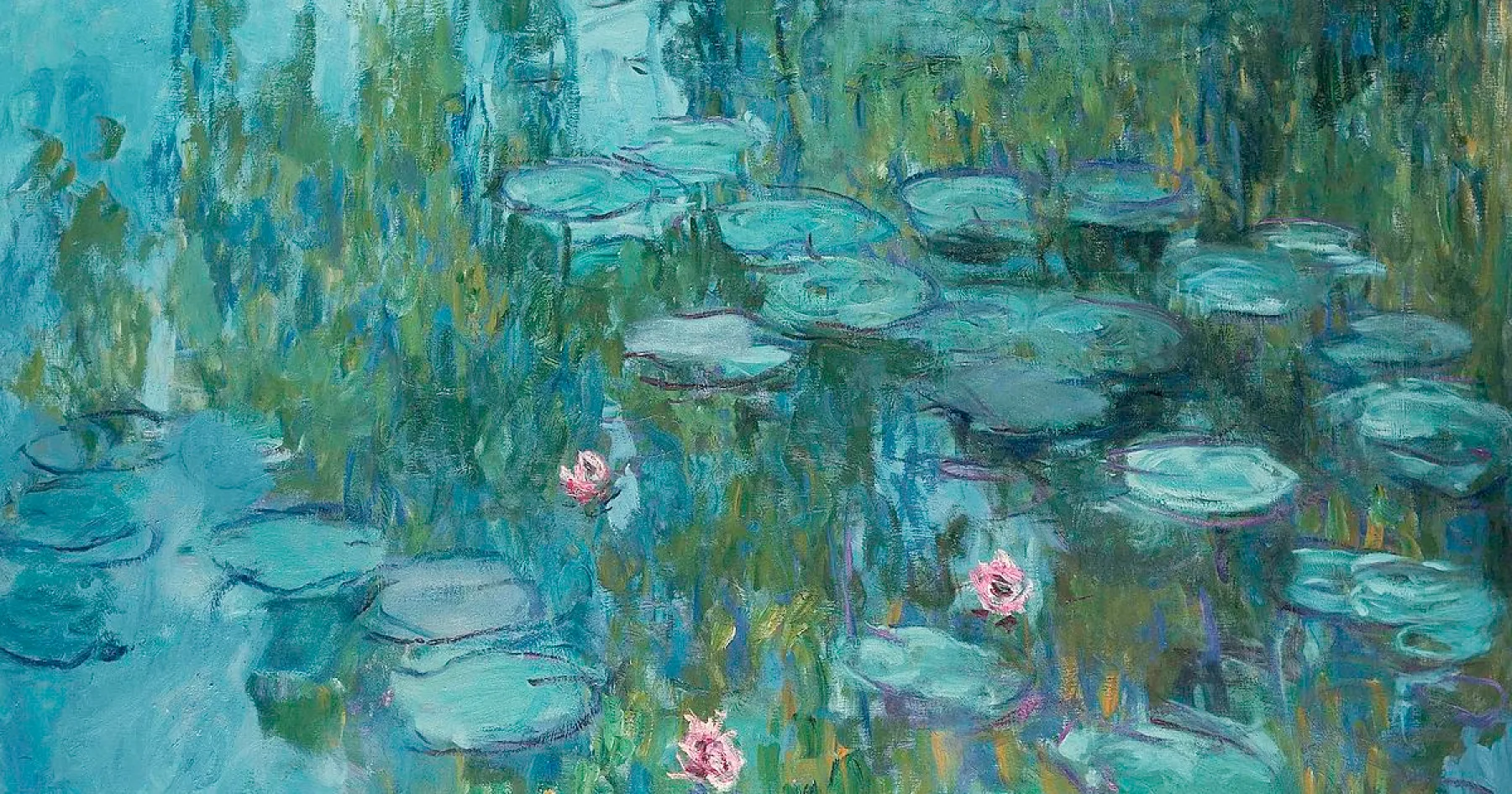
The Same Beauty of Water, Seen Through Canvas and Keys: Debussy's Piano Piece 'Reflections in the Water'
Premium Impressionism
The World's Most Beautiful Light, Created by One Who Knew Sorrow: Debussy's Masterpiece, 'Clair de lune'
Premium ImpressionismSeaJaponism