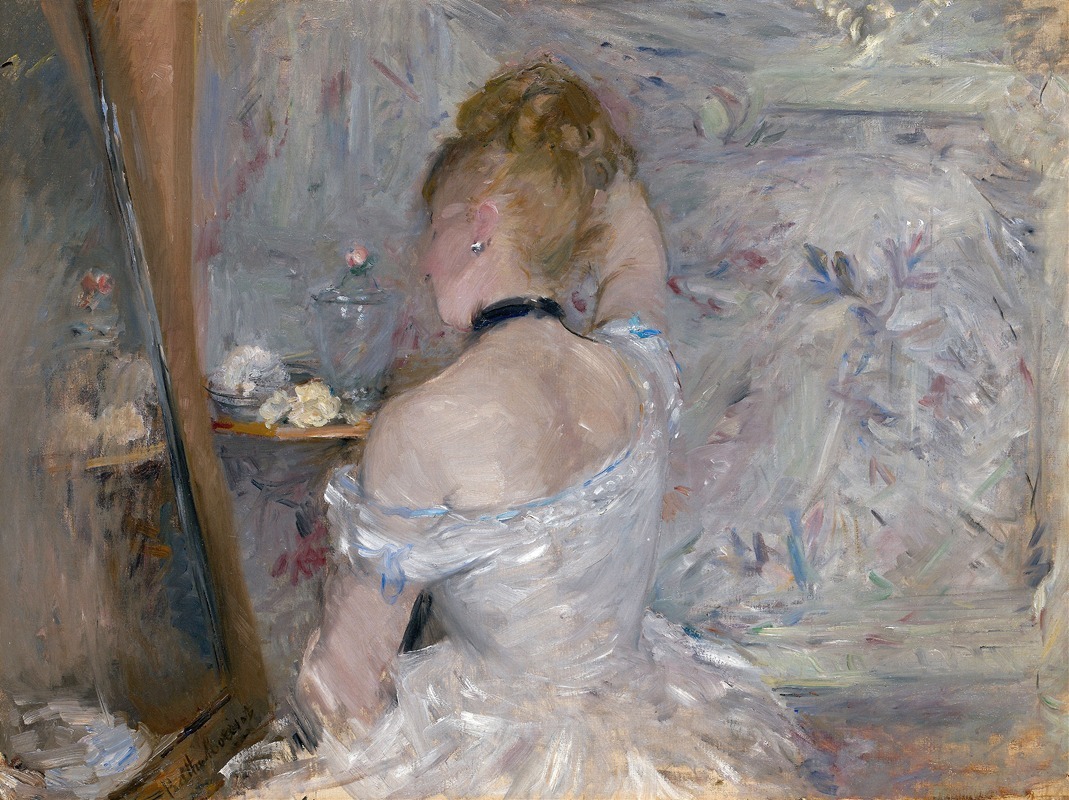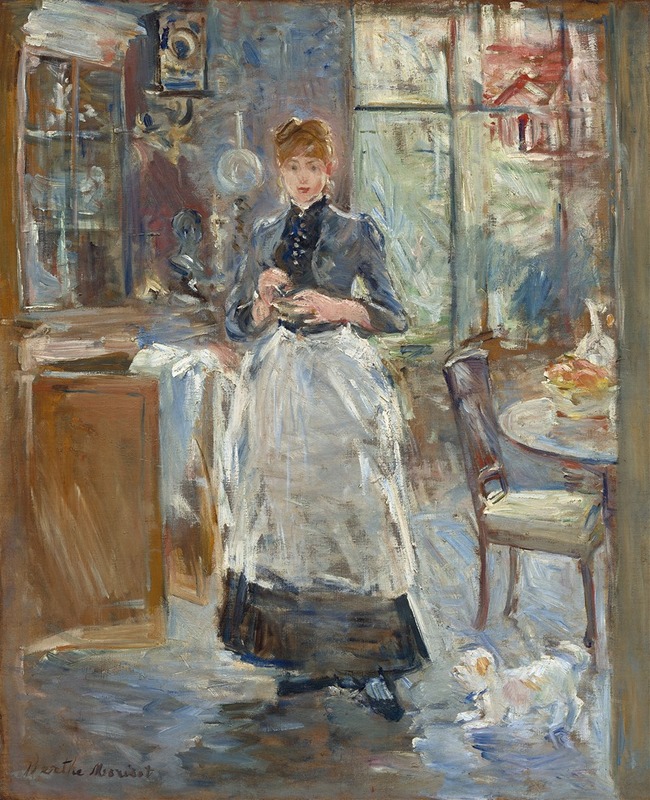
A pivotal figure in founding Impressionism, she transformed the private domestic and garden spaces reserved for women into arenas for cutting-edge visual experimentation through the play of reflected light and an aesthetic of the non finito.
LifeLife and works
Born in 1841 in Bourges, in central France, Berthe Morisot moved with her family at the age of eleven to Passy, an affluent residential district west of Paris. Prevailing social norms barred bourgeois women from navigating the modern city with the uninhibited freedom granted to men. From within the sheltered confines of the hills of Passy, observing Paris's modernization through railings and balconies, she translated the subtle shifts of an inner world and the transient play of light onto canvas—realms accessible only through a woman's perspective.
After studying art from her late teens by copying masterworks at the Louvre, Morisot was drawn to en plein air techniques, painting directly outdoors from nature. She studied under the landscape master Camille Corot, grounding herself in the keen observation of the natural world, and in 1864 achieved her first acceptance into the conservative Paris Salon with two landscape paintings.
In 1868, while copying at the Louvre, she met Édouard Manet. Although Manet painted over a dozen portraits of her, their relationship was far from a one-sided mentorship. Morisot introduced Manet to outdoor painting and the use of brighter colors, directly shaping the evolution of his style. With The Young Woman at the Window in 1869, she had already independently mastered the seamless dissolution of boundaries between outdoor light and interior shadow well ahead of Manet.
When her sister Edma, her closest painting companion, gave up art upon marriage, Morisot turned to her as a primary model to portray the authentic physical and psychological presence of the modern woman. Her 1872 work, The Cradle, depicts Edma watching over her sleeping child behind a veil of sheer chiffon. That same year, the dealer Paul Durand-Ruel purchased twenty-two of her oil paintings. Though her family's wealth meant she had no financial need to sell her art, Morisot defined herself as a professional painter and placed high value on the public circulation of her work.
In 1874, aligning with a group of young artists dissatisfied with the academic Salon, she became the only woman to participate as a founding member of the First Impressionist Exhibition. That same year, she married Manet’s younger brother, Eugène Manet. Setting aside his own aspirations, Eugène devoted himself to supporting her career logistically and financially, assisting with everything from framing and publicity to securing exhibition funds.
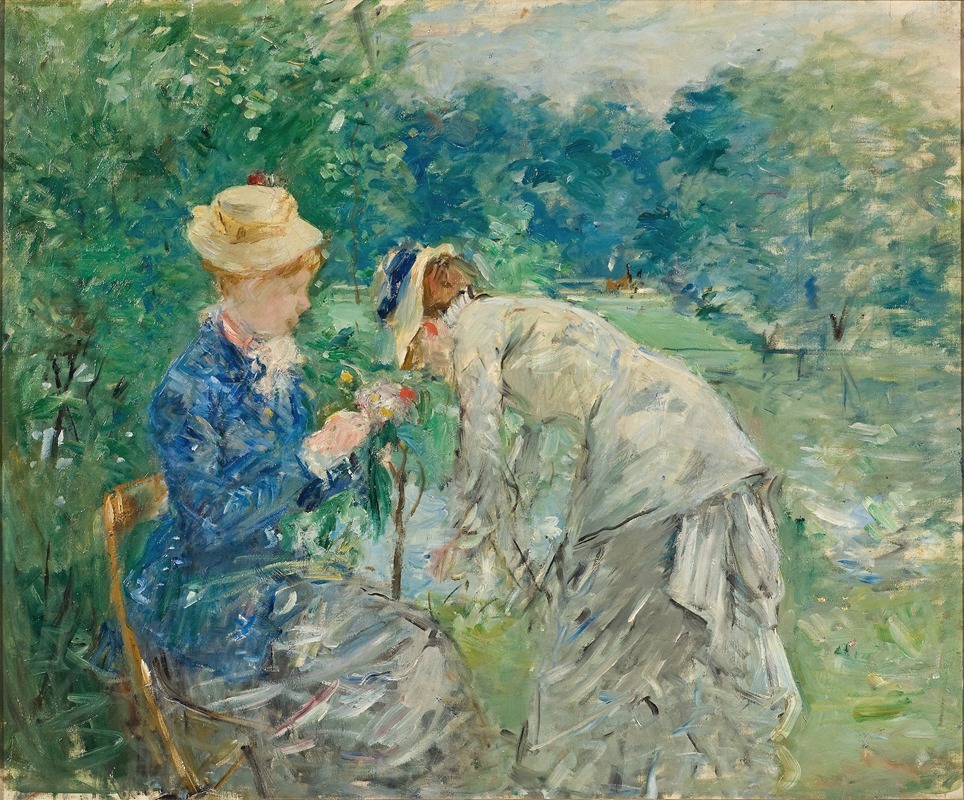
Between 1875 and 1885, Morisot pursued a radical aesthetic of rapid brushwork and sketch-like brevity. Boldly leaving raw brushstrokes visible, she dissolved form into color and light. Around 1880, she began experimenting with unprimed linen canvases, allowing the bare fabric to show through. In The Birdcage (1885), the exposed canvas functions as a texture equal in weight to the pigment, laying bare the process of painting itself.
Beginning in 1881, during family summers in Bougival on the outskirts of Paris, she produced an intensive series of roughly forty works exploring the interference of light through garden greenery and glass verandas. In Eugène Manet and His Daughter in the Garden at Bougival, which depicts her husband absorbed in crafting toys with their young daughter Julie, Morisot inverted the traditional mother-and-child motif favored by male artists to present a modern vision of paternal intimacy and family life.
In 1895, having contracted pneumonia while nursing her daughter through the same illness, Morisot died suddenly at the age of fifty-four. Most of the oils remaining in her estate were gifted by her family to the Musée Marmottan Monet in Paris. Today, housing the world's largest collection of her work with approximately eighty pieces, the museum preserves the trajectory of her visual experiments, where diaphanous color and daring brushwork merge in luminous harmony.