
- Order
- Outward
- Powerful
- Innovation
A geometry of the avant-garde, taking form apart and rebuilding it
Your sense of beauty
A bold, forceful impact that breaks through the existing frame. But what truly draws you is not destruction in itself; it is the fine rule of reconstruction underneath. When you meet expression in which settled perspective and orderly rhythm have first been taken apart and then reassembled by an entirely new geometric calculation, you feel a shock that clears the mind. In the attempt to observe things from many angles and recombine sound and form dynamically, you sense the true beauty that opens an era.
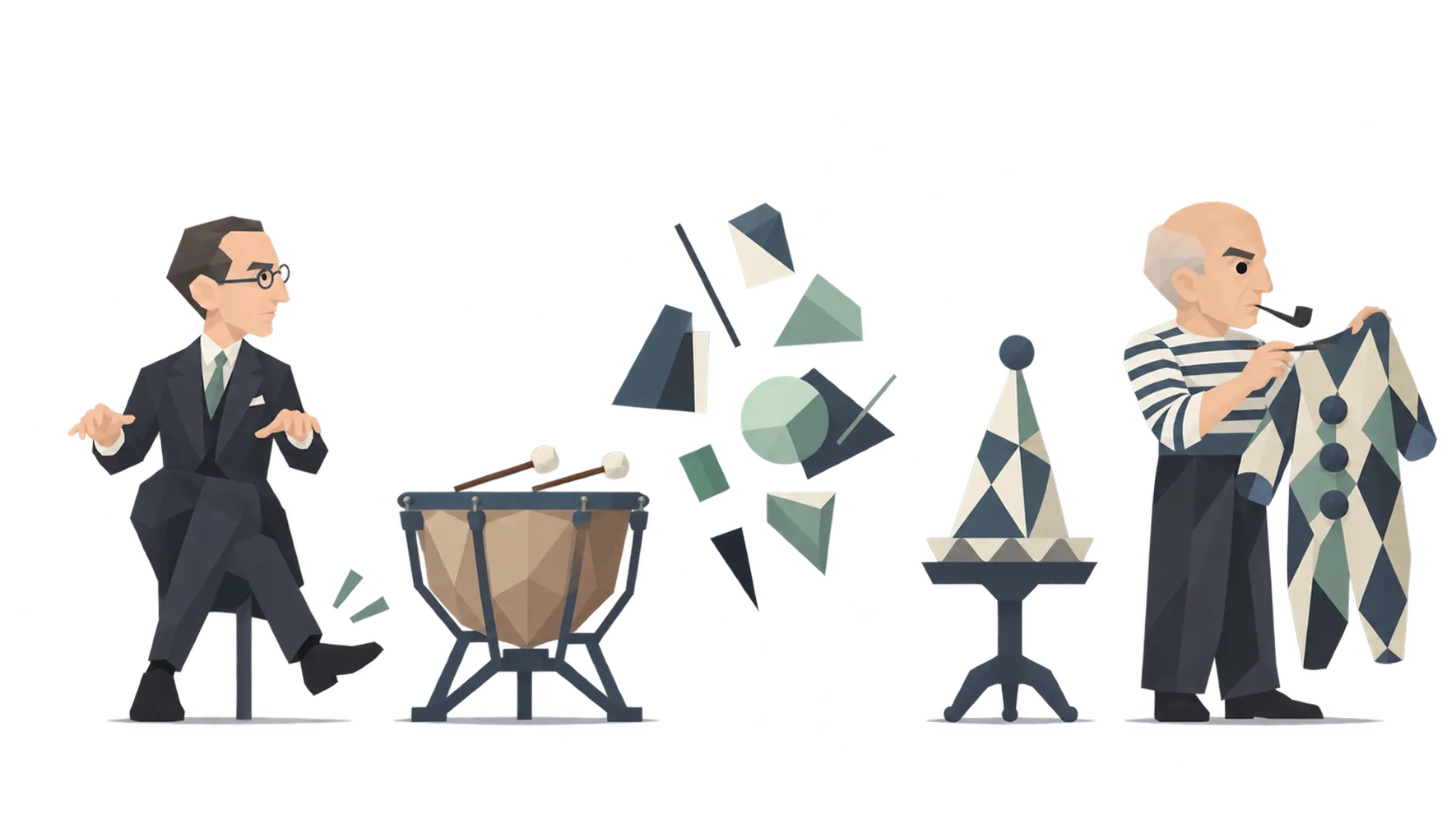
What moves you
Being overwhelmed by an orchestral performance where meters switch one after another and fierce accents shake the body. Or standing before a painting where a dismantled figure has been rebuilt on the canvas and gives off a powerful presence.
The beauty you tend to overlook
The flavor that lives inside a plain, protective practice handed down from long ago, with no experiment in it at all. Turn your gaze now and then to the quiet worth of repeating an unchanging form with care, causing no great change at all.
The composer in tune with you: Igor Stravinsky
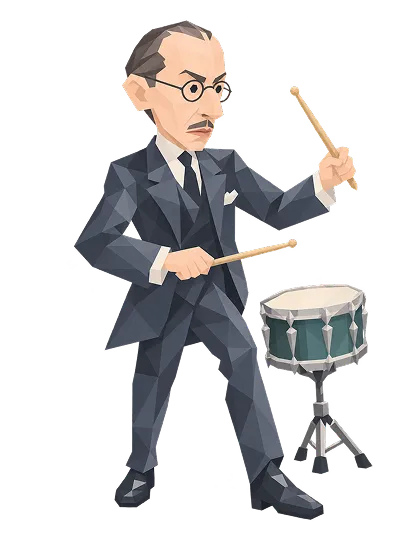
In The Rite of Spring of 1913, Stravinsky laid irregular changing meters throughout the score, dismantling and rebuilding rhythm geometrically and remaking the history of music. Then, in Pulcinella in 1920, he reinterpreted Baroque music and opened the way to a new classicism. That stance — taking apart an existing grammar to make a new structure — resonates deeply with your sense of beauty.
Learn more about Igor StravinskyThe painter who resonates with you: Pablo Picasso

Through Les Demoiselles d'Avignon and the Cubist movement, Picasso dismantled the traditional Western perspective and rebuilt on the canvas the planes and lines observed from many viewpoints. For the 1920 ballet Pulcinella he designed the sets and costumes to Stravinsky's music. A manner of painting that breaks form down geometrically and sets up a new beauty resonates strongly with your sensibility.
Learn more about Pablo PicassoWhat links the two
The two collaborated directly on the 1920 ballet Pulcinella. They share an avant-garde spirit of dismantling traditional form and rebuilding it as a new geometric structure.
Three paintings for you
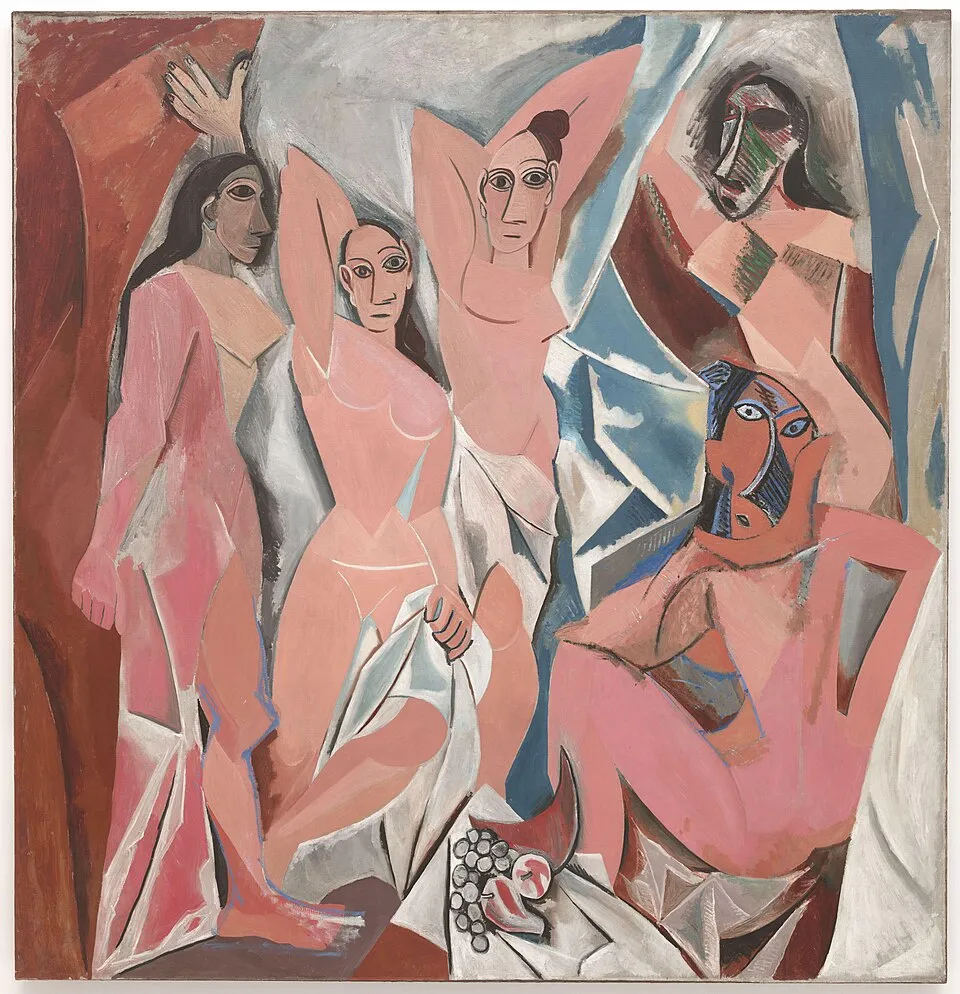
Les Demoiselles d'Avignon
Pablo Picasso
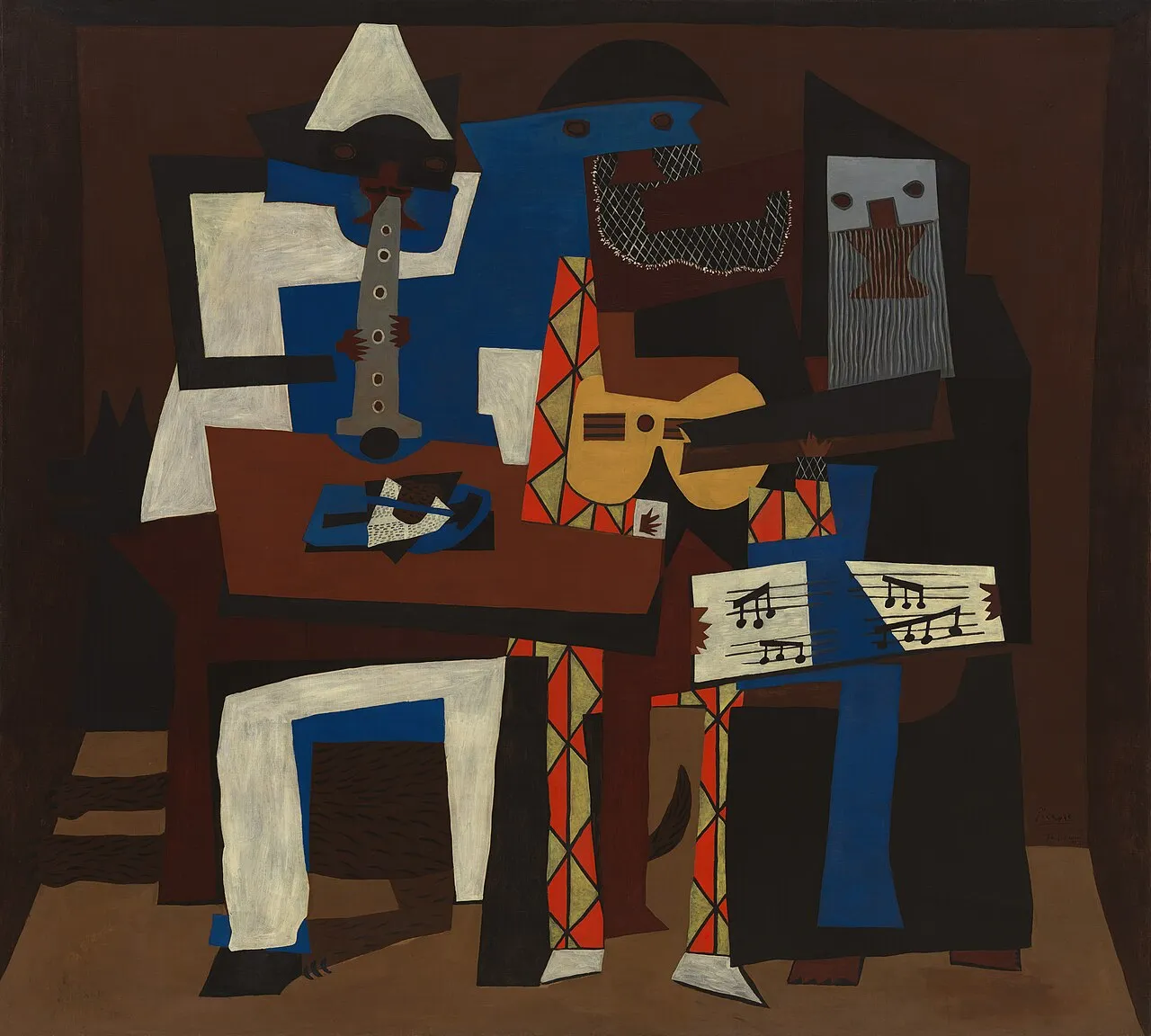
Three Musicians
Pablo Picasso
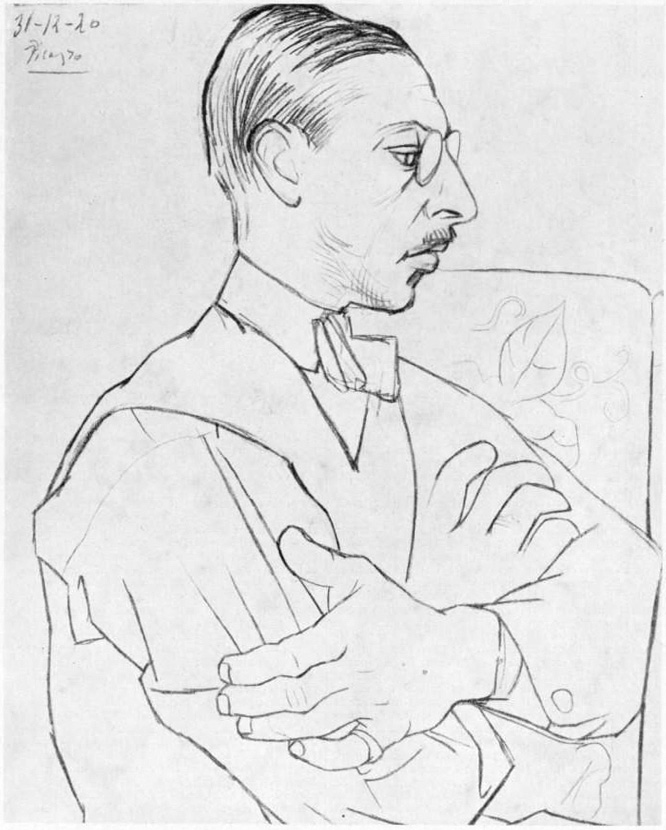
Portrait of Igor Stravinsky
Pablo Picasso
Sign up free to read the painting and music commentary
The pleasure of taking the old rules apart and building a brand-new age!
Who stands beside you changes the work
Walk through the same exhibition, hear the same performance, and what you take home still changes with the person standing beside you.
A type who is fun to go and see things with
Without a word between you, your hearts move in the same place.



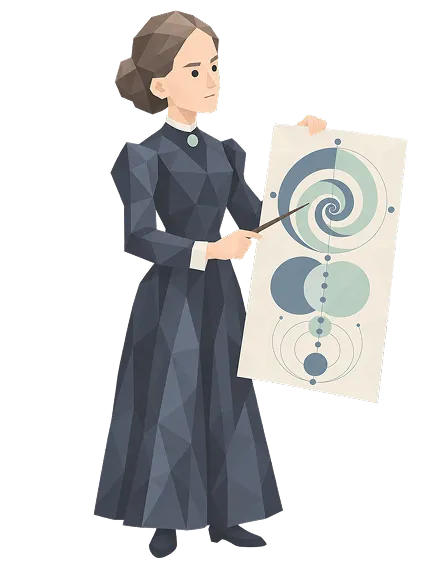
A type who finds what you overlooked
Half of it overlaps, half of it shifts. They show you what you would have walked past.

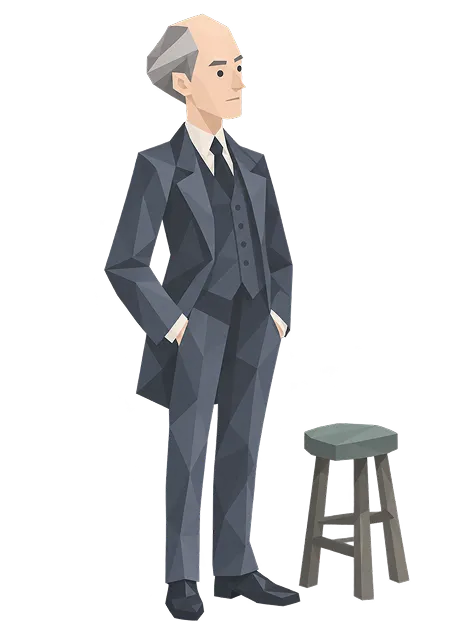
A type who sees from a completely different point of view
You spend the same hours, and the painting or the piece each of you remembers is a different one.
Types close to yours
See the other types
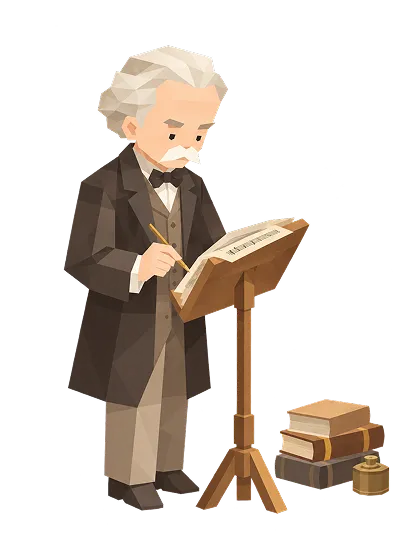
 The Meticulous ArtisanOISTGabriel Fauré × Johannes Vermeer
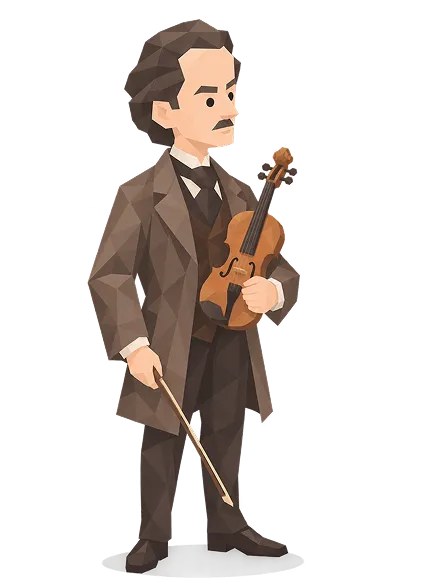 The Perfectionist ArchitectOIMTJohann Sebastian Bach × Paul Klee
 The Graceful HarmonistOESTFelix Mendelssohn × William Bouguereau
 The Brilliant EntertainerOEMTWolfgang Amadeus Mozart × Pierre-Auguste Renoir
 The Dreaming RomanticPISTFrédéric Chopin × Claude Monet
 The Poet of SorrowPIMTPyotr Tchaikovsky × Vincent van Gogh
 The Teller of NostalgiaPESTAntonín Dvořák × Jean-François Millet
 The Passionate RevolutionaryPEMTLudwig van Beethoven × Francisco de Goya
 The Solitary SeekerPISNJohannes Brahms × Caspar David Friedrich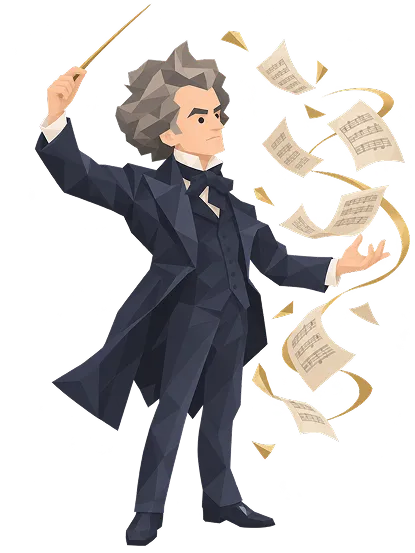
 The Mad GeniusPIMNHector Berlioz × Edvard Munch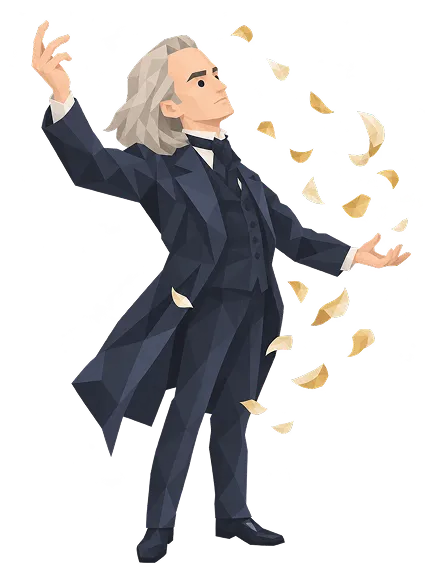
 The Free SpiritPESNFranz Liszt × Gustav Klimt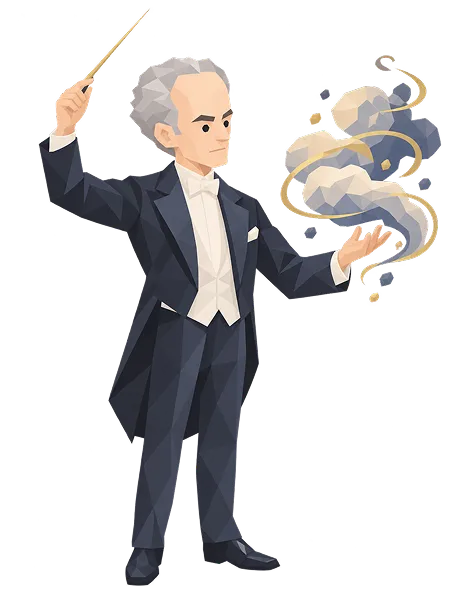
 The Iron-Willed ChallengerPEMNRichard Strauss × J. M. W. Turner

Where music and art meet,
stories that move you.
Reading that awakens a new sensibility

From “just looking”
to “reading” a painting
One painting becomes dramatically more interesting

The more you know,
the more you hear.
Commentary & analysis