A painter who broke away from the conservative art establishment to found the Vienna Secession, exploring human love and mortality by fusing flat gold-leaf ornamentation with naturalistic depictions of the human body.
LifeLife and works
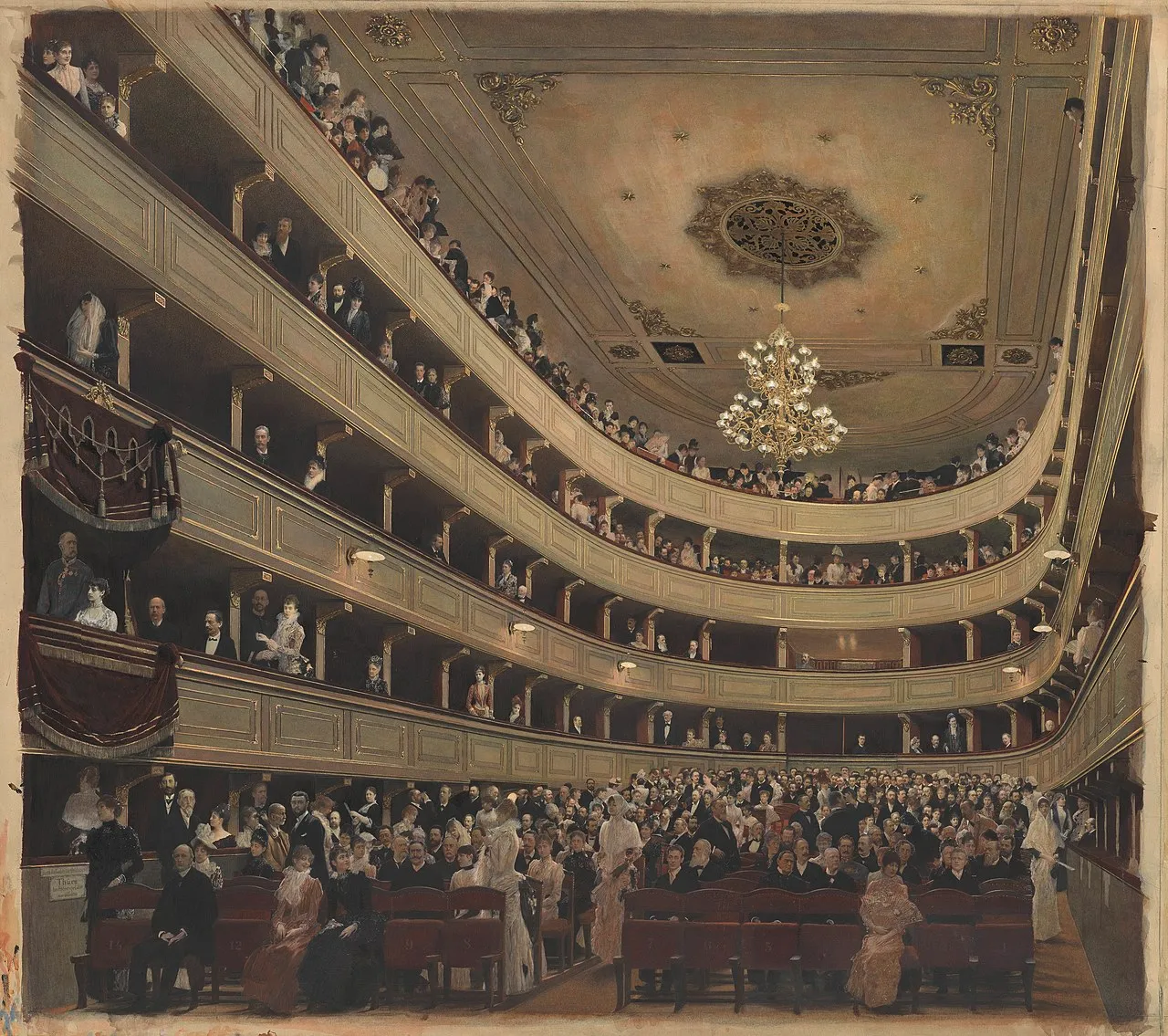
Gustav Klimt was born in 1862 on the outskirts of Vienna, the eldest son of a gold engraver. The family struggled financially, and even after enrolling in the School of Applied Arts in his teens, he relied on scholarships to get by. After graduating, he formed a workshop with his younger brother Ernst and a fellow student, taking on commissions for murals in theaters and public buildings. At the time, he produced history paintings characterized by precise anatomical rendering and deep spatial composition, earning high acclaim from the establishment, including an imperial decoration for his ceiling frescoes at the Burgtheater.
Despite his thriving career, a turning point soon arrived. Following the sudden deaths of both his father and brother in 1892, he began to seek a departure from his conventional style. In 1897, rebelling against the dominance of the conservative arts establishment, he co-founded the avant-garde Vienna Secession. Serving as its first president, he used the group's journal to introduce international movements to Vienna, including the British Arts and Crafts movement—which sought to unify life and art—and Belgian Symbolism.
During this period, he received a commission to decorate the ceiling of the Great Hall at the University of Vienna. While the university expected a traditional allegory celebrating the triumph of knowledge over ignorance, Klimt delivered a mass of nude figures tossed about by fate. This provoked fierce backlash from academia and the conservative public; eighty-seven professors signed a formal petition of protest, and the press denounced the works. Following a bitter controversy, he withdrew from the state commission, borrowed money from a patron to repay the advance in full, and reclaimed the rights to his paintings.
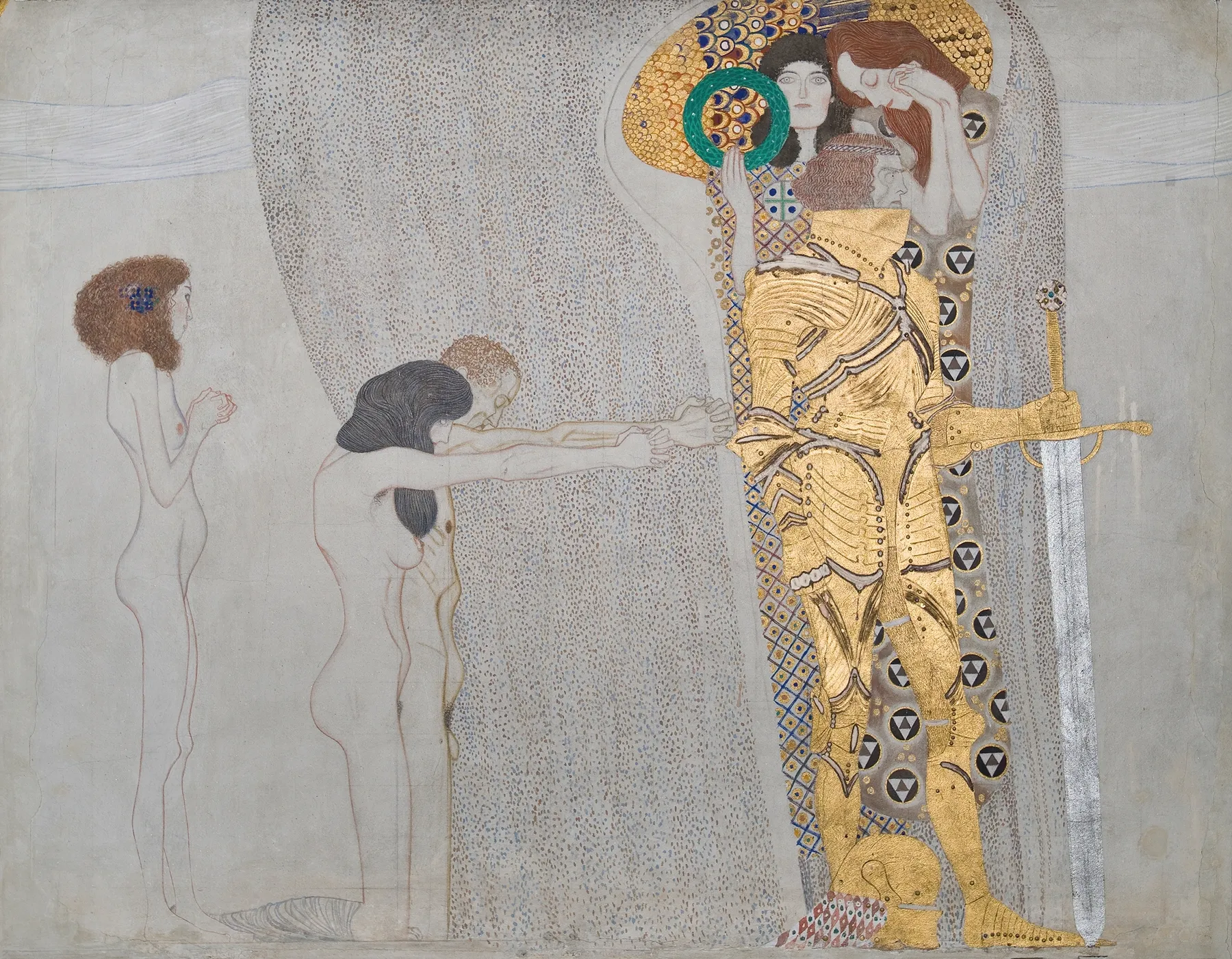
Having stepped away from public projects, he began accepting lucrative portrait commissions of women from wealthy families, particularly those of prominent industrialists. A visit to Ravenna, Italy, in 1903 left him profoundly moved by the Byzantine mosaics of its basilicas. This encounter led him to abandon three-dimensional depth in favor of a two-dimensional decorative aesthetic enriched with gold leaf. In his studio, shielded from outside eyes, he had multiple nude models wander freely, constantly sketching their natural movements and spontaneous poses.
Throughout his life, he consistently portrayed the inner human drama—the struggle between vitality and sensuality, and death and destruction. Even in works based on Greek mythology, he visualized female ecstasy, while in paintings of pregnant women, he placed skulls alongside emerging life to juxtapose it with inevitable death. In the same era that psychoanalyst Sigmund Freud was theorizing the unconscious mind and sexual drives, Klimt was manifesting the subconscious world through the medium of painting.
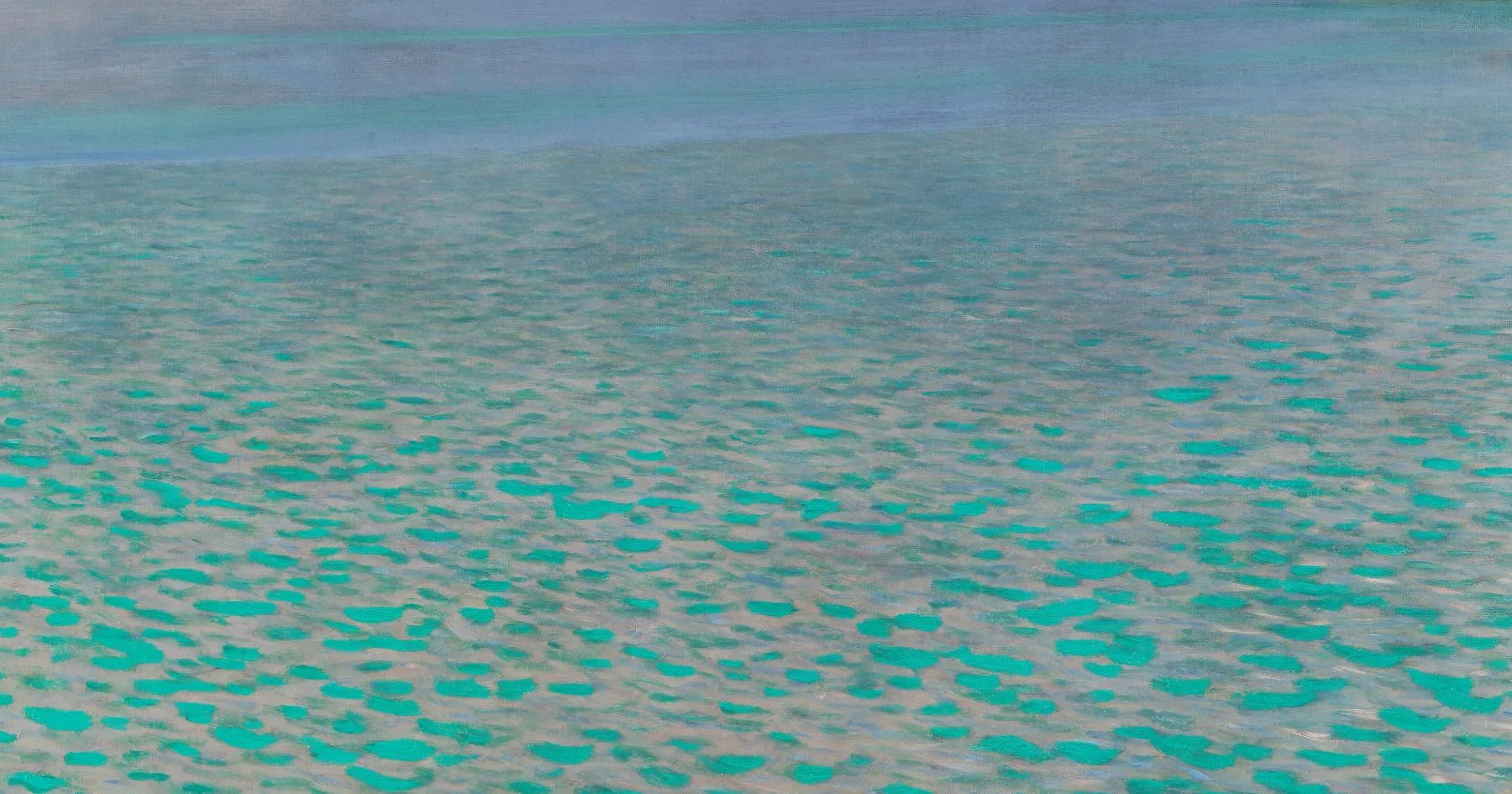
By the 1910s, he had moved away from his reliance on gold leaf, transitioning to a style defined by vibrant, colorful patterns. Every summer, he retreated to the shores of Lake Attersee, producing a series of distinctive landscapes on square canvases. In January 1918, he suffered a stroke at home that left him paralyzed on his right side; after contracting pneumonia in the hospital, he passed away at the age of fifty-five.
In the Hietzing studio where he spent his final years, he left behind unfinished masterworks that reveal his process of painting colors and decorative patterns over preliminary nude sketches. Although this studio was long believed to have been demolished, subsequent investigations revealed that its walls and original structure had been preserved inside a villa built around it. Today, many of his greatest masterpieces are on permanent display at the Belvedere in Vienna.
Works Works
No works yet