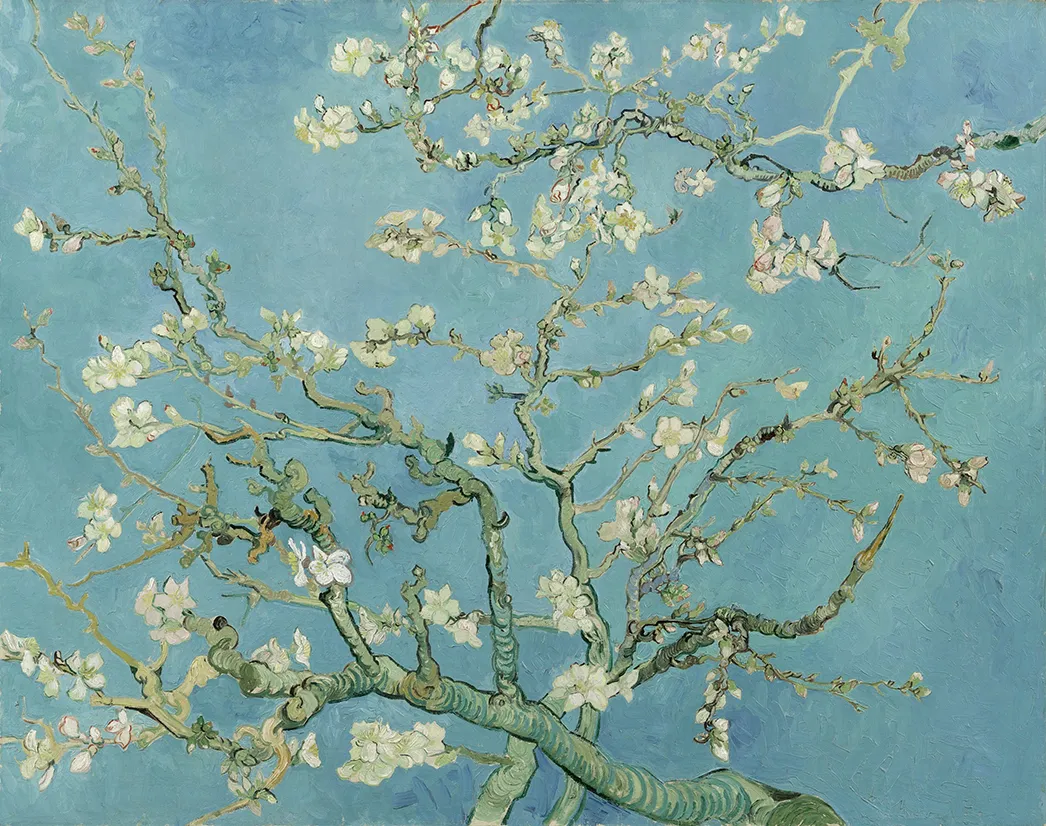
A Dutch painter who moved beyond the objective imitation of landscape, establishing a style that directly expressed the artist's subjective emotions onto the canvas through complementary contrasts and vibrant brushwork.
LifeLife and works
Throughout his artistic career, Vincent van Gogh sought to find the dignity of life in those on the margins of society and within harsh nature, using the medium of painting to evoke deep empathy in viewers. Born in 1853 in a Dutch Protestant parsonage, he worked as an art dealer's clerk and prepared for theology examinations before serving as a lay preacher in the Borinage coal-mining region of Belgium. Stripped of his position due to his excessive asceticism, he turned to painting in 1880. For him, standing before the canvas was a form of redemptive ministry akin to holy orders.
During his early Dutch period, influenced by Jean-François Millet, he depicted the austere lives of peasants and weavers in heavy, earthy tones dominated by dark browns. In 1882, while in The Hague, he received a commission from an uncle who was an art dealer for pen-and-ink drawings of cityscapes, which prompted him to study precise perspective using a perspective frame. The culmination of this period, The Potato Eaters (1885), was an attempt to convey the truth of honest labor through the image of an impoverished peasant family eating the crop they had cultivated with their own hands.
His style transformed significantly after moving to Paris in 1886. Encountering the luminous palette of Impressionism, the pointillist technique of Neo-Impressionism, and the bold, flat compositions of Japanese ukiyo-e prints, he banished dark tones from his palette and embraced a radiant visual language dominated by primary colors. In the background of his 1887 Portrait of Père Tanguy, the wall is covered with ukiyo-e prints from his own collection.
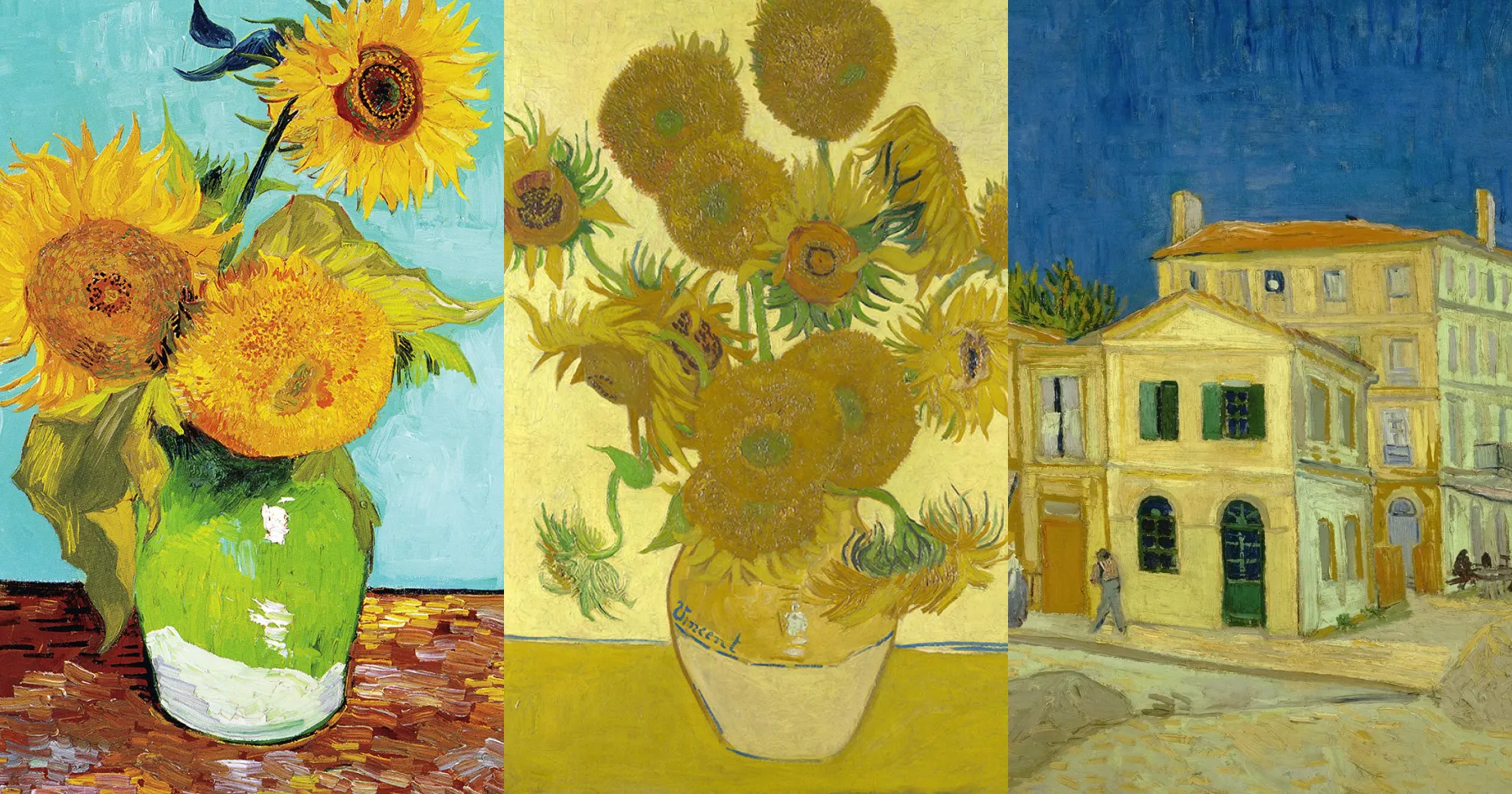
In 1888, drawn by the intense southern sunlight, he moved to Arles in Provence, where he established a distinctive approach utilizing the interplay of complementary colors such as blue and yellow, or red and green. Writing to Émile Bernard, he stated his aim to "exaggerate the essential and leave the obvious vaguely obscured," developing a visual theory in which heavy impasto and strokes applied straight from the tube carried an independent emotional cadence. In Café Terrace at Night, the composition is dominated by the striking contrast between the deep, clear navy of the night sky and the brilliant yellow illuminated by the lantern. In October of that year, he began living and working with Paul Gauguin; however, their conflicting artistic theories—Van Gogh emphasizing direct observation of nature, Gauguin advocating composition from memory—led to fierce clashes, and the partnership collapsed following the ear-severing incident that December.
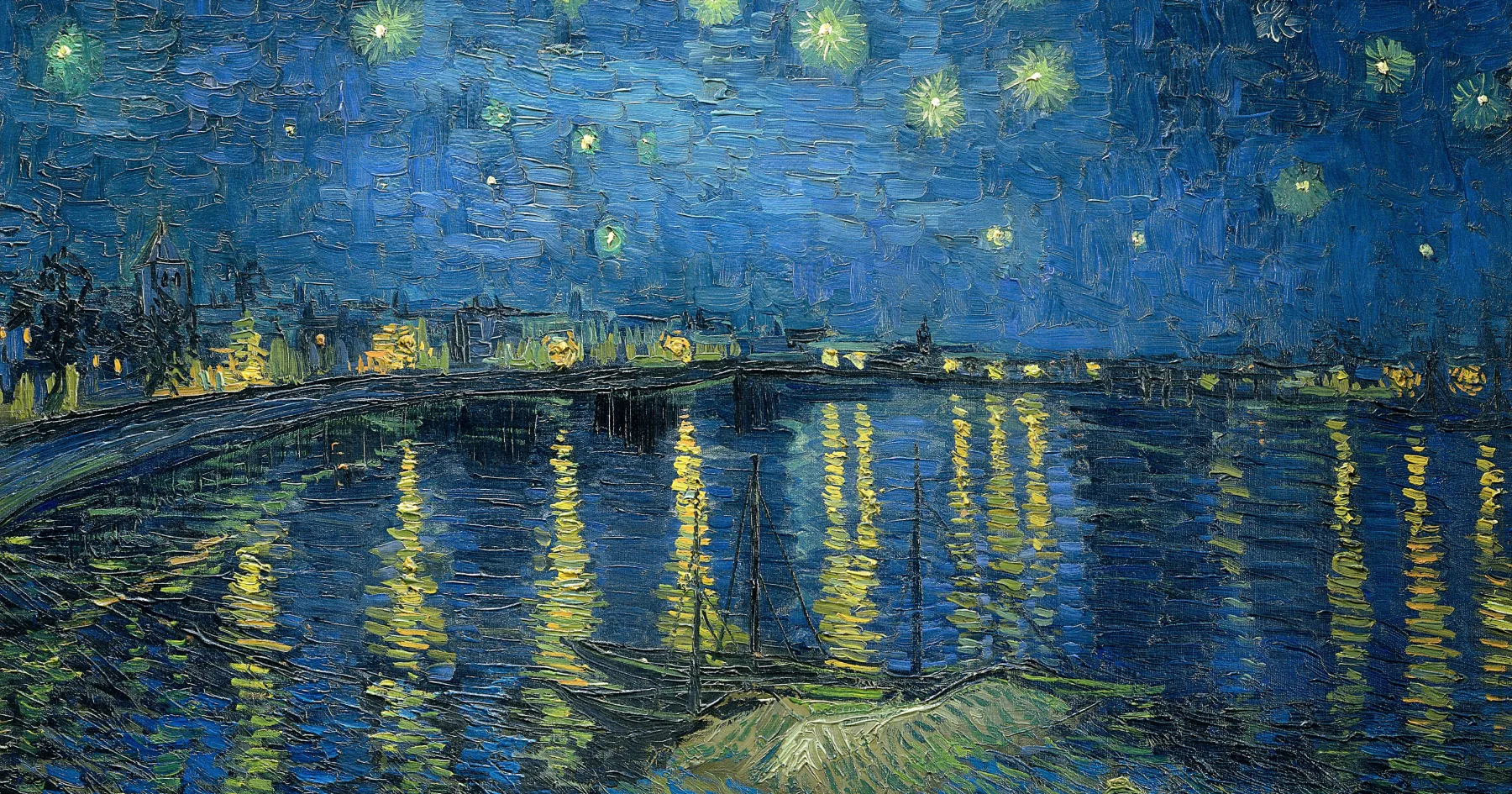
After voluntarily admitting himself to the asylum in Saint-Rémy in May 1889, he continued to paint despite recurring breakdowns and periods of convalescence. Amid this psychological turmoil, undulating, rhythmic brushwork and dynamic symbolic expressions came to the fore. In The Starry Night, which fused memories of the night sky seen from his window with his imagination, the swirling sky and the dark cypress soaring toward the heavens testify to his turbulent inner state.
His artistic life depended on monthly stipends sent by his brother, Theo. Whenever money arrived, he immediately prioritized purchasing high-quality canvases, paints, and paying models, severely cutting back on food and consequently suffering from chronic malnutrition and gastrointestinal ailments. In January 1890, the critic Gabriel-Albert Aurier published an article in a journal describing his work as characterized by "an excess of strength, an excess of nervousness, a violence of expression," heralding him as an artist who symbolized ideas rather than merely imitating reality. That same year, his oil painting The Red Vineyard, exhibited in Belgium, was purchased for 400 francs.
After moving to Auvers-sur-Oise in northern France in May 1890, he continued to produce work at a feverish pace. In Tree Roots, believed to have been painted on the morning of July 27, he captured the tangled roots on a slope in an innovative, nearly abstract composition. Later that day, he shot himself in the abdomen in a wheat field and passed away two days later at the age of thirty-seven, with his brother at his side. The vast body of work and letters left behind were meticulously managed by Theo's widow, Jo van Gogh-Bonger, eventually reaching an international audience through exhibition loans and the publication of his correspondence.
Works Works
No works yet